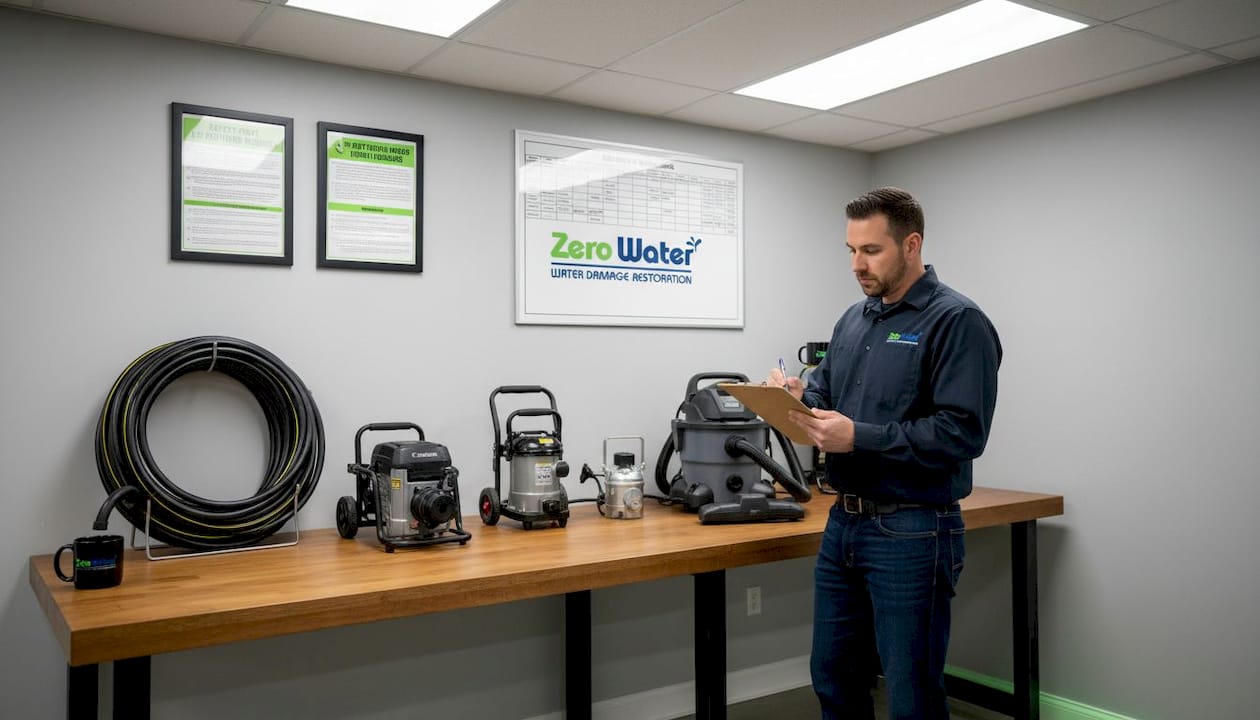
When water damage hits, the clock starts immediately. Choosing the wrong equipment wastes time, leaves hidden moisture behind, and sets the stage for mold growth within 24 to 48 hours. With so many water extraction equipment types explained across different industry guides and product pages, it can be genuinely hard to know what you actually need for a given situation. This article breaks down every major equipment type, what it does best, where it falls short, and how to match the right tool to the right job.
Table of Contents
- Key takeaways
- Water extraction equipment types explained: selection criteria that matter
- 1. Truck-mount extraction systems
- 2. Portable extraction units
- 3. Submersible pumps
- 4. Wet/dry vacuums
- 5. Carpet extractors and wand systems
- 6. Self-contained desiccant extractors
- 7. Emerging technology: IoT moisture monitoring
- Equipment comparison at a glance
- Situational recommendations for choosing the right equipment
- What experience with water extraction equipment actually teaches you
- When professional extraction equipment makes all the difference
- FAQ
Key takeaways
| Point | Details |
|---|---|
| Match equipment to damage scale | Truck-mounts handle large losses; portables and wet vacs work for smaller or hard-to-reach spaces. |
| Extraction must go beyond visible water | IICRC S500 requires mechanical extraction to continue until no additional water can be removed. |
| Safety compliance is non-negotiable | OSHA standards mandate PPE and GFCI protection whenever powered extractors operate in wet environments. |
| Equipment category affects drying time | Underpowered extraction directly causes longer drying cycles and higher mold risk. |
| Professionals deploy multiple tools | Most real-world water losses require combining two or more equipment types for complete removal. |
Water extraction equipment types explained: selection criteria that matter
Before you choose any specific machine, you need to understand what factors actually determine which equipment is right. The damage category matters enormously. Category 1 water (clean supply line breaks) allows standard extraction equipment with no special precautions. Category 2 (gray water) and Category 3 (sewage or floodwater) require equipment that can be properly decontaminated, along with strict PPE protocols.
Power and mobility are the next major factors. Truck-mount extraction systems generate 180 to 200 inches of water lift, making them the most powerful option available for residential and commercial water losses. But raw power does not mean universal access. These units sit in a vehicle and push water through hoses, which creates real limitations on how far the equipment can reach inside a structure.
Safety compliance is not optional. OSHA 29 CFR 1910.303 and 1910.132 specify that all powered extraction equipment used in wet environments requires Ground Fault Circuit Interruptors (GFCI) and appropriate PPE. No exceptions.
The IICRC S500 standard is the backbone of professional extraction practice. It defines the mechanical extraction phase as mandatory and sets formulas for how air movers and dehumidifiers must support drying after water removal. Working with a restoration company that follows S500 also makes insurance negotiations significantly smoother.
Pro Tip: Ask any restoration contractor whether they follow IICRC S500 protocols. If they are uncertain what that means, find someone else.
1. Truck-mount extraction systems
Truck-mounts are the workhorses of professional water damage restoration. These systems are built into vehicles and powered by the vehicle’s engine, which means they operate independently of the building’s electrical supply. That independence is a major advantage in flood scenarios where power is compromised.
The suction power is genuinely impressive. Truck-mount systems can move water that would physically damage a portable machine, including debris-laden floodwater with sediment and small particulates. They are the first choice for high-volume residential losses and commercial properties with open floor plans.
The limitation is reach. Truck-mounts are restricted to approximately 150 feet of hose length, which means any room or floor that falls outside that radius requires a portable unit instead. Upper floors of multi-story homes and buildings deeper than 150 feet from a truck access point are common scenarios where truck-mounts simply cannot reach.
2. Portable extraction units
Portable extractors solve the access problem that truck-mounts cannot. These machines typically carry 12 to 20 gallon tanks and can be carried into high-rise floors, tight hallways, and any space a truck-mount hose cannot reach.
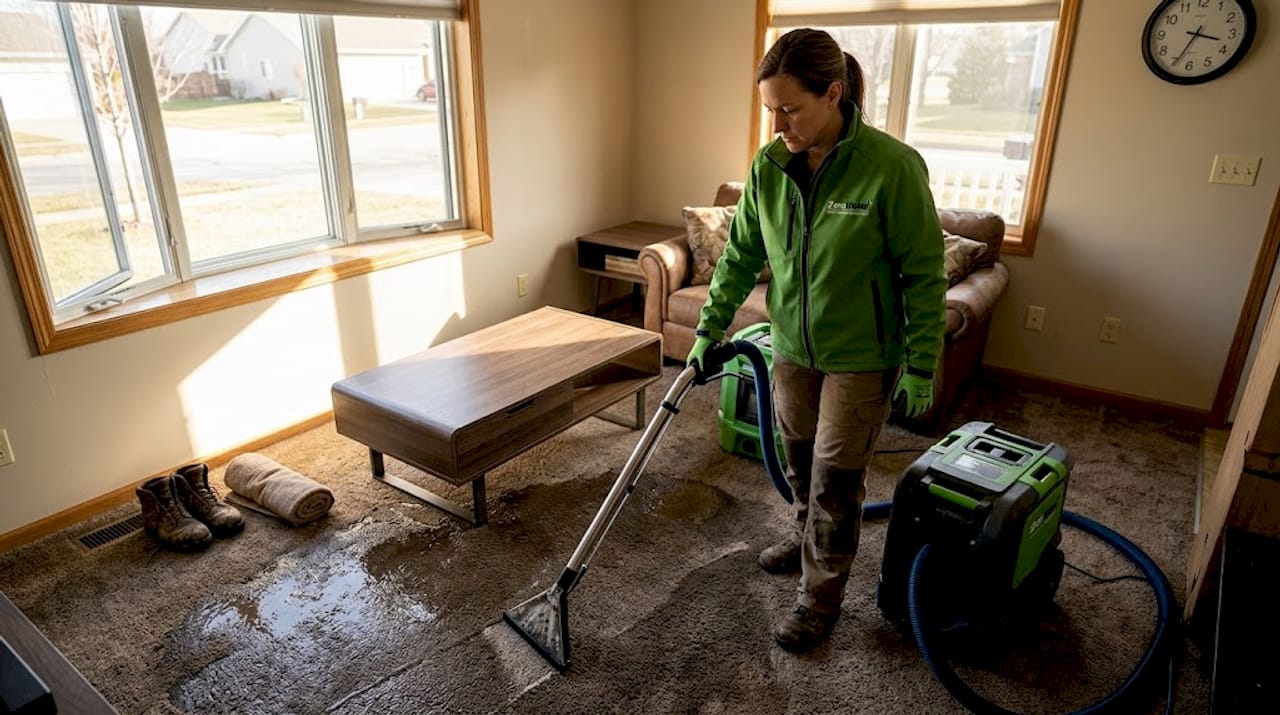
They are rated through the IICRC competency framework for performance and require regular maintenance to hold their efficiency. While they cannot match the suction power of a truck-mount, they are genuinely effective for apartment units, upper-floor bedrooms, bathrooms, and any water loss in a space with limited exterior access.
Portable units also give crews flexibility to work two zones simultaneously on a large job. A truck-mount handles the primary open areas while a portable tackles a hallway closet or finished basement room.
3. Submersible pumps
When you are looking at standing water measured in inches rather than damp carpet, submersible pumps are the starting point. These units sit directly in the water and run continuously until the bulk volume is removed.
Submersible pumps rated at 1,500 to 3,000 gallons per hour handle the primary removal phase in flood scenarios efficiently. They are essential for flooded basements, crawl spaces, and ground-floor rooms after major storm events or sump pump failures.
Submersible pumps are not the final step. They get the standing water out, but they do not have the suction capability to pull moisture from carpet, pad, or subfloor. Once the pump has done its job, extraction wands and truck-mounts take over for the deep removal phase.
4. Wet/dry vacuums
Wet/dry vacuums are the most widely available water extraction tool and the most commonly misused. Homeowners reaching for a shop vac after a burst pipe is understandable, but these machines have real capacity and suction limits that make them inadequate for anything beyond small, contained spills.
Where they genuinely shine is in spot extraction, cleaning up residual water around appliances, and post-extraction cleanup in areas where larger machines cannot physically fit. They are also useful for extracting water from hard surface floors before mopping and drying equipment takes over.
The mistake is stopping there. A wet/dry vac cannot pull moisture from carpet cushion at depth, and it will not remove water absorbed into subfloor materials.
5. Carpet extractors and wand systems
Carpet extractors are purpose-built for pulling water from carpet fibers and the padding underneath. They use a combination of suction and sometimes heat to lift moisture that general extraction equipment leaves behind.
Extraction wands connect to truck-mount systems and allow technicians to direct suction precisely across flooring surfaces. Weighted extraction wands apply additional pressure to carpet during the extraction pass, which dramatically increases the volume of water removed per square foot. This detail matters because proper mechanical extraction must continue until no additional water can be removed, not just until the surface looks dry.
Pro Tip: Weighted extraction tools on carpet can remove up to 50% more water per pass compared to standard wands. That difference directly reduces your total drying time.
6. Self-contained desiccant extractors
Desiccant extractors are a specialized tool that most homeowners will never encounter, but they belong in any complete water extraction equipment guide. These units use desiccant materials to absorb moisture from air and surfaces simultaneously, which makes them particularly effective in cold environments where refrigerant-based dehumidifiers lose efficiency.
They are commonly deployed in commercial losses, historic structures, and cold-weather restoration projects. If you are managing a water loss in a warehouse, a church with stone walls, or a commercial kitchen in winter, desiccant technology fills a gap that standard extraction cannot.
7. Emerging technology: IoT moisture monitoring
Modern extraction is not just about the physical equipment anymore. IoT-based moisture monitoring and AI-assisted scope development are now recognized as part of the 2026 industry baseline. Wireless moisture sensors placed throughout a structure give restoration teams real-time data on how water is moving through building materials and whether extraction efforts are reaching saturation points inside walls and floors.
This technology does not replace physical extraction equipment. It tells technicians where to direct their equipment and when the job is actually done, which prevents both over-drying and under-drying. Knowing how smart water management technologies are integrating with restoration workflows helps property owners understand what good professional service actually looks like today.
Equipment comparison at a glance
| Equipment type | Water lift / flow rate | Best use case | Key limitation |
|---|---|---|---|
| Truck-mount extractor | 180 to 200 inches of lift | Large residential and commercial losses | Limited to ~150 ft hose reach |
| Portable extractor | Moderate (varies by model) | High-rise floors, tight spaces | Smaller tank, higher maintenance |
| Submersible pump | 1,500 to 3,000 GPH | Flooded basements, standing water | Cannot extract from materials |
| Wet/dry vacuum | Low (general purpose) | Spot cleanup, hard surfaces | No deep carpet or subfloor extraction |
| Carpet extractor / wand | High (with weighted tool) | Carpet and pad water removal | Requires connection to larger system |
| Desiccant extractor | Absorption-based | Cold climates, historic structures | Higher cost, specialized deployment |
Situational recommendations for choosing the right equipment
Getting equipment selection right depends entirely on the scenario in front of you.
-
Small residential appliance overflow. A dishwasher or washing machine leak that stays on a hard floor is manageable with a wet/dry vacuum and a portable extractor for any carpeted adjacent areas. Speed matters here because water wicks under baseboards fast.
-
Flooded basement after storm. Start with a submersible pump to handle standing water volume. Follow immediately with truck-mount extraction for the floor surfaces and any carpeting. Do not skip the extraction phase once the pump clears the bulk water.
-
Sewage backup. Category 3 water requires full PPE and equipment that can be properly decontaminated afterward. Truck-mounts handle the volume, but the crew needs proper protective gear and must treat all contact surfaces as contaminated.
-
Commercial scale water loss. Large retail floors, office buildings, and warehouses benefit from multiple truck-mounts running simultaneously with portable units handling peripheral spaces. Coordination matters more than raw equipment power at this scale.
-
High-rise or access-constrained spaces. Portable extractors are non-negotiable for any floor or room that exceeds a truck-mount’s 150-foot hose range. Budget for additional equipment time on these projects.
-
Combining equipment for maximum efficiency. On most real jobs, a single equipment type is not enough. Truck-mounts handle open areas, portables reach upper floors, and submersible pumps clear standing water first. The professional restoration assessment process determines the right combination before extraction begins.
Pro Tip: On any flooded basement job, run the submersible pump first, wait for standing water to clear, then immediately follow with truck-mount extraction. Every hour you delay the extraction phase adds drying time.
What experience with water extraction equipment actually teaches you
I have seen the consequences of rushed extraction more times than I can count, and the pattern is always the same. A crew pulls visible water, decides the floor feels dry enough, and moves straight to air movers. Three days later, the subfloor is buckled and mold is already colonizing behind the baseboards.
The IICRC S500 standard exists precisely to prevent this. S500 is not optional for professional work. It defines mechanical extraction as a phase that must continue until no additional water can be removed, period. Skipping or shortcutting that phase does not save time. It creates a longer, more expensive job and real health risks for the people living in that home.
I am also watching the technology side shift quickly. IoT monitoring and AI-assisted planning are no longer niche tools. They are becoming the baseline expectation for 2026 professional restoration work. The best crews I have seen combine serious hands-on extraction skill with data from wireless sensors that confirm what the equipment is actually accomplishing inside building materials, not just on the surface.
DIY extraction with a rented shop vac rarely ends well on anything beyond a minor spill. The equipment is underpowered for real losses, the operator does not know where moisture has migrated, and there is no framework for knowing when extraction is actually complete. That is not a knock on homeowners. It is just the reality of what water extraction work actually requires.
— Jim
When professional extraction equipment makes all the difference
If you are dealing with more than a small contained spill, the equipment selection decisions covered in this article are exactly what a professional crew handles before they ever start a machine. Zero Water Restoration deploys the right combination of truck-mount systems, portable extractors, and submersible pumps based on the specific damage scenario, not a one-size-fits-all approach.
For homeowners and businesses in the Barrington area, water damage restoration services from Zero Water Restoration include full IICRC S500-compliant extraction, real-time moisture monitoring, and direct coordination with your insurance provider to document the process correctly. If you need water damage expertise in Lake Zurich or anywhere across the northwest suburbs, the team is available 24/7. Call (847) 515-7000 or visit zerowaterrestoration.com for a free inspection.
FAQ
What are the main types of water extraction equipment?
The main types include truck-mount extractors, portable extractors, submersible pumps, wet/dry vacuums, carpet extraction wands, and desiccant extractors. Each type is suited to specific water damage scenarios and scale.
How does water extraction work in professional restoration?
Professional extraction removes bulk water mechanically before drying equipment is deployed. IICRC S500 mandates that extraction continues until no additional water can be mechanically removed, preventing extended drying times and mold risk.
When should you use a submersible pump vs. an extractor?
Use a submersible pump first when standing water is present, typically in flooded basements or ground-floor rooms. Once the pump clears the bulk volume, follow with truck-mount or portable extraction to pull residual moisture from flooring materials.
Why can’t a wet/dry vacuum handle most water damage jobs?
Wet/dry vacuums lack the suction power to extract moisture from carpet padding, subfloor materials, or large surface areas efficiently. They are useful for spot cleanup and small spills but are inadequate as a primary extraction tool for real water damage events.
What is the IICRC S500 and why does it matter for extraction?
The IICRC S500 is the industry standard for professional water damage restoration, defining mandatory protocols for extraction, drying equipment deployment, and documentation. Following S500 also supports smoother insurance claim outcomes by providing verifiable, standardized documentation of the restoration process.