
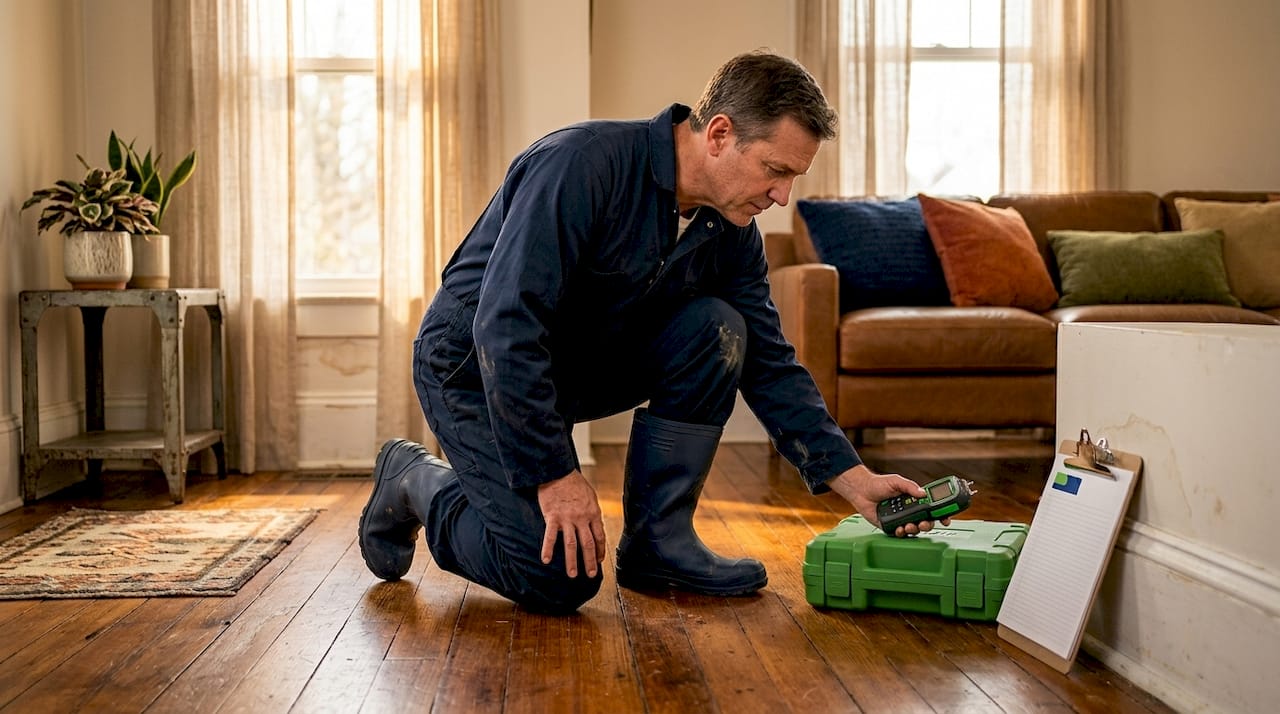
Most homeowners assume the worst is over once the water is gone. That assumption is expensive. What is secondary water damage? It’s the structural and biological destruction that unfolds after the initial flood or leak, driven by trapped moisture your cleanup missed. Up to 40% of total water damage costs come from these secondary effects. Mold, warped floors, corroded metal, and crumbling drywall can silently develop over days or weeks, turning a manageable repair into a full-scale restoration project. Understanding what causes it, how to spot it, and how to stop it is what this article covers.
Table of Contents
- Key takeaways
- What is secondary water damage
- Recognizable effects of secondary water damage
- How to identify secondary water damage
- How to prevent secondary water damage
- My honest take after years in water damage restoration
- Stop secondary damage before it costs you more
- FAQ
Key takeaways
| Point | Details |
|---|---|
| Secondary damage follows the initial event | Moisture left behind after a flood or leak causes a second wave of structural and biological damage. |
| Mold can start within 48 hours | Microbial growth begins fast, making prompt drying one of the most time-sensitive priorities after any water event. |
| Up to 40% of costs come from secondary issues | Peeling paint, warped wood, and hidden rot are not minor inconveniences. They represent a major share of total repair expenses. |
| Documentation protects your insurance claim | Photographing and labeling damage before removal gives adjusters the evidence they need and speeds up your payout. |
| Fast professional response limits the spread | Certified restoration equipment and expertise stop secondary damage before it compounds into a much larger problem. |
What is secondary water damage
In restoration industry terms, this concept is often called “secondary damage” or “consequential moisture damage.” The informal phrase secondary water damage captures the same idea plainly: it is the harm caused not by water contact itself, but by the moisture that lingers after the initial water event has passed.
Primary damage is direct. A pipe bursts and soaks your hardwood floor. That soaking is primary damage. Secondary damage is what happens next. The moisture trapped beneath that floor leads to subfloor rot. The humidity released into the room causes drywall to swell and paint to peel. A week later, mold colonies have established themselves inside your wall cavity where no one can see them.
The timeline matters more than most people realize. Mold growth starts within 48 hours if materials are not dried promptly, and water travels into cracks, drywall, and insulation causing swelling and delamination well before you notice anything on the surface. By the time warping or staining becomes visible, the process has already been underway for some time.
Several factors determine how severe the secondary effects become:
- Water category: Restoration professionals classify water as clean (Category 1), gray (Category 2), or black (Category 3). Category 3 water requires removal of porous materials entirely, while clean water may allow for drying and salvage if handled quickly. The contamination level directly influences how aggressively secondary damage develops.
- Material porosity: Drywall, insulation, carpet padding, and wood absorb and hold moisture long after surfaces feel dry to the touch.
- Ventilation and humidity: Poor airflow in enclosed spaces accelerates microbial growth and slows evaporation.
- Response time: Every hour of delay widens the gap between manageable and catastrophic.
Pro Tip: A surface that feels dry is not necessarily dry. Moisture inside wall cavities and under flooring can persist for weeks without any visible surface sign.
Recognizable effects of secondary water damage
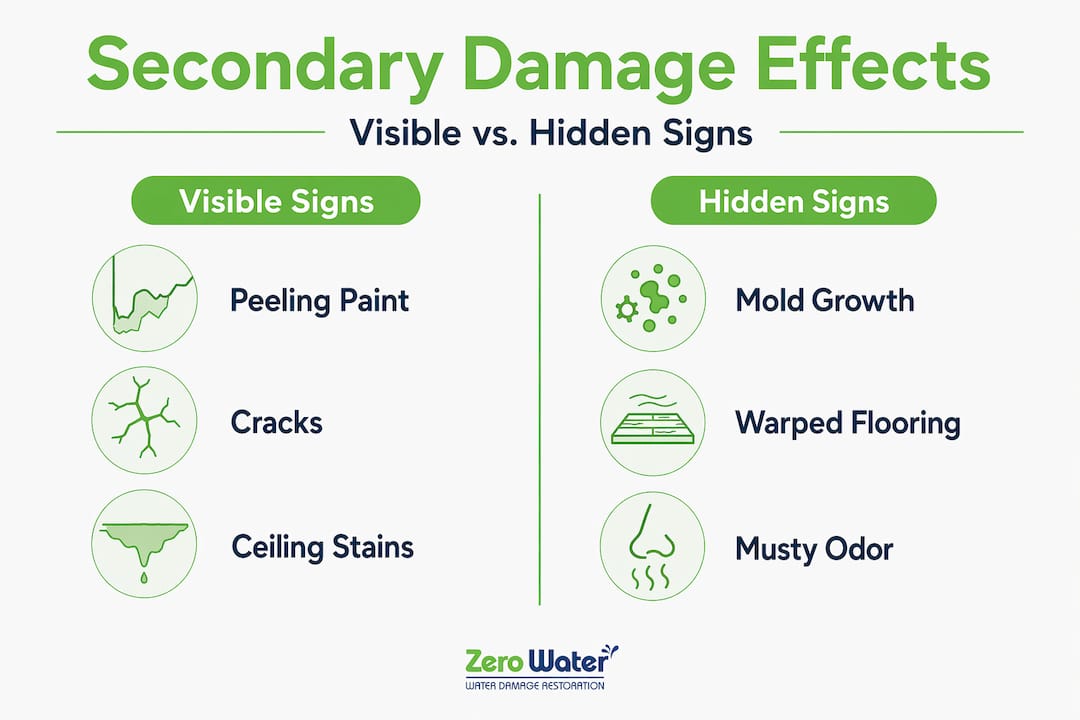
The effects fall into two categories: what you can see, and what you cannot.
Visible signs you should not ignore
Peeling or bubbling paint is one of the earliest indicators of trapped moisture underneath a wall or ceiling surface. Warped baseboards and buckling hardwood floors suggest that wood fibers have absorbed water and expanded beyond their original dimensions. Yellowish or brownish staining on ceilings and walls often marks the boundary of where water traveled, especially after roof leaks or pipe failures above.
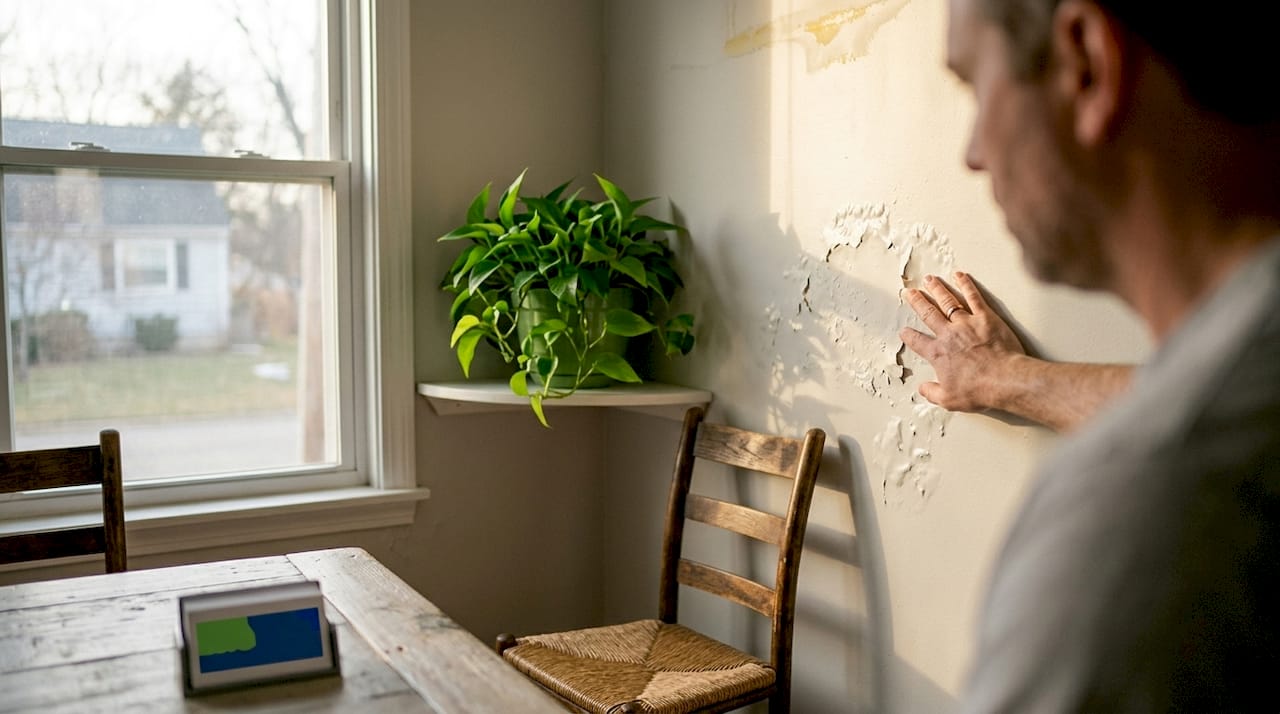
Cracks appearing along drywall seams after a water event are worth taking seriously. They typically indicate that moisture caused the material to swell, then contract unevenly as it partially dried.
Hidden damage that raises your repair bill
| Type of damage | Where it hides | Why it matters |
|---|---|---|
| Mold growth | Inside wall cavities, under flooring, in insulation | Health risk and structural degradation; requires professional remediation |
| Subfloor rot | Beneath tile, hardwood, or laminate | Weakens structural integrity; often requires full floor replacement |
| Rust and corrosion | Around pipes, fasteners, HVAC components | Compromises mechanical systems and can cause future leaks |
| Insulation saturation | Inside exterior and interior walls | Destroys thermal performance; moisture in insulation extends repair duration significantly |
| Window and door frame swelling | Around frames and jambs | Causes sticking, misalignment, and eventual seal failure |
The connection between these hidden effects and total repair costs is direct. Delayed or improper mitigation causes additional avoidable structural and content damage that increases both restoration costs and health risks. The unknown risks of water damage are rarely visible on the surface, which is exactly what makes them so costly.
How to identify secondary water damage
Catching secondary damage early requires looking in places most homeowners skip. The visible damage is rarely the full story.
Here is a practical inspection sequence to follow after any water event:
- Start with smell. A musty or earthy odor in any room is a reliable early indicator of mold growth, even before visible colonies appear. Trust your nose before you trust your eyes.
- Check humidity levels. Use a hygrometer to measure relative humidity throughout your home. Readings above 60% in any room after a water event indicate moisture is still present in materials or air, creating conditions for microbial growth.
- Test surfaces with a moisture meter. These inexpensive tools detect moisture content inside walls, floors, and ceilings that surface touch cannot reveal. Focus on areas adjacent to the primary damage, not just the obviously wet zones.
- Inspect baseboards and corners. Moisture migrates. Water that entered through a ceiling leak may travel laterally through wall framing and show up as soft or discolored baseboard material several feet from the original source.
- Check inside closets and cabinets. Enclosed spaces trap humid air. Cabinets against exterior walls and closets near bathrooms are particularly vulnerable to mold growth after a water event.
- Look for floor movement. Walk slowly across all flooring in and around the affected area. Any sponginess, bounce, or creaking that was not there before indicates subfloor moisture damage.
- Document everything before you touch it. FEMA recommends photographing damage room by room before removing or repositioning any items. This protects your insurance claim and creates an accurate record of the damage extent.
Pro Tip: Do not rely solely on visual inspection. Professional moisture mapping uses thermal imaging cameras to detect moisture behind walls and under flooring that no amount of looking will reveal.
The threshold for calling a professional is lower than most homeowners think. If you find any sign of mold, if moisture readings remain elevated 48 hours after drying began, or if the affected area is larger than 10 square feet, get a certified restoration technician on site.
How to prevent secondary water damage
Speed is the most powerful prevention tool available to you. The faster moisture is removed from materials, the smaller the window for secondary damage to develop.
Here are the practices that matter most:
- Extract water immediately and completely. Wet vacuums and mops remove surface water, but they leave significant moisture in porous materials. Professional extraction equipment removes far more. If the water intrusion is anything beyond a minor spill, equipment that goes beyond consumer tools is worth the investment.
- Run dehumidifiers continuously. Portable dehumidifiers pull moisture from the air, which in turn draws moisture out of walls and floors. Proper humidity control is the single most effective mold prevention measure available during the drying phase.
- Increase ventilation. Open windows and doors where outdoor humidity is lower than indoor humidity. Use box fans to circulate air through affected rooms and accelerate evaporation. More air changes per hour mean faster drying.
- Remove saturated materials promptly. Wet carpet padding, drywall, and insulation that cannot be thoroughly dried within 24 to 48 hours should be removed rather than dried in place. Keeping saturated porous materials creates a guaranteed mold environment. The emergency water mitigation process specifically addresses which materials to save and which to remove.
- Make temporary repairs to stop new water entry. Roof tarps, plastic sheeting over broken windows, and shut-off valves for leaking pipes all prevent additional water from entering while restoration is underway.
- Separate damaged belongings from undamaged ones. FEMA advises separating damaged property and saving all receipts. Wet belongings left in contact with dry ones transfer moisture and extend the damage zone.
- Communicate with your insurer early. Notify your insurance company as soon as possible and document every step you take. Delayed notification can complicate claims, and some policies require prompt action to remain valid. The water damage restoration timeline provides a clear picture of what insurers expect at each phase.
- Protect your home before major weather events. Gutter maintenance and proper drainage reduce the likelihood of water entry. Clogged gutters are a surprisingly common source of exterior wall moisture intrusion.
My honest take after years in water damage restoration
I have watched homeowners make the same mistake hundreds of times. The water gets cleaned up, the visible wet materials get replaced, and then they wait. They assume the problem is solved because it looks solved. Three weeks later they call back because there is a black stain spreading across the ceiling, or the floor in the next room has started to bounce.
What I have learned is that secondary damage is almost always a failure of follow-through. The initial cleanup happens, then the urgency fades. People go back to work, kids go back to school, and monitoring the drying process falls through the cracks. Moisture meters get set down. Dehumidifiers get turned off because the air feels dry. Then biology takes over.
The properties that avoid serious secondary damage share one consistent factor. Someone stayed focused on the drying process and measured it rather than guessing at it. That is not complicated advice, but it is harder to follow in practice than it sounds. Life does not pause because your basement flooded.
The other thing I would push back on is the idea that DIY cleanup is always good enough for medium-sized water events. A shop vac and some fans work fine for a small leak caught immediately. For anything involving more than a couple hundred square feet, or anything involving Category 2 or 3 water, professional drying equipment and monitoring is not a luxury. It is what actually stops secondary damage from developing. The cost of professional mitigation is nearly always less than the cost of the mold remediation and structural repairs that follow when mitigation is inadequate.
— Jim
Stop secondary damage before it costs you more
If you are dealing with water damage right now, the clock is running. Secondary damage does not announce itself until it has already become a significant problem, and by then the repair scope has grown considerably.
Zero Water Restoration responds 24 hours a day, seven days a week, because water damage does not wait for business hours. The team brings professional extraction, drying, and monitoring equipment to stop secondary damage before it develops, and handles full-scope water damage restoration in Barrington and throughout the northwest Chicago suburbs. If mold has already appeared, the mold remediation services team addresses it completely. Zero Water Restoration also works directly with insurance adjusters to manage documentation and keep out-of-pocket costs down. Call (847) 515-7000 or visit zerowaterrestoration.com for a free inspection.
FAQ
What is secondary water damage?
Secondary water damage refers to the structural and biological harm that develops after the initial water event, caused by trapped moisture that was not fully removed during cleanup. Common examples include mold growth, warped wood, corroded metal, and saturated insulation.
How soon does secondary water damage start?
It can begin within 24 to 48 hours of the initial water event. Mold growth in particular can establish itself within 48 hours in warm, humid conditions if materials are not dried promptly.
What are the signs of secondary water damage?
Key signs include musty odors, peeling or bubbling paint, warped floors or baseboards, yellowish ceiling stains, sticky or misaligned doors and windows, and visible mold growth. Elevated moisture meter readings in adjacent rooms are also a strong indicator.
Can you prevent secondary water damage yourself?
Partial prevention is possible with fast water extraction, continuous dehumidification, and ventilation. However, for events covering more than a small area or involving contaminated water, professional drying equipment and moisture monitoring provide much more reliable protection against secondary effects.
Does insurance cover secondary water damage?
Most homeowner policies cover secondary water damage when it results from a covered event and the homeowner takes prompt, documented steps to mitigate further damage. Reviewing your insurance claim process early and notifying your insurer quickly improves your chances of full coverage.