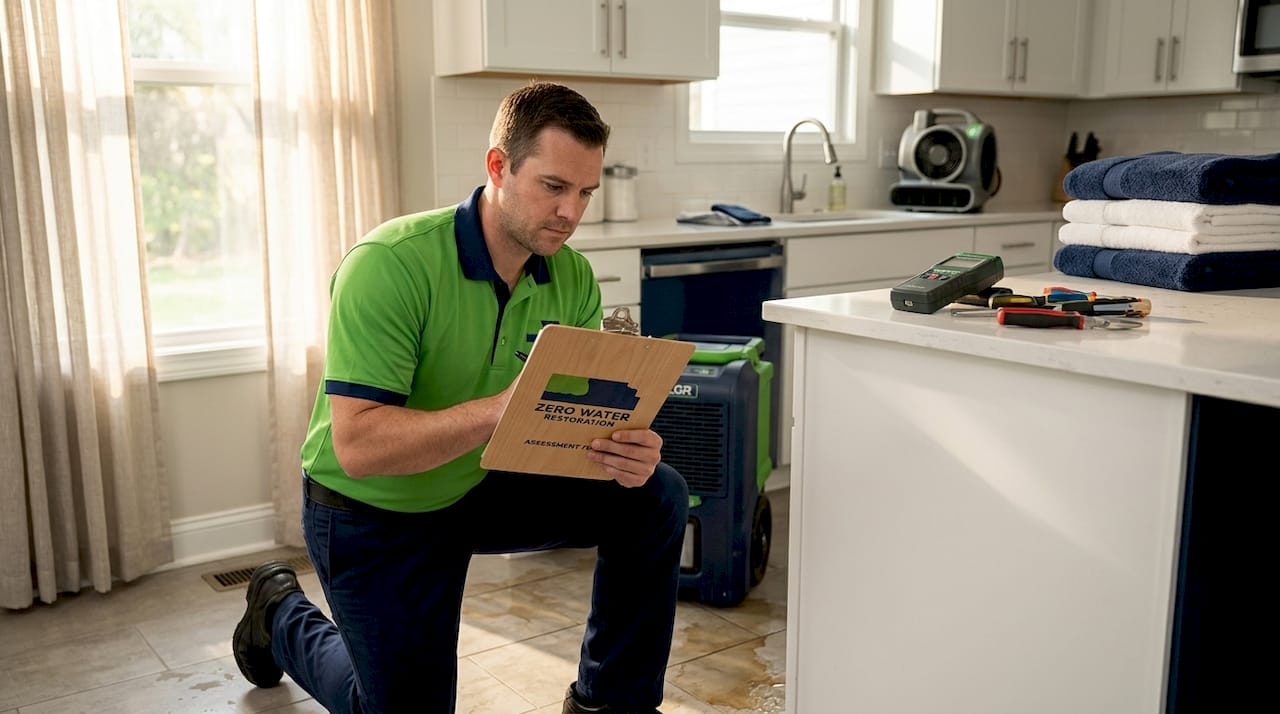
Flooding does not end when the water recedes. That is the part most homeowners get wrong. The moment standing water disappears, many people assume the threat is over. But how restoration prevents mold after flooding is a story that begins right there, in those first few hours after the flood. Mold spores germinate in as little as 24 hours under the right conditions, and wet drywall, soaked insulation, and saturated wood give those spores everything they need. What you cannot see is often what causes the most damage.
Table of Contents
- Key takeaways
- How restoration prevents mold after flooding: the critical timeline
- Key steps in professional flood restoration to stop mold
- How professionals assess mold risk and make salvage decisions
- Safety precautions during the restoration process
- My take on why mold prevention is mostly about monitoring, not cleanup
- Zero Water Restoration: your partner in post-flood mold prevention
- FAQ
Key takeaways
| Point | Details |
|---|---|
| 24-hour mold clock starts immediately | Mold can begin colonizing wet materials within 24 to 48 hours, so response time is everything. |
| Visual dryness is misleading | Surfaces that look dry can still hold dangerous moisture levels inside structural materials. |
| Professional drying requires more than fans | Industrial dehumidifiers and moisture meters are required to safely bring humidity down and confirm drying. |
| Porous materials often must be removed | Drywall, carpet padding, and insulation saturated beyond 48 hours typically cannot be salvaged safely. |
| Restoration follows a strict sequence | Moisture source removal must happen before cleanup, or mold will return regardless of what products are used. |
How restoration prevents mold after flooding: the critical timeline
The single biggest factor in whether a flood turns into a mold problem is time. Mold colonies can appear within 48 to 72 hours of water exposure, meaning the window for effective intervention is brutally short. Most homeowners do not realize how little time they have until they are already past it.
Here is what the timeline actually looks like after a flood event:
- 0 to 2 hours: Water is still present or just receding. Spores in the environment begin contacting wet surfaces immediately.
- 2 to 24 hours: Spores on saturated porous materials start germinating. Warmth and limited airflow accelerate the process.
- 24 to 48 hours: Active mold growth begins on drywall, wood framing, and carpet. Odor may not yet be detectable.
- 48 to 72 hours: Visible colonies form. Structural materials that have not been dried or removed become significantly harder to salvage.
- Beyond 72 hours: Mold spreads to adjacent areas through spore dispersal. Remediation scope and cost grow substantially.
The 48-hour benchmark is not arbitrary. It is the industry standard that professional restorers use to make salvage decisions, and it is why a fast response matters more than almost anything else.
“A home that gets professional extraction and drying started within six hours of a flood has a dramatically different outcome than one that waits two days. The materials are the same. The difference is timing.” — Water damage restoration industry guidance
Pro Tip: Do not wait until you smell something musty to call a restoration company. By the time mold has an odor, it has already been growing for days. Moisture monitoring needs to start before any visible signs appear.
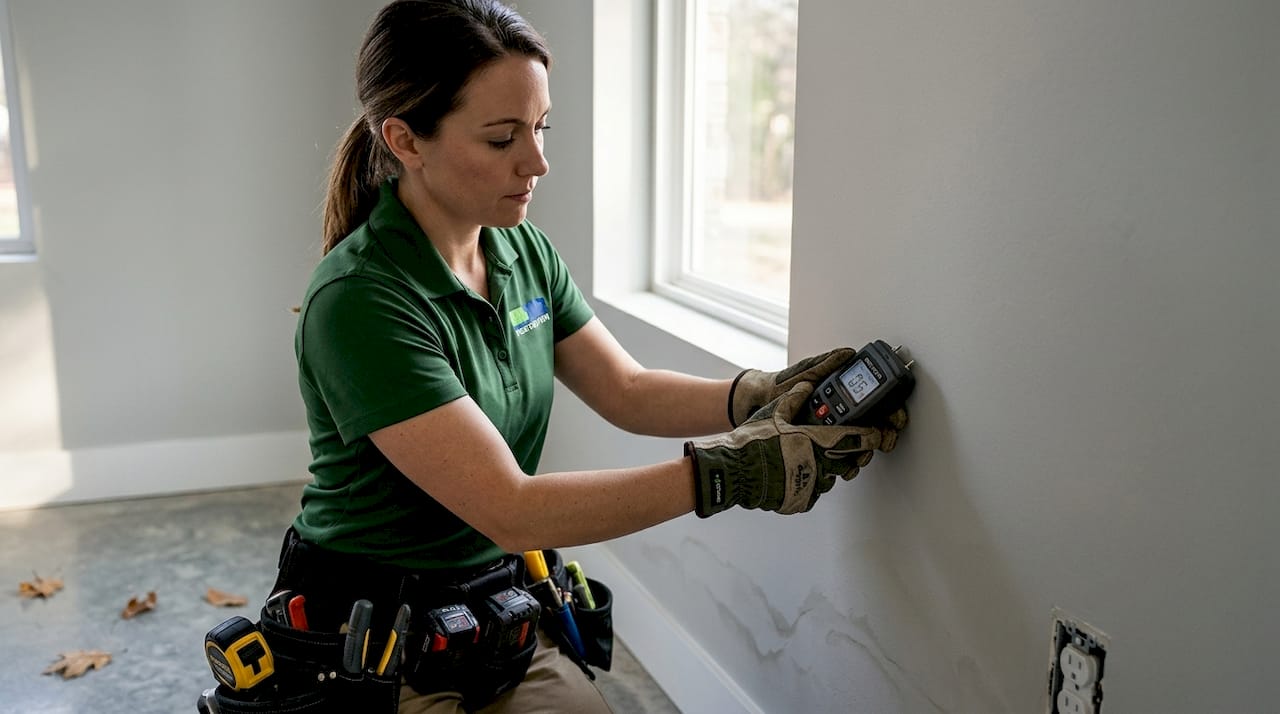
Moisture meters detect hidden moisture inside walls and floors that looks and feels dry on the surface. That is one of the most important tools in post-flood mold prevention, and it is something most homeowners simply do not have access to on their own.
Key steps in professional flood restoration to stop mold
Professional restoration is not just drying things out. It is a structured sequence of steps, each one designed to remove conditions that allow mold to take hold. Skipping or rushing any step puts the whole process at risk.
-
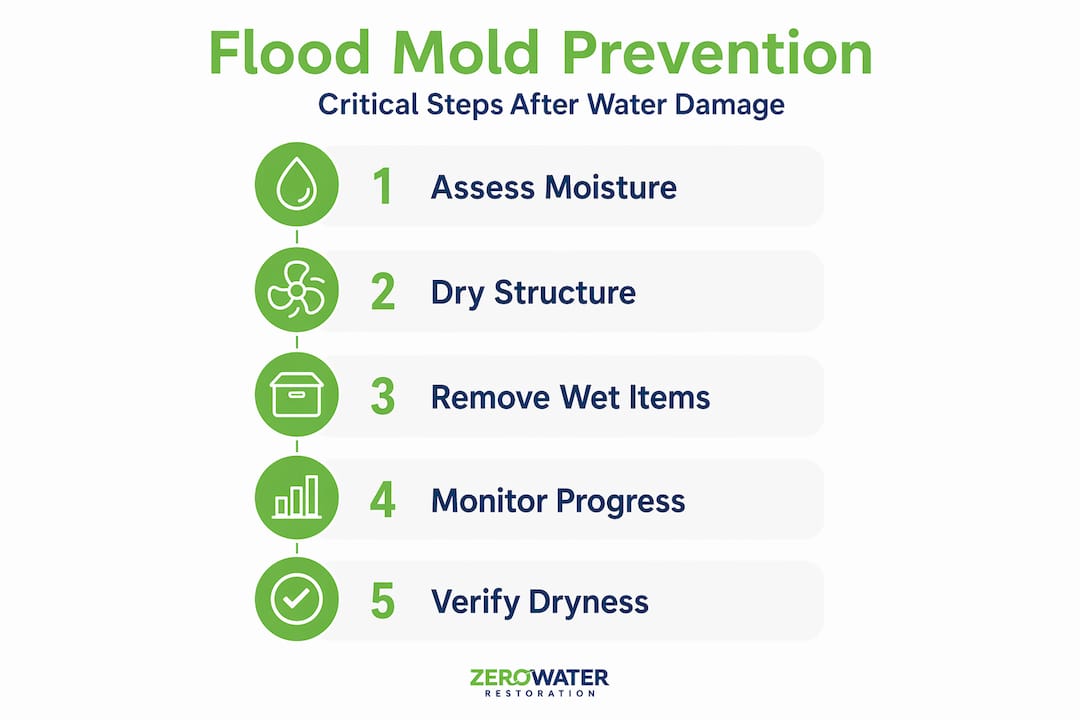
Identify and stop the water source. Whether it is a broken pipe, storm intrusion, or sewer backup, the source must be fully stopped before any drying begins. Continuing to introduce moisture defeats everything that follows.
-
Extract standing water immediately. Industrial wet vacuums and truck-mounted extraction units remove water far faster than consumer-grade equipment. Speed here directly compresses the mold growth window.
-
Remove saturated porous materials. Porous materials saturated beyond 48 hours must typically be discarded. This includes drywall, carpet padding, and fiberglass insulation. These materials trap moisture inside where drying equipment cannot reach effectively.
-
Set up industrial drying equipment. Commercial dehumidifiers rated at 100 to 200-plus pints per day, combined with high-velocity air movers, create the airflow and vapor pressure differential needed for structural drying. Fans alone are not sufficient.
-
Maintain indoor humidity between 30% and 50%. Industrial dehumidifiers are required to hold this range consistently during the drying process, which can take days to weeks depending on damage severity.
-
Monitor moisture daily with meters. Substrate moisture content inside walls and floors must be tracked throughout drying. Ambient humidity readings alone are lagging indicators that do not tell you what is happening inside a wall cavity.
-
Clean and disinfect all affected surfaces. After drying, surfaces need antimicrobial treatment to eliminate mold food sources and any residual spore presence. This step is preparation for reconstruction, not a substitute for the steps above.
Pro Tip: Running fans without dehumidifiers after a flood can actually raise indoor humidity levels. Structural drying works when evaporation, dehumidification, and air movement happen together. Remove the dehumidifier from the equation and fans become part of the problem, not the solution.
Understanding the full water damage restoration timeline helps you know what to expect at each phase and why each step takes the time it does.
How professionals assess mold risk and make salvage decisions
Not everything wet needs to be removed. But knowing what to save and what to tear out requires more than a visual inspection. Professionals use moisture meters, thermal imaging cameras, and material-specific thresholds to make those calls accurately.
Here is how the decision breaks down by material type:
| Material | Moisture threshold for removal | Can it be dried in place? |
|---|---|---|
| Drywall (gypsum board) | Above 1% moisture content or wet beyond 48 hours | Rarely. Paper facing traps moisture and feeds mold directly. |
| Wood framing | Above 19% moisture content | Yes, if caught early and dried quickly with monitoring. |
| Carpet and padding | Any saturation from Category 2 or 3 water | Padding almost never. Carpet depends on saturation level and water type. |
| Fiberglass insulation | Any saturation | No. Loses R-value and holds moisture without visual indication. |
| Concrete subfloor | High moisture readings with no visible damage | Often can be dried, but requires thorough monitoring. |
The governing standard for these decisions is ANSI/IICRC S520, which requires that moisture sources be fully corrected before or during mold remediation. If moisture remains in the substrate, mold will return regardless of how thoroughly surfaces are cleaned.
One of the most common misconceptions in mold prevention after a basement flood is that antimicrobial sprays and fogging can solve the problem without removing materials. They cannot. Spraying alone is cosmetic. Mold hyphae penetrate porous materials, and the mycotoxins they produce cannot be eliminated by surface treatments. Physical removal of contaminated materials is the only reliable path forward.
Thermal imaging fills in gaps that moisture meters miss by revealing temperature differentials in walls and ceilings where moisture is pooling behind intact surfaces. A wall can look completely dry and still be holding enough moisture to sustain mold growth for weeks. Knowing about common mold types after flooding also helps professionals prioritize which areas need the most urgent attention.
Safety precautions during the restoration process
Flood restoration is not just a property problem. It is a health situation. Floodwaters frequently carry sewage, bacteria, and chemical contaminants, and disturbing wet or moldy materials without proper protection puts both workers and occupants at real risk.
Key safety measures that must be in place throughout the process:
- Respirators are not optional. OSHA mandates N95 or P100 respirators for any mold cleanup exceeding 10 square feet or involving Category 3 (sewage-affected) water. Consumer dust masks do not filter mold spores adequately.
- Gloves and eye protection must be worn throughout. Contaminated floodwater contains pathogens that absorb through skin and mucous membranes. Nitrile gloves and safety goggles are the minimum standard.
- Containment barriers control spore spread. 6-mil polyethylene sheeting with negative air pressure seals off the work area and prevents disturbed mold spores from traveling to unaffected parts of the home. This step is frequently skipped in DIY attempts and frequently causes the problem to spread.
- Occupants, especially vulnerable individuals, should not be present. Children, elderly residents, and anyone with respiratory conditions, allergies, or compromised immune systems should stay elsewhere during active remediation.
- DIY attempts on large-scale or contaminated floods create more risk than they solve. Tearing out wet drywall without containment, proper PPE, or moisture monitoring can scatter spores through an entire home in minutes.
The distinction between a manageable water event and a serious mold situation often comes down to how safely and thoroughly those first 48 hours are handled. Cutting corners on safety does not save money. It usually just expands the scope of the problem.
My take on why mold prevention is mostly about monitoring, not cleanup
I have been doing this work long enough to say something that surprises most homeowners: the cleanup part is not actually the hardest part of mold prevention. The hardest part is knowing when you are done drying.
I have seen homes where crews pulled materials, set up drying equipment, and handed the job back to the homeowner after a couple of days. The place looked fine. It smelled fine. Then six weeks later, the homeowner called back with mold growing behind the new drywall because nobody confirmed that the framing was actually dry before closing the wall.
Visual dryness is a lagging indicator. It tells you what happened at the surface. It tells you nothing about what is happening two inches inside a wall. In my experience, the most important thing a restoration team does is not the water extraction, as critical as that is. It is the daily moisture readings and the willingness to say “we are not dry yet” when a homeowner wants to move forward.
The mold remediation process only works when moisture monitoring drives every decision from start to finish. Act before mold is visible. Act before you smell something. The meter is the authority, not your eyes.
— Jim
Zero Water Restoration: your partner in post-flood mold prevention
When you are dealing with flooding, the clock starts the moment water touches your floors. Zerowaterrestoration provides 24/7 emergency response throughout Schaumburg and the northwest Chicago suburbs, arriving fast with the industrial extraction and drying equipment needed to protect your home from mold before it takes hold.
Their team handles every phase: water extraction, structural drying, moisture mapping, contaminated material removal, and full mold remediation services that meet IICRC standards. They also work directly with your insurance provider to document damage, communicate with adjusters, and keep your out-of-pocket costs as low as possible.
If you have had a flood, do not wait to see if a problem develops. Call Zerowaterrestoration at (847) 515-7000 or visit zerowaterrestoration.com for a free inspection and estimate. Fast response is the difference between a dry home and a mold problem.
FAQ
How quickly does mold grow after flooding?
Mold spores can begin germinating within 24 hours of water exposure on wet porous materials, with visible colonies forming in 48 to 72 hours. Acting within the first 24 to 48 hours dramatically reduces the risk of widespread mold growth.
What is the most important step in post-flood mold prevention?
Eliminating the moisture source and beginning structural drying immediately is the most critical step. According to IICRC S520 standards, moisture must be fully corrected before or during mold remediation, or mold will return after cleanup.
Can I prevent mold after a basement flood by drying it myself?
Small, clean water events on non-porous surfaces can sometimes be managed with consumer equipment. However, basement floods involving saturated drywall, insulation, or carpet almost always require professional-grade dehumidifiers, moisture meters, and proper containment to prevent mold effectively.
Do antimicrobial sprays prevent mold after flooding?
No. Spraying or fogging contaminated porous materials is a surface treatment only. Mold hyphae penetrate into drywall and wood, and physical removal of saturated materials is required before antimicrobial products can be effective.
How do restoration professionals know when a flood-damaged home is truly dry?
Professionals use pin-type moisture meters to measure substrate moisture content inside walls and floors, not just surface readings. Drying is confirmed only when moisture levels fall within acceptable thresholds for each specific material, not when the area simply looks or feels dry.