
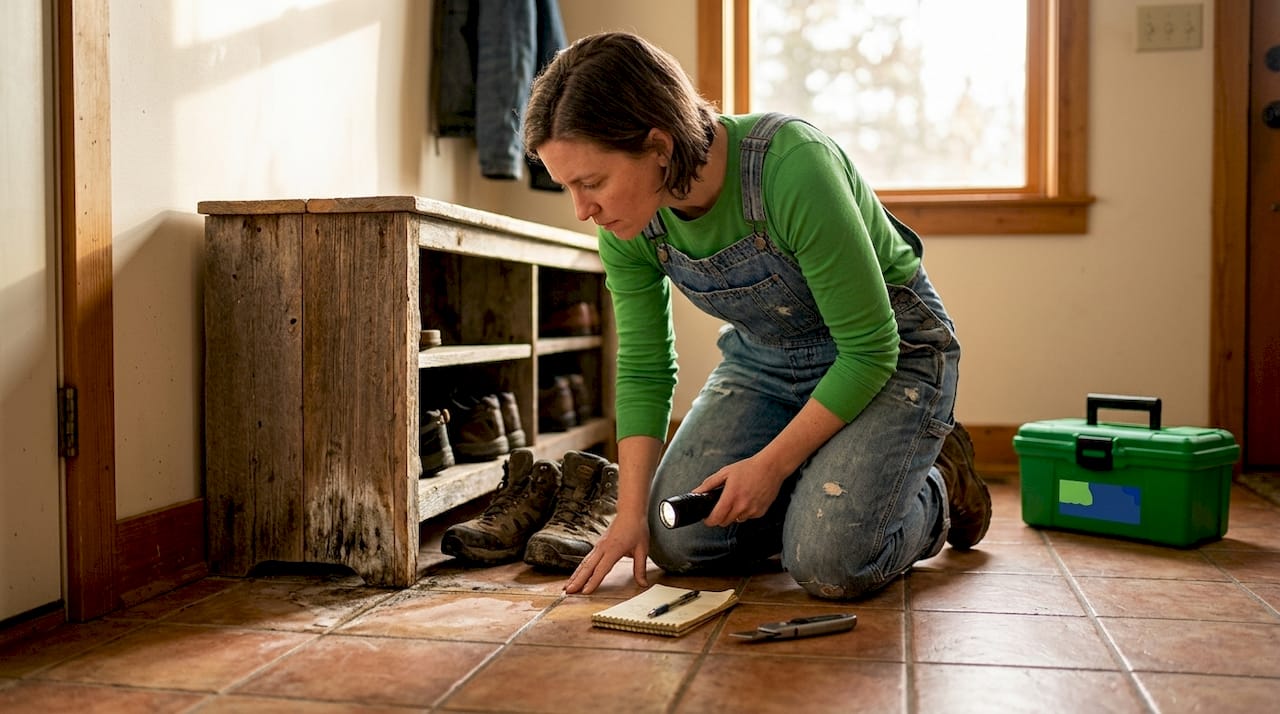
Water leaks and mold are almost always a package deal. The moment moisture soaks into your walls, floors, or ceiling, the clock starts ticking on potential mold growth. The tricky part is that some of the most serious examples of mold growth after leaks happen completely out of sight, behind drywall or under carpet, where you won’t notice anything until the damage is already significant. This article walks you through real scenarios, the types of mold you’re most likely to encounter, how to spot the warning signs early, and what it actually takes to stop mold from taking over your home.
Table of Contents
- Key Takeaways
- 1. Common examples of mold growth after leaks
- 2. Signs of mold after leaks you should not ignore
- 3. Factors that control how fast mold develops after a leak
- 4. Comparison of common mold types found after leaks
- 5. Preventing mold growth and remediation strategies that actually work
- What I have learned after years of mold calls
- Got mold? Zerowaterrestoration responds fast
- FAQ
Key Takeaways
| Point | Details |
|---|---|
| Mold starts faster than expected | Mold can begin germinating within 24 to 48 hours of moisture exposure. |
| Hidden growth is the bigger threat | Mold often colonizes behind drywall and under carpets before any visible signs appear. |
| Porous materials need fast action | Drywall and carpet pads have a narrow drying window before removal becomes necessary. |
| Odor is an early warning signal | A musty smell without visible mold is a reliable indicator of hidden mold growth. |
| Fixing moisture stops recurrence | Cleaning mold without addressing the underlying leak leads to the same problem every time. |
1. Common examples of mold growth after leaks
Understanding where and how mold typically shows up after a leak is the first step toward catching it before it spreads. These scenarios are not hypothetical. They are what Zerowaterrestoration crews see regularly across Chicagoland homes.
Mold on drywall from pipe leaks. A slow leak behind a bathroom wall can saturate paper-faced drywall over weeks without triggering any obvious alarm. The paper backing is an ideal food source for Stachybotrys chartarum, the organism most people call black mold. By the time a homeowner notices discoloration or soft spots, the colony is already well established.
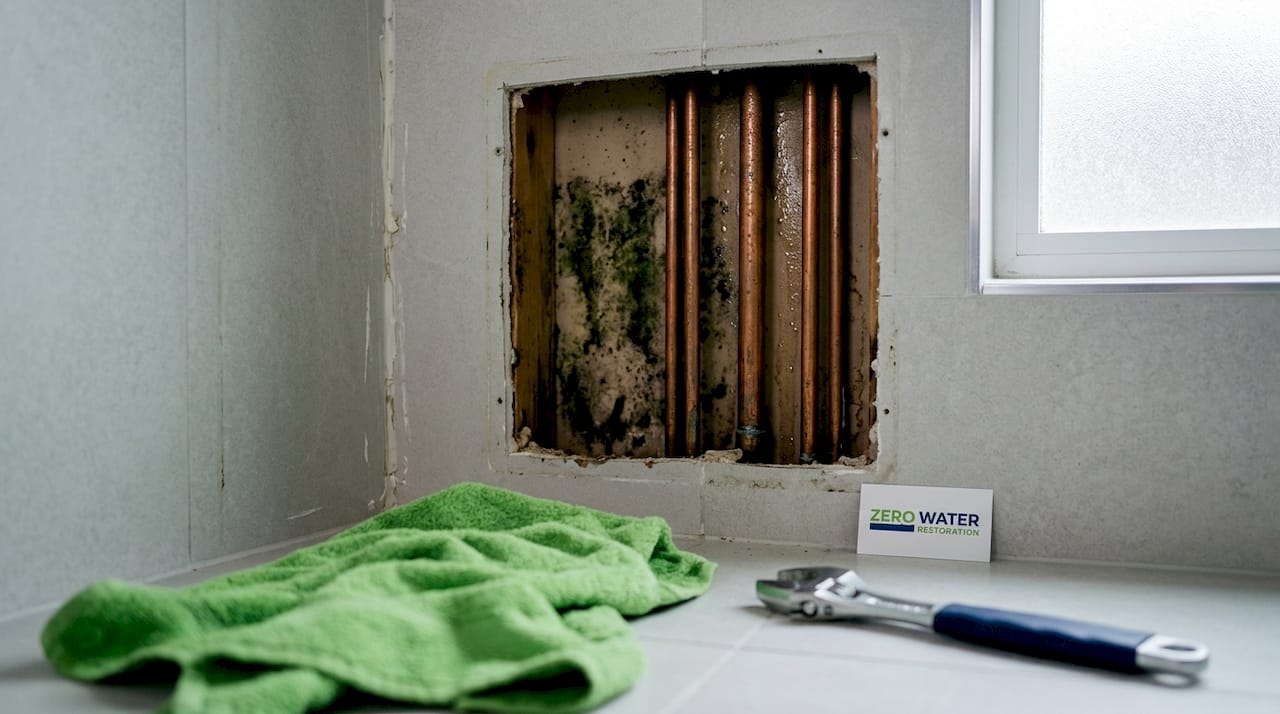
Aspergillus on carpet and pad. When water from a roof leak or appliance failure soaks into carpet, the pad underneath holds moisture far longer than the surface. Aspergillus species thrive in exactly this environment. The carpet may feel dry to the touch within a day or two, but the pad beneath is still wet and already growing mold.
Cladosporium on window frames and HVAC vents. Condensation leaks around windows and poor HVAC insulation create low-level but persistent moisture. Cladosporium, which appears as dark green or black powdery patches, is the most common result. It spreads easily through air movement, which means an HVAC system with hidden growth can distribute spores throughout your entire home.
Ulocladium on wallpaper and paneling. This less well-known species thrives on water-damaged cellulose materials. If your home has wallpaper or wood paneling near a leak source, Ulocladium is a likely culprit. It typically presents as dark brown or black patches that look similar to dirt staining.
Hidden growth in ceiling tiles and ductwork. According to EPA guidance, mold can grow behind drywall, inside walls around pipes, and inside ductwork where visual inspection simply cannot reach. One Kansas City family discovered elevated hidden mold concentrated in areas they had no reason to check, despite multiple repair attempts on visible leaks.
Pro Tip: Press firmly on drywall near any known leak area. If it feels soft or crumbles slightly, there is almost certainly mold growing on the back face of the panel, even if the painted surface looks fine.
2. Signs of mold after leaks you should not ignore
You do not need to see mold to know it is there. Most mold growth causes problems long before you get a visual confirmation.
- Musty or earthy odor in a room that persists even after cleaning or airing out. The Minnesota Department of Health notes that odor and moisture smell are critical clues to hidden growth when nothing visible is present.
- Discoloration or staining on walls, ceilings, or floors. Yellowish rings, grayish patches, or dark streaking often indicate moisture that has been sitting long enough to support growth.
- Bubbling or peeling paint and wallpaper. Moisture trapped behind the surface creates the telltale bubbles and curling edges that almost always precede visible mold.
- Recurring respiratory symptoms among occupants. Sneezing, coughing, and eye irritation that improve when people leave the house and return when they come back is a pattern worth taking seriously.
- Visible patches of various colors. Mold can appear black, green, white, or even orange depending on the species and substrate. Do not assume a white fuzzy growth is harmless or that only black growth is dangerous.
Check the spots most likely to harbor hidden mold: the back of drywall near plumbing, under bathroom and kitchen flooring, inside HVAC vents, and the underside of subfloor joists in basements and crawl spaces.
Pro Tip: Use a flashlight and a handheld hygrometer near suspected areas. If the surface humidity reads above 60%, mold germination is already a real possibility even if nothing is visible yet.
3. Factors that control how fast mold develops after a leak
Mold growth after a leak is not random. Several specific factors determine whether your home gets a manageable spot of surface mold or a serious infestation inside the walls.
| Factor | Details | Impact on mold risk |
|---|---|---|
| Time wet | Materials wet beyond 48 hours are high risk | Very high: the most critical variable |
| Surface type | Porous (drywall, carpet pad) vs. non-porous (tile, glass) | Porous materials grow mold significantly faster |
| Temperature | Between 60°F and 80°F is prime growth range | Higher temps accelerate colony formation |
| Humidity | Above 60% relative humidity triggers germination | Threshold condition for mold to start |
| Water category | Clean water vs. gray or black water | Contaminated water introduces more mold-prone organic material |
| Ventilation | Poor airflow extends drying time and raises local humidity | Increases risk dramatically in enclosed spaces |
The 24 to 48 hour window is the number that matters most. Water-damaged materials that dry within that timeframe are unlikely to develop mold colonies. Beyond that window, the problem escalates quickly. Germination starts within those first two days, but visible colonies take 1 to 2 weeks to form, which is exactly why people are often shocked at how much mold they find when they open a wall they thought was fine.
4. Comparison of common mold types found after leaks
Not all mold behaves the same way, and knowing which type you are dealing with affects both the urgency and approach of remediation.
| Mold type | Color and appearance | Common locations | Health concern |
|---|---|---|---|
| Stachybotrys (black mold) | Slimy black or dark greenish-black | Paper drywall, wood behind walls | High: associated with respiratory and neurological symptoms |
| Aspergillus | White, green, or yellow with powdery texture | Carpets, insulation, HVAC | Moderate to high: causes respiratory illness, especially in sensitive individuals |
| Cladosporium | Dark green or black, powdery | Window frames, bathroom grout, ductwork | Moderate: common allergen, worsens asthma |
| Ulocladium | Dark brown or black | Wallpaper, painted surfaces near leaks | Moderate: allergenic, often mistaken for dirt |
| Penicillium | Blue-green with white edges | Insulation, carpets, furniture | Moderate: rapidly spreading spores, strong allergen |
One important point that many homeowners miss: visual identification is unreliable when it comes to mold species. Lab testing is sometimes necessary for an accurate diagnosis. More practically, the health evidence is stronger for dampness and mold exposure in general than for any specific species. All mold in a damp environment poses a health risk and should be removed. You can read more about how different mold types show up after flooding in this guide for Chicagoland homeowners.
5. Preventing mold growth and remediation strategies that actually work
Once you know the risk factors, you can take steps that make a real difference. Here is what works, in order of priority.
- Act within the first 48 hours. Use fans, dehumidifiers, and open windows to dry affected areas as quickly as possible. This single step, done fast, prevents the majority of mold problems from ever starting.
- Fix the source before anything else. Cleaning mold off a surface while an active leak continues is pointless. Moisture is the root cause, and removing it permanently is the only way to prevent recurrence. Proper pipe leak detection is the first step when a hidden plumbing leak is suspected.
- Assess what can be saved and what has to go. Porous materials like drywall, insulation, and carpet pads that have been wet for more than 48 to 72 hours generally need to be removed rather than cleaned. Non-porous surfaces like tile and metal can be cleaned and dried.
- Use the right protective gear. If you handle any mold removal yourself on small areas (under 10 square feet), wear an N-95 respirator, gloves, and eye protection. Avoid creating airborne spores by scrubbing aggressively.
- Call a professional for anything significant. If water has been sitting for more than two days, if the affected area is larger than 10 square feet, or if you suspect growth inside walls or ducts, professional remediation is the right call. The Zerowaterrestoration step-by-step remediation guide walks through exactly what a professional process looks like.
- Inspect regularly after any leak event. Check affected areas weekly for at least a month after restoration. New growth can appear from spores that survived the initial cleanup if any moisture source remains.
Pro Tip: After any water leak, even a small one, use your nose. Walk slowly through every room near the event. A musty odor that was not there before is more reliable than your eyes for catching hidden mold early.
What I have learned after years of mold calls
I have walked into hundreds of homes after water damage events, and there is a pattern I see constantly. The homeowner patched the leak, dried what they could see, and assumed the problem was solved. Then weeks or months later they are dealing with a mold situation several times worse than what they would have faced if they had called sooner.
The part that surprises people most is how invisible the worst cases are. Stachybotrys growing on the back of drywall leaves no obvious clue on the painted side for weeks. A basement carpet that smells fine to someone who walks through daily is running the nose blind from constant exposure. That is a real thing, and it leads people to underestimate what is happening.
My honest take is that most homeowners treat small leaks like inconveniences rather than emergencies. A slow drip under a sink that gets fixed in a week has still created seven days of potential mold growth in a cabinet full of porous particleboard. That material almost never dries out fully in an enclosed space. I have seen significant mold colonies come from leaks that lasted less than 10 days.
The balance between DIY and professional help is real, but the threshold is lower than most people think. Small, contained surface mold on non-porous materials is a legitimate DIY job. Anything inside a wall cavity, under flooring, or in a crawl space is not. The protective value of professional remediation in those cases is not just about mold removal. It is about confirming that the moisture source is gone and the structural materials are sound.
— Jim
Got mold? Zerowaterrestoration responds fast
If you are dealing with a leak or you suspect hidden mold growth in your home, the window for the least costly solution is short. The longer moisture sits in walls, floors, and structural materials, the deeper the damage goes and the more extensive the remediation becomes.

Zerowaterrestoration serves homeowners across Schaumburg, Arlington Heights, Palatine, Barrington, and the entire northwest Chicago suburbs. The team is available 24/7 for emergency response, handles everything from water extraction to full structural restoration, and works directly with your insurance provider to manage documentation and reduce your out-of-pocket costs. For professional mold remediation services or to get a free inspection after a water leak, call (847) 515-7000 or visit zerowaterrestoration.com.
FAQ
How fast does mold grow after a water leak?
Mold can begin germinating within 24 to 48 hours of moisture exposure, though visible colonies typically take one to two weeks to form. Acting within the first 48 hours is the most effective way to prevent mold from establishing.
What are the first signs of mold after a leak?
The earliest signs include a musty or earthy odor, bubbling or peeling paint, and discoloration on walls or ceilings. Respiratory symptoms among occupants that improve away from home are also a strong indicator of hidden mold growth.
Is all mold after a leak dangerous?
All indoor mold in a damp environment poses a health risk and should be removed regardless of species. Health risks from mold exposure are linked to dampness and mold broadly, not only to specific types like black mold.
Can mold grow inside walls without visible signs?
Yes. Mold commonly colonizes behind drywall, under flooring, inside ductwork, and around pipes without producing visible signs on finished surfaces for weeks. A persistent musty smell is often the only detectable clue until significant growth has already occurred.
When should I call a professional for mold removal?
Call a professional if the affected area exceeds 10 square feet, if water has been sitting for more than 48 to 72 hours, or if you suspect mold inside wall cavities, under flooring, or in HVAC systems. Hidden mold requires specialized detection and containment that DIY methods cannot reliably provide.