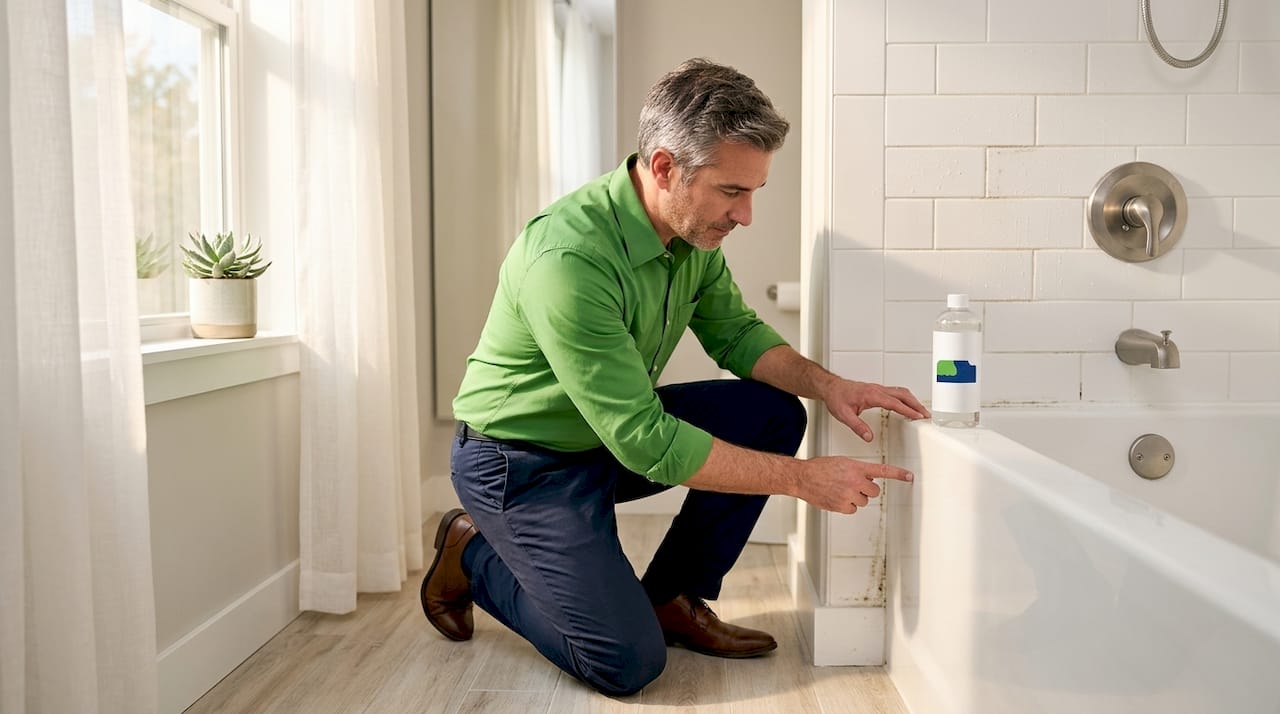
If you discovered mold after a pipe burst or basement flood, your first instinct was probably to grab bleach and scrub it off. That instinct is wrong, and it could make things significantly worse. What is mold remediation? It is not cleaning. It is a structured, multi-phase process designed to permanently eliminate mold by addressing why it grew in the first place. For homeowners in Schaumburg, Arlington Heights, Palatine, and across the northwest Chicago suburbs, understanding this distinction is the difference between solving a mold problem and temporarily hiding one.
Table of Contents
- Understanding mold and why remediation matters
- What is mold remediation? The complete process explained
- Step-by-step mold remediation: what homeowners can expect
- The critical role of moisture control in mold remediation
- Mold remediation standards and why choosing professionals matters
- Why many homeowners misunderstand mold remediation and how to avoid pitfalls
- Professional mold remediation services in northwest Chicago suburbs
- Frequently asked questions
Key Takeaways
| Point | Details |
|---|---|
| Mold remediation defined | Mold remediation is a professional multi-step process that includes moisture control, containment, removal, cleaning, and verification. |
| Moisture control is key | Eliminating moisture through repairs and drying is essential to prevent mold from returning after remediation. |
| Containment protects health | Proper containment and filtration prevent mold spores from spreading during remediation work. |
| Professional standards matter | Following EPA and IICRC S520 standards with independent verification ensures safe and effective mold removal. |
| Timely expert action | Engaging certified professionals quickly after water damage protects your home and family’s health. |
Understanding mold and why remediation matters
Mold is not a surface problem. It is a symptom of a moisture problem. After any water intrusion, whether from a burst pipe, roof leak, or storm flooding, mold can begin growing within 24 to 48 hours if conditions are right. The northwest Chicago suburbs see a full range of weather extremes, and that seasonal cycle of freeze, thaw, and humidity creates a constant risk of water damage that leads directly to mold.
The core issue is straightforward: mold needs three things to grow. Moisture. Organic material to feed on. And a surface to colonize. Your drywall, wood framing, and carpet all qualify as food. All mold needs from you is a wet environment, and your home provides that the moment water damage goes unaddressed.
Understanding the mold types after flooding common in Chicagoland helps explain why certain areas of your home are higher risk than others. Basements, crawl spaces, and interior wall cavities are the most vulnerable because they hold moisture longest and have limited air circulation.
The health risks are real. Mold exposure can cause respiratory issues, allergic reactions, and chronic irritation, particularly for children, elderly residents, and anyone with asthma or immune system challenges. The structural risks are equally serious. Left untreated, mold deteriorates wood framing, insulation, and drywall to the point where replacement becomes unavoidable.
Some of the most common signs of mold issues to watch for include:
- A persistent musty or earthy smell in specific rooms or areas
- Visible discoloration on walls, ceilings, or around window frames
- Warped or bubbling drywall or wallpaper
- Recurring allergy symptoms that improve when you leave the home
- Water stains that were never fully dried and treated
“The key to mold control is moisture control. Fix leaks and keep humidity below 60% to prevent mold growth.” — US EPA
Now that you know why mold is a threat, let’s explore what mold remediation actually involves.
What is mold remediation? The complete process explained
Mold remediation is a structured, multi-step process that addresses not just the mold you can see, but the conditions that allowed it to grow. It includes moisture source repair, physical containment, material removal, cleaning and treatment, drying, and independent verification that the environment is safe. The IICRC S520 standard, updated in 2024, defines this process in detail and serves as the professional benchmark for certified remediators.
This is where most homeowners get confused about how mold remediation differs from removal. Mold removal typically means wiping or scrubbing visible mold off a surface. Remediation means fixing the moisture source, containing the affected area to prevent spore spread, removing contaminated materials, cleaning and treating surfaces, and confirming through testing that the job is done. Remediation addresses the moisture source and requires professional steps for any affected area over 10 square feet, unlike simple mold removal which risks recurrence.
Here is a clear breakdown of the difference:
| Factor | Mold removal | Mold remediation |
|---|---|---|
| Moisture source fixed | No | Yes |
| Containment used | Rarely | Always |
| HEPA filtration | No | Yes |
| Porous material removal | Sometimes | When needed |
| Post-remediation verification | No | Required |
| Risk of recurrence | High | Low when done correctly |
The full mold remediation process follows this sequence:
- Initial assessment to identify the extent of mold growth and moisture sources
- Moisture source repair before any remediation work begins
- Containment setup using plastic sheeting and negative air pressure machines to prevent spore migration
- HEPA air filtration running continuously throughout the project
- Removal of affected materials including drywall, insulation, or flooring that cannot be cleaned
- Surface cleaning and antimicrobial treatment of salvageable materials
- Drying of all building materials to target moisture levels
- Post-remediation verification (PRV) by an independent third party
Pro Tip: Ask any mold remediation contractor whether they include independent post-remediation verification or whether they test their own work. A contractor testing their own remediation is a significant conflict of interest. Independent clearance testing is what actually confirms the job is complete.
Understanding the full process clarifies why professional remediation is essential. Now let’s look at the specific steps involved in detail.
Step-by-step mold remediation: what homeowners can expect
Knowing the timeline reduces stress considerably. Most homeowners do not realize that mold remediation typically takes 1 to 5 days for residential properties, covering containment, removal, cleaning, drying, and clearance testing. Here is what each phase actually looks like in your home.
Day 1: Containment setup. No mold is removed on the first day. The entire focus is on building a protective barrier. Plastic sheeting seals off the affected area from the rest of the house. Negative air machines create lower air pressure inside the containment zone, meaning air flows in but cannot carry spores out. Disturbing mold without proper containment can spread spores to previously unaffected areas and make the problem significantly worse. HEPA air scrubbers begin filtering the air immediately.
Days 2 through 4: Removal and cleaning. Porous materials like drywall, insulation, and carpet that are heavily contaminated get removed and bagged in sealed containers. Non-porous surfaces are cleaned with EPA-registered antimicrobial solutions. Structural wood may be wire-brushed, sanded, or treated with an encapsulant depending on its condition.
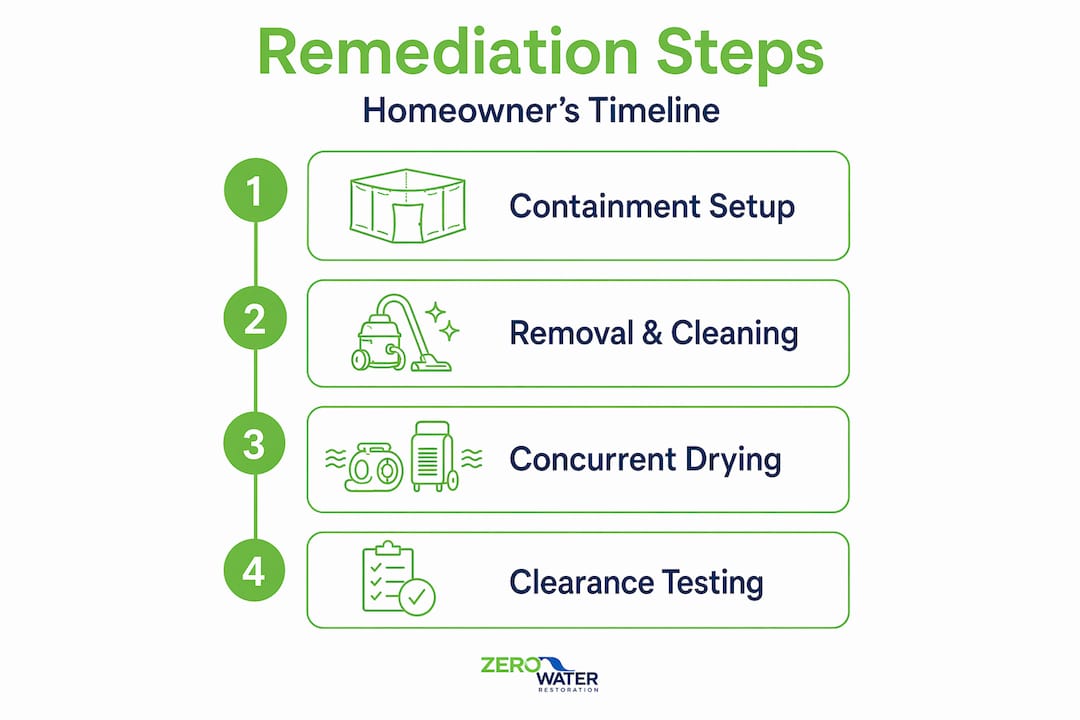
Concurrent drying. Commercial-grade dehumidifiers and air movers run throughout the project and often for 1 to 3 additional days after material removal. This is not optional. If building materials do not reach target moisture levels before reconstruction, mold grows back under new drywall or flooring.
Final clearance testing. An independent environmental hygienist collects air samples and surface samples to confirm mold levels are within acceptable ranges. This is what gives you documented proof that your home is safe.
Key things to prepare for as a homeowner:
- You may need to vacate the containment area or the home entirely during active work
- Plan for noise from air movers and dehumidifiers running day and night
- Reconstruction does not begin until clearance testing confirms success
- Proper attic ventilation and insulation conditions matter for preventing future mold growth from the top down
Pro Tip: Take photos and keep records of every phase of the work. Dates, what was removed, and the clearance test results. Your insurance company will want this documentation, and it protects you if mold issues resurface later.
Knowing the full timeline helps homeowners prepare. Next, let’s examine the crucial role of moisture control in lasting remediation success.
The critical role of moisture control in mold remediation
This is the step that separates a permanent fix from an expensive repeat job. You can remove every trace of visible mold, treat every surface, and pass a clearance test. But if the original moisture source is still active, mold will return. It is that simple.
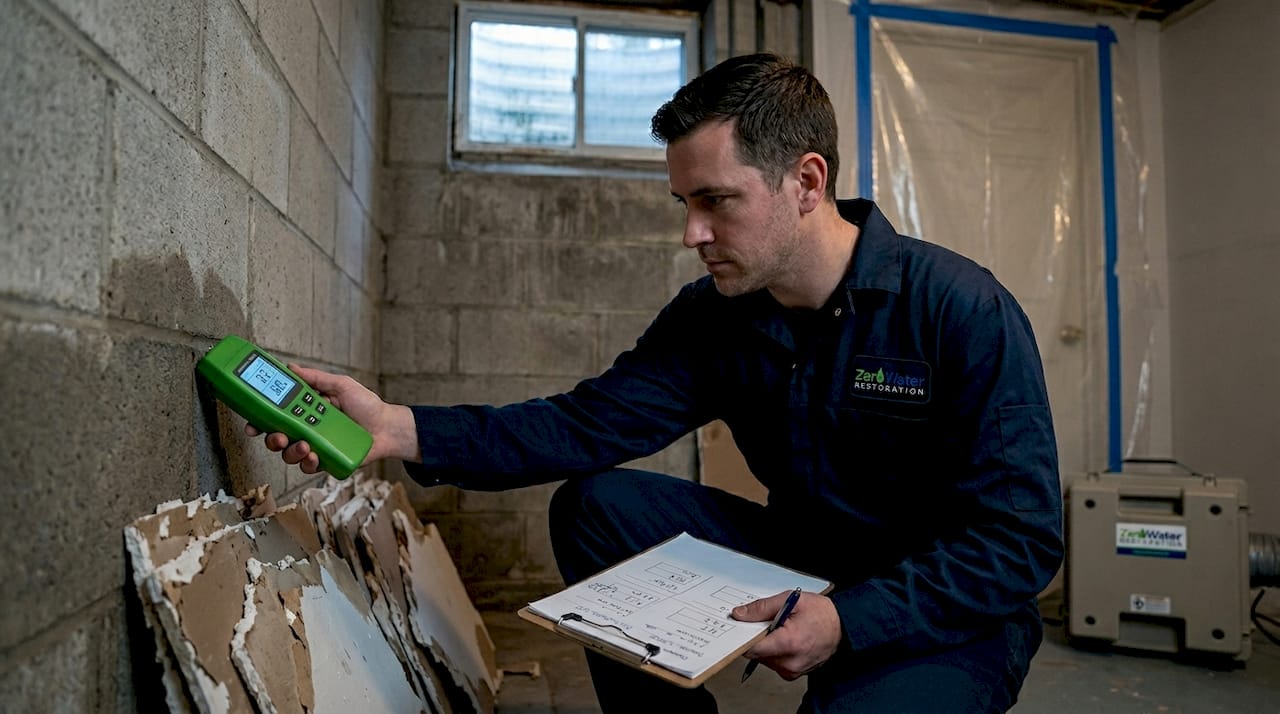
Drying affected areas within 24 to 48 hours and keeping indoor humidity below 60% are the core requirements for preventing mold from reestablishing. Professionals use moisture meters to measure the actual water content inside building materials, not just surface dryness.
| Building material | Safe moisture level for clearance |
|---|---|
| Wood framing | Below 15% |
| Drywall | Below 1% |
| Concrete subfloor | Below 4% |
| Hardwood flooring | Below 12% |
The targets above matter because materials can feel dry to the touch while still holding enough moisture to support mold growth inside. Moisture meters confirming wood below 15% and drywall below 1% are the professional standard before any remediation project is considered complete.
Moisture control after remediation includes:
- Repairing the original leak, whether a plumbing failure, roof penetration, or foundation crack
- Running a whole-home dehumidifier if your home has consistent humidity issues
- Checking that bathroom and kitchen exhaust fans vent to the exterior, not into attic space
- Maintaining crawl space vapor barriers and improving sub-slab drainage where needed
- Monitoring interior humidity with a simple hygrometer, especially during humid Chicago summers
For broader water damage protection tips relevant to homes throughout the northwest suburbs, getting ahead of moisture is always less expensive than responding to it after mold has taken hold.
Pro Tip: A dehumidifier running during remediation is not a substitute for fixing the leak. Both must happen. One controls the environment while work is being done. The other actually solves the problem.
With moisture control understood, let’s compare remediation approaches and what proper standards require to protect your home and health.
Mold remediation standards and why choosing professionals matters
The two primary standards governing mold remediation are the EPA guidelines and the IICRC S520. Neither is legally mandatory across all jurisdictions, but both are widely adopted by certified professionals and increasingly referenced in insurance claims and litigation.
The IICRC S520 standard defines containment levels, personal protective equipment requirements, work sequencing, and post-remediation verification requirements. It also classifies contamination into condition levels that determine how extensive the response needs to be. A certified remediator follows these protocols on every job, regardless of size.
Here is what proper standards require at minimum:
- Written assessment before work begins
- Appropriate containment based on contamination level
- Use of respirators, gloves, and protective suits during removal
- HEPA vacuuming of all surfaces before and after cleaning
- Bagged and sealed disposal of contaminated materials
- Independent clearance testing before reconstruction begins
“Documentation and independent clearance testing protect health and limit liability, and are required for areas over 10 square feet.” — EPA Mold Remediation Guidelines
The ventilation role in mold control is also directly referenced in professional standards, particularly for attic mold cases where inadequate airflow drives recurring moisture accumulation.
DIY remediation carries real risks. Without proper containment, you spread spores. Without moisture measurement equipment, you cannot confirm dryness. Without clearance testing, you have no documentation. That gap creates problems with insurance claims, property sales, and your family’s health.
Choosing a certified professional mold remediation contractor is not about paying more for the same result. It is about getting a documented, verified, and permanent outcome instead of a temporary one.
Understanding standards clarifies why professional remediation is essential. Now, here is an expert perspective on what homeowners consistently get wrong.
Why many homeowners misunderstand mold remediation and how to avoid pitfalls
After handling mold remediation throughout the northwest Chicago suburbs for over a decade, we have seen the same misconceptions damage homes repeatedly. The most expensive mistake is not the mold itself. It is the expectation that remediation should be fast.
Homeowners call us expecting a one-day job. They want the mold gone by evening. That thinking is understandable, but it creates pressure to skip the containment phase and go straight to cleaning. Disturbing mold without proper containment spreads spores to unaffected areas and turns a contained problem into a whole-house problem. Day one is always containment. Period.
The second major misconception is that visible mold is the whole problem. Mold grows inside wall cavities, behind baseboards, under flooring, and inside HVAC systems. You can scrub every visible surface and still have active colonies growing where you cannot see them. This is why a proper assessment, including moisture mapping and sometimes air sampling, happens before any work begins.
The third misconception is about bleach. Bleach kills surface mold on non-porous materials. It does not penetrate porous materials like drywall or wood, and it does not kill mold roots. Scrubbing a damp basement wall with bleach and calling it remediation is how homeowners end up calling us six months later with a worse problem.
Finally, skipping independent clearance testing is a gamble with your family’s health and your property value. We encourage homeowners to review detailed mold remediation steps before hiring anyone, so they know what questions to ask. A contractor who resists independent testing or discourages clearance verification is telling you something important about the quality of their work.
The homeowners who get the best outcomes are the ones who treat remediation as a documented, sequential process and do not let urgency push them toward shortcuts.
Professional mold remediation services in northwest Chicago suburbs
Water damage in the northwest suburbs moves fast, and so does the mold that follows it. If you are dealing with the aftermath of a burst pipe, a flooded basement, or storm damage in Schaumburg, Arlington Heights, or anywhere across the region, getting certified help quickly is the single most important decision you can make.
At Zero Water Restoration, our mold remediation services follow EPA and IICRC S520 standards from assessment through independent clearance testing. We handle containment, removal, cleaning, drying, and documentation, including working directly with your insurance adjuster to manage the claim. Whether you are in Barrington dealing with a roof leak or in Palatine responding to a basement flood, our team is available 24/7. Call us at (847) 515-7000 for a free inspection and let us get your home back to safe.
Frequently asked questions
What is the difference between mold remediation and mold removal?
Mold remediation is a full process that fixes the moisture source, contains the area, removes affected materials, cleans surfaces, and verifies success through independent testing. Mold removal is surface-level cleaning that does not address moisture, meaning mold recurrence is likely without the full remediation approach.
How long does professional mold remediation usually take?
For most residential properties, professional remediation takes 1 to 5 days covering containment setup, removal, cleaning, drying, and clearance testing. Larger contamination areas or complex moisture problems can extend that timeline.
Why is fixing moisture important before mold cleanup?
Without eliminating the moisture source, mold will regrow even after thorough cleaning. The EPA confirms that moisture control is the foundation of any successful mold prevention or remediation effort.
What does post-remediation verification involve?
Post-remediation verification is an independent inspection using air sampling and surface testing to confirm that mold levels are within safe ranges. Independent clearance testing is the only objective proof that remediation was successful and the space is safe to re-occupy.