Most homeowners assume water damage cleanup means pulling out a shop vac and running a few fans. That assumption can cost you thousands of dollars and create a serious health hazard inside your own home. Professional water restoration is a structured, science-backed process governed by standards like the IICRC S500, and it operates on timelines that leave almost no room for delay. The difference between a proper restoration and a rushed surface dry is the difference between a fully recovered home and one quietly rotting from the inside out.
Table of Contents
- What defines professional water restoration?
- Why speed and precision matter in water restoration
- Mold risks and professional remediation strategies
- When should you call professionals? Scenario-based guidance
- The truth most guides miss about water restoration
- Get expert restoration help in northwest Chicago
- Frequently asked questions
Key Takeaways
| Point | Details |
|---|---|
| Professional standards matter | Industry protocols like the IICRC S500 ensure safe, thorough water restoration well beyond basic cleanup. |
| Act within 48 hours | Drying or removing water-damaged materials within 48 hours is crucial to prevent mold and further damage. |
| Mold risks are hidden | Effective restoration always considers concealed contamination and addresses moisture sources to reduce mold threats. |
| Call experts for extensive damage | If water damage covers more than 32 square feet or affects porous or hidden spaces, professional restoration is safest. |
| Local help is available | Homeowners in northwest Chicago suburbs can access trusted restoration and remediation experts for urgent needs. |
What defines professional water restoration?
Building on the introduction, let’s look at what makes professional restoration distinct from basic cleanup.
Water restoration work is commonly structured around the IICRC S500 Standard, which is the industry’s procedural blueprint for every major decision made on a job site. This standard defines how technicians classify water damage, select equipment, and verify that drying is complete before wrapping up. It exists because water damage is not a single event. It is a chain of deteriorating conditions that gets worse with each passing hour.
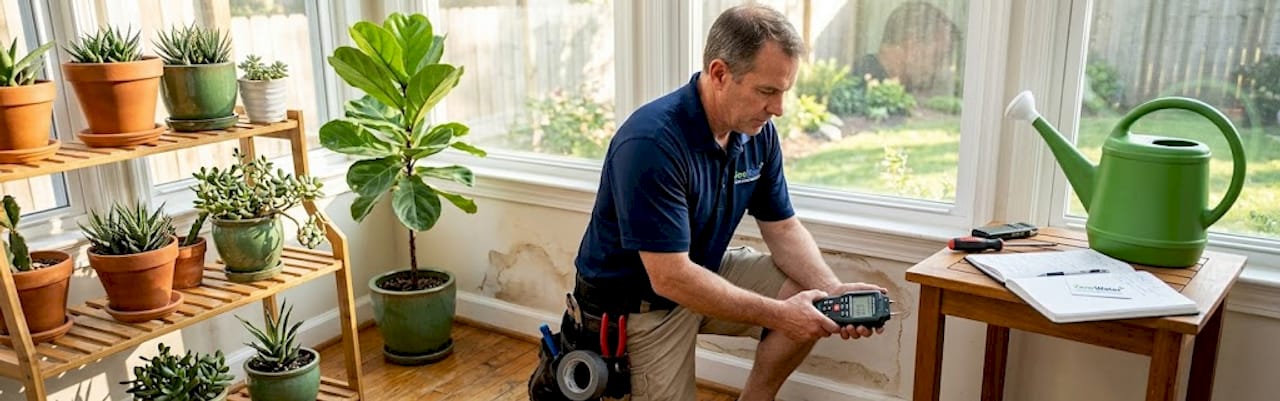
Professional restoration follows a defined sequence of phases. The initial response establishes safety and stops the water source. The assessment phase, which includes a thorough look at restoration assessment steps, documents the scope using moisture meters, thermal imaging cameras, and psychrometric readings. Psychrometrics is the science of measuring moisture in air and materials, and trained technicians use it to calculate exactly how much drying power is needed for each specific space. After assessment comes extraction, followed by controlled drying with commercial-grade dehumidifiers and air movers, and finally remediation of any contaminated or compromised materials.
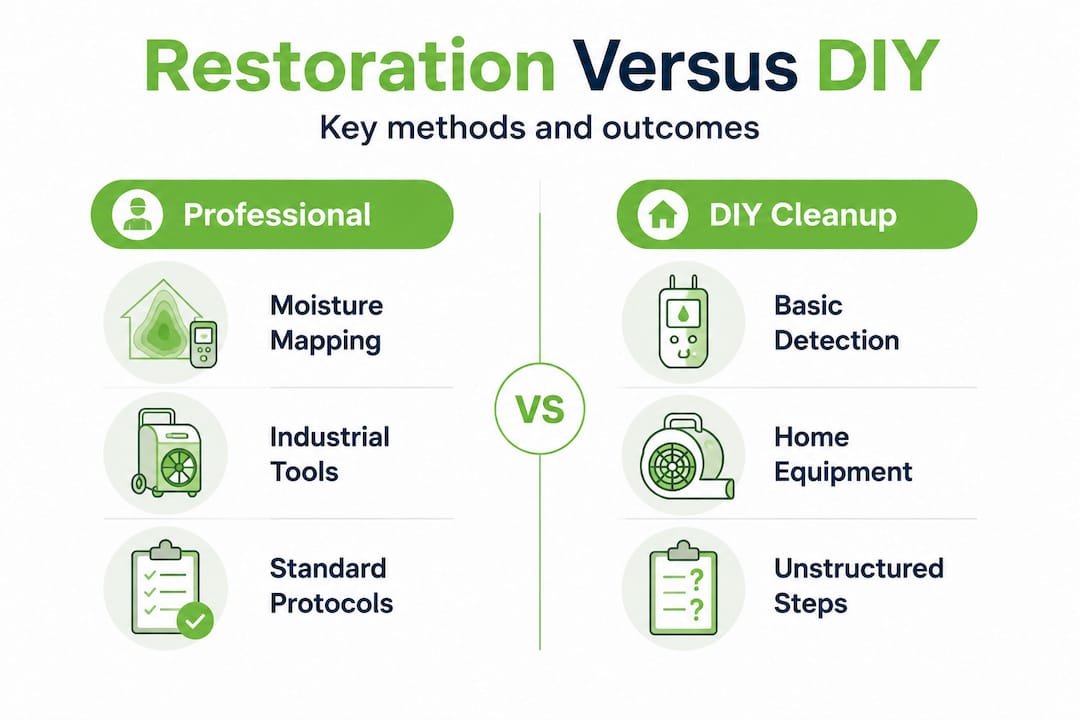
Here is a comparison that shows how significant the gap is between professional work and DIY attempts:
| Factor | Professional restoration | DIY cleanup |
|---|---|---|
| Moisture detection | Thermal imaging, meters, psychrometric tools | Visual inspection only |
| Equipment | Industrial extractors, commercial dehumidifiers | Shop vac, household fans |
| Standard followed | IICRC S500 | None |
| Documentation | Written scope, moisture logs | Typically none |
| Mold risk assessment | Built into every phase | Rarely considered |
| Hidden damage | Systematically checked | Often missed |
Beyond equipment, professional teams bring a documented process. Every reading is logged. Every decision about what to remove or what to dry in place is justified by data. That paper trail matters when you file an insurance claim, and it matters even more if problems resurface months later.
Key elements of a professional water restoration job include:
- Water classification and categorization: Clean water from a burst pipe is handled differently than gray water from an appliance overflow or black water from a sewage backup.
- Moisture mapping: Every affected surface gets measured so the drying plan is targeted, not guesswork.
- Structural drying verification: Drying is not finished when things feel dry. It is finished when readings confirm moisture levels are back to normal.
- Material-specific decisions: Porous materials like drywall, carpet, and insulation often need to be removed rather than dried in place.
Homeowners in communities like Palatine can benefit from understanding restoration tips for Palatine that reflect local building materials and weather patterns. The fundamentals of the IICRC process apply everywhere, but local knowledge matters when it comes to common construction types in the northwest suburbs. It also helps to understand the water damage risks that accumulate even after the visible water is gone.
Why speed and precision matter in water restoration
Understanding the technical framework, let’s see why speed is crucial in water restoration.
The 48-hour benchmark is one of the most important numbers in restoration. CDC/NIOSH guidance specifies that drying must be completed within 48 hours to properly prevent mold growth and limit further damage. That window starts the moment water contacts your structure, not when you call for help. Every hour of delay shrinks the margin between a manageable restoration and a much larger, more expensive problem.
Here is what actually happens to a water-damaged structure over time:
| Time elapsed | Condition of structure |
|---|---|
| 0 to 1 hour | Water absorbed into drywall, subfloor, framing begins |
| 1 to 24 hours | Swelling, staining, odor development begins |
| 24 to 48 hours | Mold can begin to colonize on wet porous surfaces |
| 48 to 72 hours | Structural materials at higher risk; mold spreading |
| Beyond 72 hours | Extensive mold, potential structural compromise |
EPA guidance emphasizes the critical importance of drying and removing water-damaged materials quickly after any flood or leak event. The EPA is not talking about cosmetic cleanup. It is talking about physically removing saturated porous materials before mold takes hold in places you cannot see or clean effectively.
Speed without precision, though, creates its own problems. Drying too fast in the wrong sequence can trap moisture inside wall cavities. Running equipment in the wrong configuration can actually increase humidity in adjacent spaces. That is why the psychrometric science matters. Technicians calculate vapor pressure, temperature, and air volume to set up equipment correctly for each unique space.
Pro Tip: When water enters a finished basement, prioritize the areas you cannot see. Insulation behind drywall, subfloor material above a crawl space, and framing inside partition walls hold moisture far longer than any exposed surface. If those concealed areas are not dried or removed, mold will develop there regardless of how clean the visible surfaces look.
Understanding emergency water mitigation is especially important for homeowners who face flooding at night or on weekends, when they might be tempted to wait until Monday to call someone. Those few hours can push a job well past the 48-hour window. Knowing how to make temporary water damage repairs before a professional team arrives can slow additional damage in the meantime.
“The goal is to restore the property to its pre-loss condition as quickly and safely as possible, following a structured, evidence-based process at every stage.”
Mold risks and professional remediation strategies
With timely drying established, let’s examine mold risks and professional approaches to remediation.
Mold is not a separate problem from water damage. It is the predictable outcome of water damage that is not handled correctly. The two issues are inseparable, and treating them as separate events is one of the most common and costly mistakes homeowners make.
EPA mold cleanup guidance directly ties mold prevention to the removal and drying of water-damaged materials. Cleaning the surface of a wet piece of drywall does not solve the problem. The moisture inside the material is still feeding mold growth. The only real fix for saturated porous materials is removal.
Here is a step-by-step view of how professional teams approach mold remediation after water damage:
- Identify all moisture sources: Moisture mapping confirms where water traveled, including hidden paths like inside walls, under flooring, and inside ceiling cavities above finished spaces.
- Contain the affected area: Air scrubbers and negative air pressure prevent mold spores from spreading to unaffected parts of the home during work.
- Remove all saturated porous materials: Wet drywall, insulation, carpet, and pad are removed, bagged, and disposed of according to remediation protocols.
- Apply antimicrobial treatment: Exposed framing and structural surfaces are treated after removal to address any residual contamination.
- Verify moisture levels: Before reconstruction starts, every surface is tested to confirm it has returned to acceptable moisture content.
- Document everything: A complete record of what was removed, treated, and verified protects the homeowner and supports the insurance claim.
CDC healthcare facility guidance notes that extensive contamination or damage exceeding 32 square feet requires professional assessment and remediation. For residential properties, that threshold is often reached faster than homeowners expect, especially in basements, crawl spaces, or after roof leaks that spread across large ceiling areas.
Pro Tip: After any flooding event, check behind baseboards, under kitchen and bathroom cabinets, and inside any utility closets that share a wall with an affected space. These spots hold moisture and are frequently overlooked during both DIY cleanups and incomplete professional jobs. If you can smell a musty odor in a room that visually looks dry, there is almost certainly hidden mold somewhere in that space.
Choosing a restoration firm becomes especially important when mold is involved. Not every contractor who handles water damage is properly trained in mold remediation protocols. You want a team that treats water damage and mold as a single integrated process, not two separate services. And before you make that decision, reviewing how professionals assess restoration needs will help you ask the right questions.
When should you call professionals? Scenario-based guidance
Understanding mold risks, let’s clarify when expert help is not just helpful but necessary.
There is a meaningful difference between a small, contained leak and a situation that requires a professional response. Knowing where that line is can save you time, money, and a lot of stress.
Here are scenarios where calling professionals immediately is the right move:
- Basement flooding from storm water or sump pump failure: Water volume, contamination risk, and the number of materials involved almost always make this a professional job.
- Burst pipe in a finished space: Even a relatively short burst can push water inside walls, under flooring, and into adjacent rooms before it is visible.
- Roof leak that has been active for more than a few days: By the time most homeowners notice a roof leak, the insulation above the ceiling is likely saturated and mold has had time to start.
- Any sewage or drain backup: Category 3 water, meaning sewage-contaminated water, requires full protective protocols that are not safe to handle without professional training and equipment.
- Odor in a space that has been wet before: Persistent musty smell almost always means active mold, which requires remediation, not just cleaning.
Guidance from the CDC indicates that damage affecting more than 32 square feet benefits from professional assessment. In practical terms, that is roughly a 5×6 foot section of wall or floor. A single burst pipe or a moderate roof leak can easily exceed that threshold in the first hour.
Conversely, a minor drip from a supply line that was caught immediately, cleaned up fully, and dried within a few hours on hard, non-porous surfaces may be manageable without calling a team. The key variables are how much water, what type of water, what materials were affected, and how quickly you responded.
For situations that fall in the middle, the safest move is a professional inspection. Most restoration companies, including us, offer free estimates. Getting eyes on the situation costs nothing but can prevent a much larger problem down the road. You can also review guidance on choosing a restoration firm to make sure you are working with a team that follows proper protocols.
The truth most guides miss about water restoration
Most guides on water restoration focus on the phases and the checklists. They cover what to do and in what order. What they consistently miss is the weight of the assessment phase and the fact that visible damage is almost never the whole picture.
We have been on enough jobs to tell you with confidence: the damage you can see when you walk into a flooded room is rarely the worst of it. Water travels through gaps in framing, wicks up wall cavities through capillary action, and settles in the lowest accessible space it can find. A basement floor that looks mildly wet might be sitting on a subfloor that is completely saturated. A ceiling stain from a roof leak might represent weeks of insulation that has been holding moisture.
The other thing most guides underestimate is the integration of water and mold. These are not sequential problems. Mold risk begins the moment water contacts porous material. Thinking about mold as something to worry about “after the drying is done” is a dangerous delay in mindset, not just in action.
What we always recommend is insisting on full moisture mapping before any work begins. Moisture mapping means every wall, floor, and ceiling in the affected area gets measured and logged. It is the only way to know the real scope of the job. Without it, there is no way to verify the job is actually complete when equipment comes out.
Understanding the full range of unrecognized water damage risks is what separates homeowners who come through water damage intact from those who deal with recurring mold and structural repairs for years afterward. The urgency is real. The standards exist for a reason. And the assessment phase deserves as much attention as any other part of the process.
Get expert restoration help in northwest Chicago
When water damage hits your home in the northwest suburbs, you need a team that already knows the area and responds fast.
Zero Water Restoration serves homeowners throughout Schaumburg, Arlington Heights, Palatine, Barrington, and surrounding communities. Whether you need immediate Barrington water restoration after a storm or a thorough assessment following a slow leak, we are available 24/7 and handle everything from extraction through full reconstruction. Our mold remediation services follow the same integrated approach covered in this article, and if you want a deeper understanding of the process, our Chicago mold remediation guide walks through every step in detail. Call us at (847) 515-7000 or visit zerowaterrestoration.com for a free inspection and estimate.
Frequently asked questions
What is the IICRC S500 standard and why does it matter?
The IICRC S500 standard sets the procedural and technical framework for professional water damage restoration, covering everything from moisture classification to drying verification. It is the industry benchmark that ensures restoration work produces safe, reliable, and documented results.
How quickly should water-damaged materials be dried or removed?
CDC/NIOSH guidance recommends drying or removing wet materials within 48 hours to prevent mold growth and limit further structural damage. The clock starts when water first contacts your structure, not when help arrives.
When is professional remediation required for water damage?
Professional help is strongly recommended when damage involves contaminated water, porous materials, concealed spaces, or an affected area larger than 32 square feet. CDC guidelines specifically highlight that threshold as the point where professional assessment becomes necessary.
Should mold cleanup be done before reoccupying flooded spaces?
Yes. EPA guidance recommends completing mold remediation and confirming that all materials are properly dried before returning to any water-damaged space. Reoccupying too early exposes residents to active mold and incomplete structural repairs.