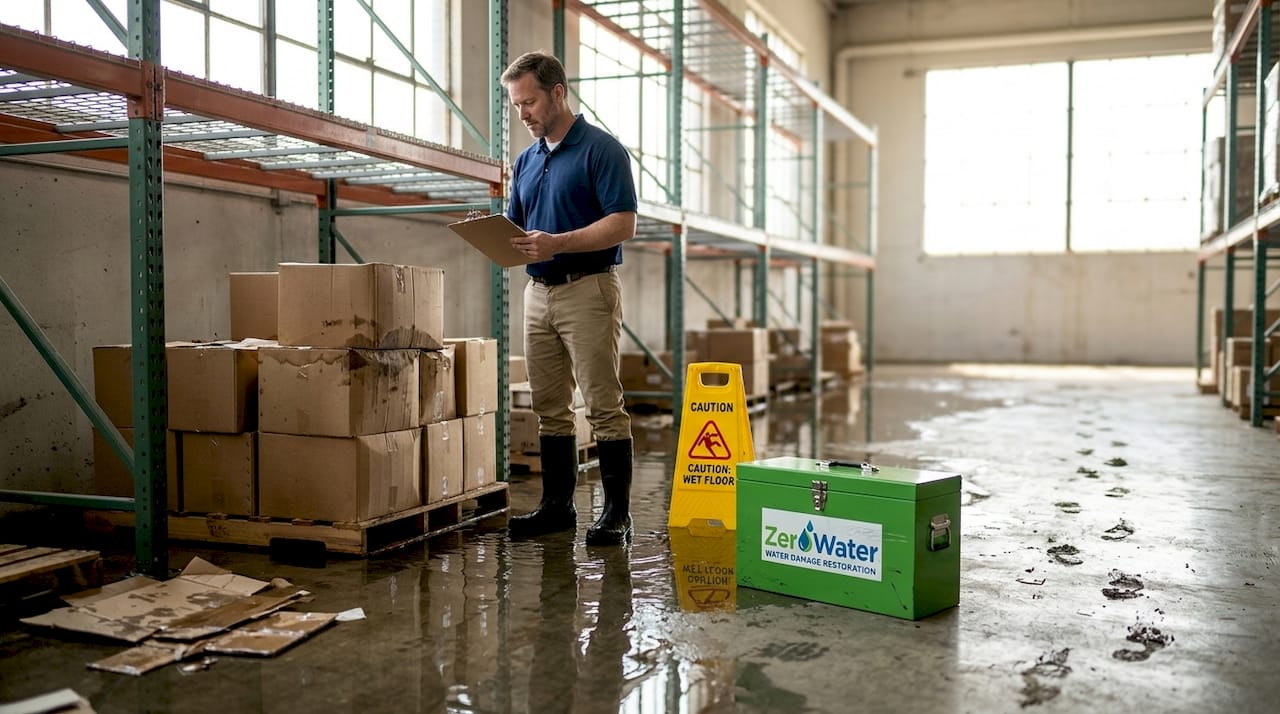
When water floods your property, the instinct is to assume everything is ruined. What is water damaged inventory restoration? It’s the professional process of assessing, cleaning, drying, and recovering goods and contents damaged by water intrusion. The industry term is “contents restoration,” and it’s a distinct discipline within the broader water damage restoration process. Most property owners don’t realize how much can actually be saved. This article walks you through how restoration works, what drives success or failure, and exactly what to do in the critical hours after water damage hits.
Table of Contents
- Key takeaways
- What water damaged inventory restoration actually means
- Tools and techniques professionals use to restore inventory
- What to do immediately after water damage hits
- What drives restoration cost and success rates
- My take on what property owners usually get wrong
- How Zerowaterrestoration handles inventory restoration
- FAQ
Key takeaways
| Point | Details |
|---|---|
| Most items are not total losses | Professional contents restoration can recover furniture, documents, electronics, and inventory that appears destroyed. |
| Speed is the deciding factor | Microbial growth starts within 24 to 48 hours, making same-day action critical. |
| Contamination type changes everything | Category 1, 2, and 3 water require different cleaning, sanitizing, and disposal approaches. |
| Documentation protects your claim | Photographing damage and logging moisture readings are necessary for insurance recovery. |
| Professionals use tools you don’t have | Thermal imaging and psychrometric equipment detect hidden moisture that leads to mold if missed. |
What water damaged inventory restoration actually means
Contents restoration, the standard industry term for what most people call water damaged inventory restoration, covers every movable item on a property: merchandise, equipment, furniture, files, fixtures, and personal belongings. It’s distinct from structural drying because inventory items often require specialized handling, controlled environments, and item-specific cleaning methods.
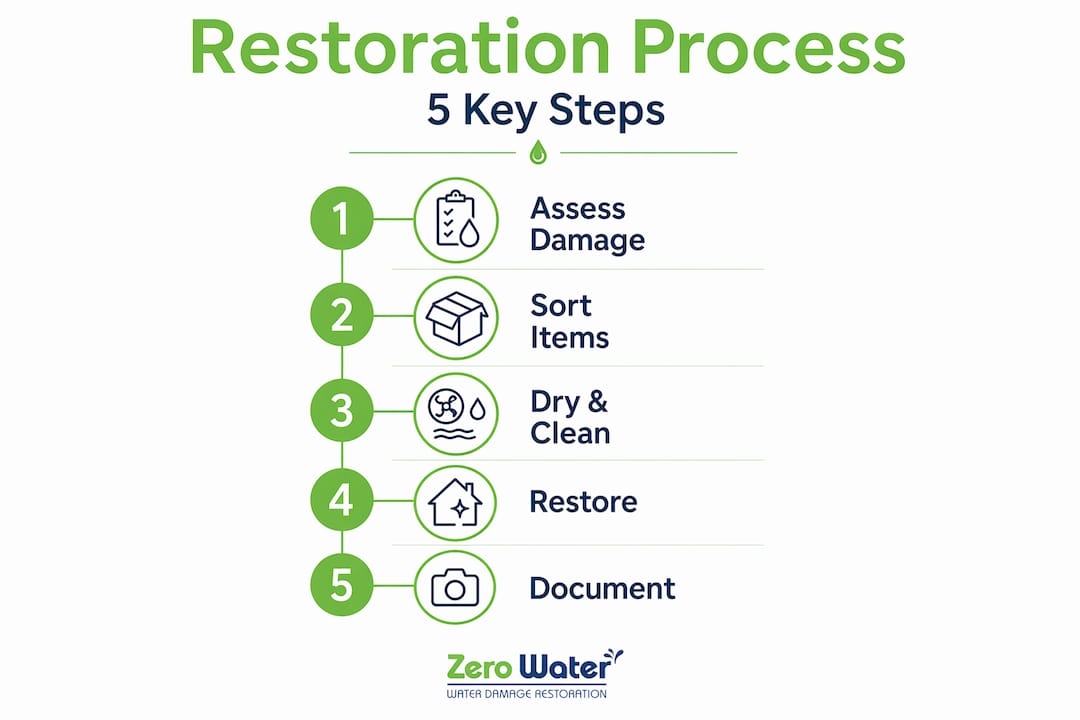
The 5-step restoration process used by certified professionals starts with emergency inspection and assessment, moves through bulk water extraction, then drying and dehumidification, then cleaning and sanitizing, and finishes with repairs or replacement of items that couldn’t be fully restored. Each step has a different impact on inventory depending on what the items are made of and how long they sat in water.
One thing most property owners get wrong: they treat wet inventory as a uniform category. A soaked cardboard box of paper files is a very different problem than a wet solid wood desk or a flooded shelving unit. The restoration approach, the timeline, and the likelihood of success vary widely. Understanding that distinction is what separates recoverable losses from write-offs.
Pro Tip: Before touching anything, photograph every affected item in place. Restoration professionals and insurance adjusters both depend on that original documentation to establish what was damaged and to what extent.
The type of water contamination also determines how aggressively items need to be treated. Category 1, or clean water, comes from supply lines and requires less intensive cleaning. Category 2, gray water, carries contaminants from appliances or sinks. Category 3, black water is the most hazardous, arriving from sewage backups or floodwater, and it requires antimicrobial treatment and often the disposal of porous items that absorbed it.
Tools and techniques professionals use to restore inventory
The difference between a restoration company that saves your inventory and one that doesn’t often comes down to equipment. Home-grade moisture meters only read surface conditions. Professionals use thermal imaging cameras and psychrometric measurements to detect moisture trapped inside walls, under flooring, and within the structure of furniture or equipment. Thermal imaging and psychrometric tools identify hidden saturation that visual checks completely miss, which is exactly where mold starts.
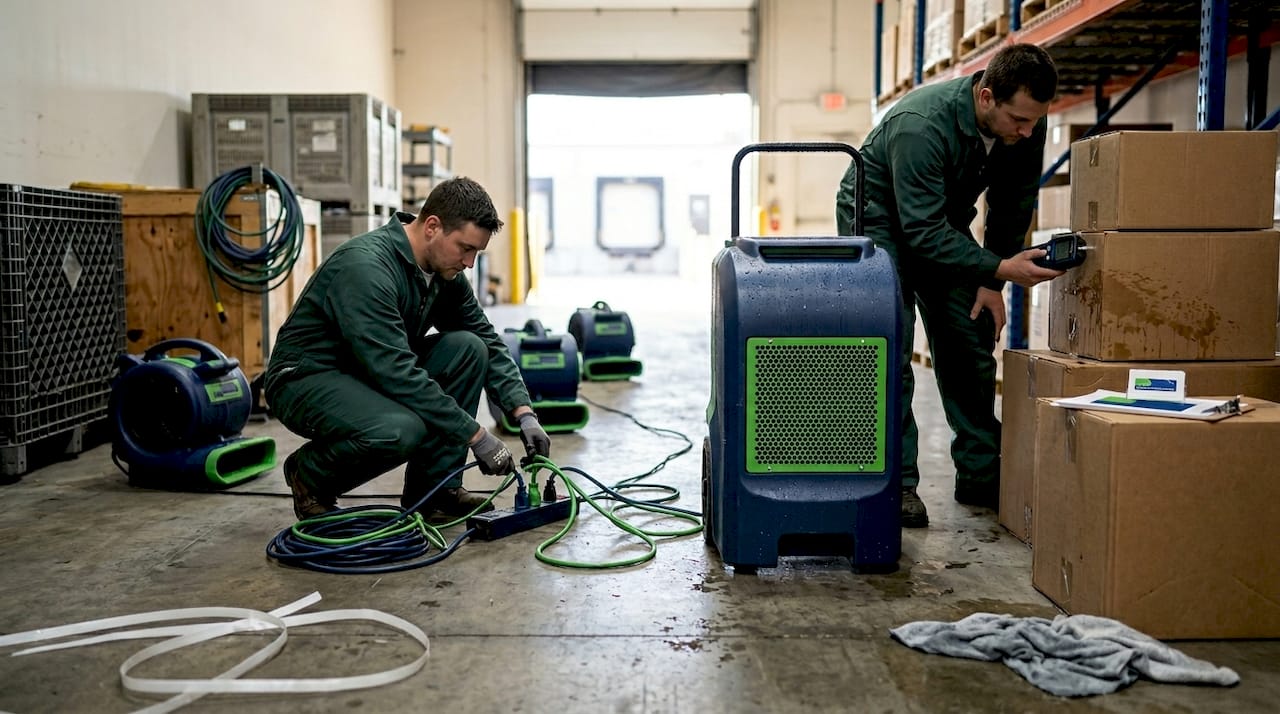
For drying inventory, professionals deploy a combination of industrial air movers and commercial dehumidifiers calibrated to the specific moisture load in the space. These aren’t the box fans you rent from a hardware store. Industrial equipment moves and processes dramatically more air volume, shortening the drying window from weeks to days. That time difference is often what separates a salvageable item from one that has begun to grow mold.
The table below shows how the cleaning and recovery approach differs by contamination category.
| Water category | Source example | Inventory cleaning method | Typical outcome |
|---|---|---|---|
| Category 1 (clean) | Burst supply pipe | Surface drying, basic cleaning | High salvage rate |
| Category 2 (gray) | Appliance overflow | Antimicrobial cleaning, HEPA vacuuming | Moderate salvage rate |
| Category 3 (black) | Sewage backup, flooding | Full antimicrobial treatment, item disposal for porous goods | Low salvage rate for porous items |
When immediate drying isn’t possible, freezing is a legitimate stabilization method. Items that can’t be dried within 48 hours should be frozen at or below -10°F to stop microbial growth and buy time for proper restoration later. This is especially useful for documents, books, textiles, and certain types of packaged inventory.
Some items like solid wood furniture, metal fixtures, and hard goods often respond well to professional drying and restoration. Others, including mattresses, foam cushions, and most electronics that have been submerged, typically require disposal regardless of how quickly you respond.
Pro Tip: If you have electronics that got wet, don’t try to power them on to test if they work. Doing so before they’re fully dried and professionally assessed almost guarantees permanent damage to components that might otherwise have been salvageable.
What to do immediately after water damage hits
The first 24 hours after water intrudes on your property are more consequential than the following week. Here’s what to do in that window, in order.
- Cut power to affected areas first. Water and live electrical circuits are a life-threatening combination. Don’t enter a flooded space until you’ve confirmed power is off or had an electrician verify safety.
- Put on protective gear before handling anything. Gloves, rubber boots, and eye protection are the minimum. If the water could be gray or black category, add an N95 respirator.
- Start documenting before you move a single item. Take photos and video of everything in its damaged state. List items on paper or use a phone app. Thorough photo documentation is your primary evidence for the insurance claim and your guide for later restoration decisions.
- Remove standing water as quickly as possible. Wet vacuums, submersible pumps, and mops all work for smaller volumes. The goal is reducing water contact time with inventory and building materials.
- Sort inventory into three categories: Items that can be moved to a dry area and air-dried immediately, items that need to be frozen for later restoration, and items that are clearly contaminated beyond recovery and need to be bagged and removed.
- Call a licensed restoration company within the first few hours. Professional assessment in the first 24 to 48 hours significantly reduces mold growth risk, structural deterioration, and overall costs. This is not the kind of problem that benefits from a “wait and see” approach.
For commercial property managers specifically, reviewing your commercial water damage response steps before an event happens will save you hours of confusion when it actually does.
Pro Tip: Keep a waterproof bag or container in your storage area stocked with disposable gloves, a basic respirator, a portable flashlight, and a printed emergency contact list. That three-minute prep now is worth 30 minutes of scrambling later.
What drives restoration cost and success rates
Not all water damage situations cost the same or produce the same results. Four variables control both the price and the outcome of inventory recovery after flooding.
The first is the source and contamination category of the water. Clean water damage costs significantly less to remediate than gray or black water damage because the cleaning requirements are less intensive and fewer items need to be discarded. A burst supply pipe in a storage room is a very different financial situation from a sewage backup in the same space.
The second is material type. Dense materials like solid wood, metal, and glass tolerate water exposure better than porous materials like fabric, paper, drywall, and foam. Inventory made from porous materials that absorbs Category 2 or Category 3 water is rarely worth attempting to restore.
The third is timing. Every hour of delay allows water to penetrate deeper into materials and increases the probability that mold becomes part of the problem. Mold remediation adds significant cost and complexity to any restoration project.
The fourth is documentation. Detailed records of moisture levels, item conditions, and the steps taken during mitigation are necessary for insurance processing. Continuous documentation and moisture monitoring give your insurer the evidence they need to approve your claim and prevent disputes over what was and wasn’t damaged.
On the prevention side, sealing floor drains, installing backflow valves, and keeping inventory elevated off floor level are inexpensive steps that dramatically reduce exposure when water intrusion does occur.
My take on what property owners usually get wrong
I’ve seen hundreds of water damage situations over the years, and the pattern that costs property owners the most money isn’t the flood itself. It’s the delay. People spend the first few hours trying to figure out whether the situation is “bad enough” to call a professional. By the time they decide it is, the moisture has already moved into places that are going to cause problems for months.
The second thing I see consistently is people underestimating hidden moisture. You can feel a surface and it seems dry. You run a home moisture meter and it reads fine. But inside the wall cavity, inside the core of a wood pallet, inside a cabinet’s back panel, there’s still saturation. That’s where mold colonizes quietly before anyone notices it. Tools that detect surface conditions are not the same as tools that detect real moisture distribution throughout a structure or an item.
The third pattern is assuming that more items are total losses than actually are. I’ve watched property owners throw out solid wood furniture, metal shelving, and even sealed electronic enclosures that a professional assessment would have cleared for restoration. The impulse to “just get it out of here” is understandable when you’re stressed. But it costs real money when you’re replacing items that could have been saved for a fraction of the replacement cost.
On the insurance side, the biggest mistake is incomplete documentation before cleanup begins. Once items are moved or discarded, that evidence is gone. Adjusters can’t approve claims for losses that aren’t documented. Slow down for 20 minutes, take thorough photos and a written inventory, and you’ll protect yourself financially regardless of what comes next.
— Jim
How Zerowaterrestoration handles inventory restoration
When water damage happens, you need someone who shows up fast and knows exactly what they’re doing. Zerowaterrestoration provides 24/7 emergency response throughout the Chicagoland area, including water damage restoration in Barrington and surrounding northwest suburbs. Their certified technicians use industrial drying equipment, thermal imaging, and psychrometric analysis to assess and restore inventory and property to pre-loss condition.
Zerowaterrestoration also handles the insurance process directly, working with adjusters, managing documentation, and keeping your out-of-pocket costs as low as possible. From initial extraction through final restoration, the team sees every job through to completion. Call (847) 515-7000 or visit zerowaterrestoration.com for a free inspection and estimate.
FAQ
What does contents restoration mean in water damage?
Contents restoration refers to the professional cleaning, drying, and recovery of movable items damaged by water, including furniture, inventory, equipment, and personal belongings. It uses specialized equipment and techniques that differ from structural drying.
How long does water damaged inventory take to restore?
Restoration timelines depend on water contamination category, material types, and how quickly response began. Clean water damage affecting hard goods may resolve in three to five days, while contaminated water affecting porous inventory can take one to two weeks or require disposal.
Can electronics be restored after water damage?
Some electronics can be restored if they weren’t powered on after getting wet and if they’re assessed professionally within the first 24 to 48 hours. Submerged or Category 3-exposed electronics typically require replacement rather than restoration.
Does homeowner or property insurance cover inventory restoration?
Most property insurance policies cover sudden and accidental water damage, including contents restoration costs. Flood damage from external sources typically requires separate flood insurance. Thorough documentation is required to support any claim successfully.
Why does acting fast matter so much in inventory recovery?
Mold can begin growing within 24 to 48 hours in warm, moist conditions. Items that could have been dried and saved become contaminated once mold colonizes them, significantly increasing both losses and restoration costs.