
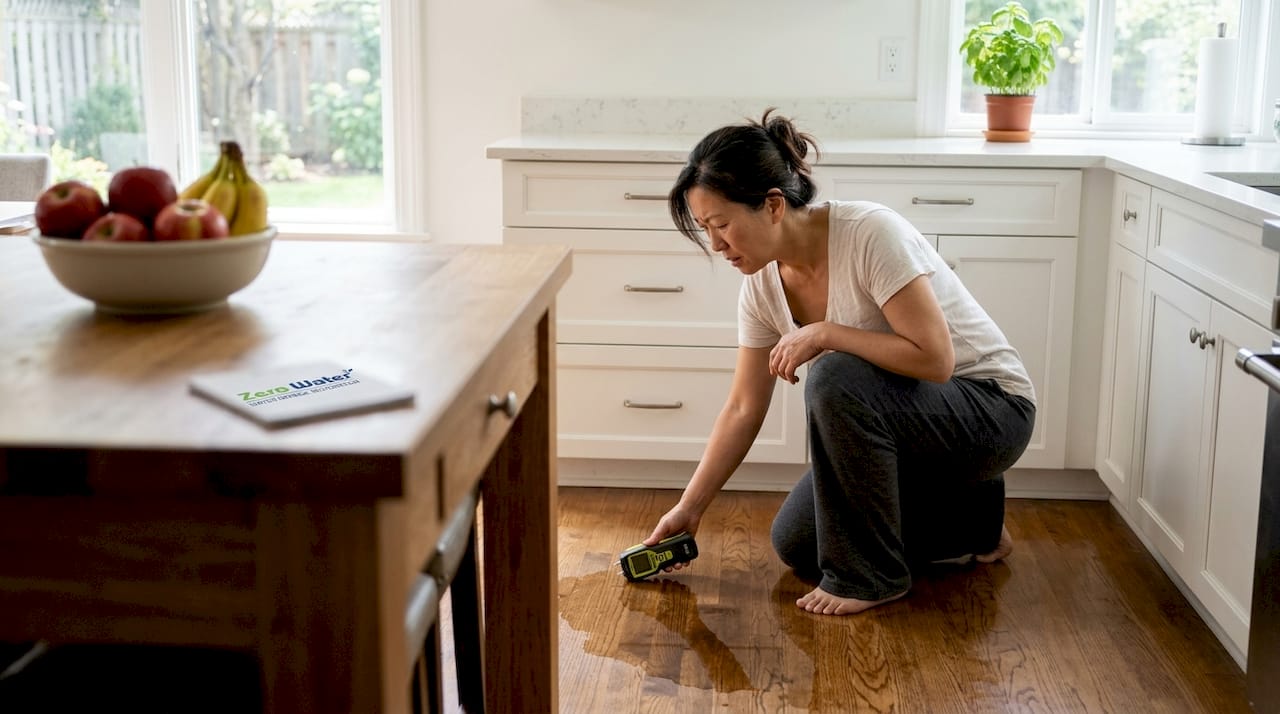
Water damage spreads quickly because water infiltrates porous building materials like drywall, wood, and insulation within minutes of contact, triggering chemical and biological reactions that accelerate structural decay. This process, known in the restoration industry as moisture migration, does not pause while you assess the situation. The critical response window is the first 24 to 48 hours. After that, mold colonies form, structural materials weaken, and what started as a manageable leak becomes a costly reconstruction project. Understanding exactly how and why this happens gives you the best chance of limiting the damage before it limits your options.
Why water damage spreads quickly through building materials
The physics behind water damage rapid spread comes down to three forces: capillary action, gravity, and material porosity. Most homeowners assume water only flows downward. That assumption costs them thousands of dollars.
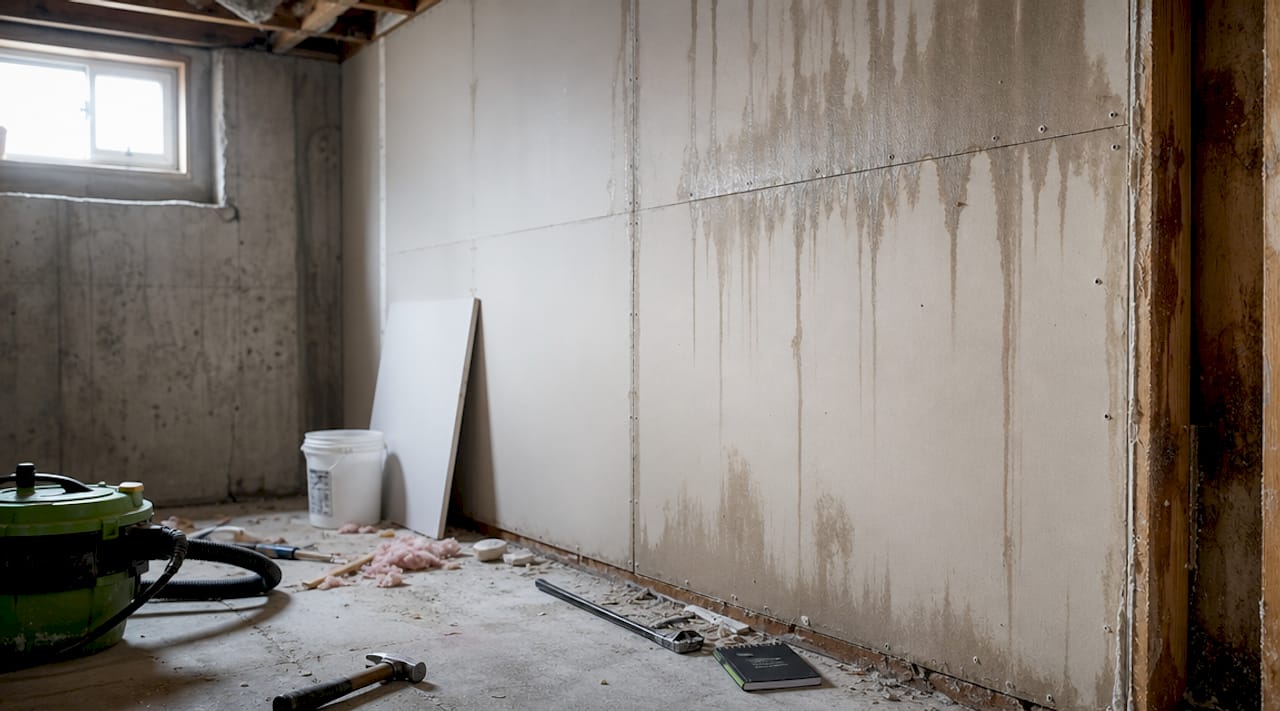
Capillary action pulls water into and along porous materials regardless of gravity. Drywall, wood framing, carpet padding, and concrete all contain microscopic pores and channels that actively draw moisture sideways and upward. A wet baseboard does not just stay wet at the bottom. The moisture wicks upward through the paper facing of the drywall and spreads horizontally into adjacent wall sections. Water migrates behind walls via capillary action within the first hour, and damage routinely extends one to two feet beyond any visible moisture mark.
Here is what that looks like in practice across common materials:
- Drywall absorbs water through its paper facing and gypsum core, swelling and softening within minutes. The damage extends well past the wet spot you can see.
- Carpet and padding saturate quickly and hold moisture against the subfloor, accelerating wood rot and mold growth beneath the surface.
- Wood framing and subfloors swell as fibers absorb water, creating structural stress at joints and fasteners.
- Insulation traps moisture and holds it against wall cavities for days, preventing natural drying and feeding mold growth.
Porous materials wick water sideways and upward against gravity, which explains why damage appears in rooms or wall sections that seem far removed from the original leak. The visible stain is rarely the full picture.
Pro Tip: Use a non-invasive moisture meter on walls and floors surrounding any visible water. Readings above 16% moisture content in wood or drywall indicate active wicking that requires professional drying, not just surface cleanup.
What chemical and biological reactions happen after water exposure?
Water does not just wet materials. It starts breaking them down immediately through a set of chemical and biological processes that compound over time.
Hydrolysis is the chemical reaction where water molecules break down the bonds in materials like gypsum drywall and concrete. The gypsum core of standard drywall begins to soften and lose structural integrity within hours of saturation. Concrete, while more resistant, develops micro-fractures under repeated wet-dry cycles that weaken it over time.
Wood responds differently but just as fast. Wood fibers expand up to 20% in volume within 30 minutes of saturation. That expansion creates immediate stress on joints, fasteners, and finishes. Floors buckle. Door frames shift. Structural connections loosen. This is not slow deterioration. It happens faster than most people expect.
Metal components face their own threat. Corrosion begins beneath moisture layers on pipes, fasteners, electrical boxes, and HVAC components. The corrosion is invisible at first, which makes it particularly dangerous in structural connections and electrical systems.
The biological threat is the most serious long-term factor. Mold spores are present in virtually every indoor environment. They need only moisture and a food source, and building materials provide both. Mold germinates within 24 to 48 hours of water exposure. Once a colony establishes itself, it releases mycotoxins that affect air quality and human health. The spread compounds because mold spores become airborne and settle on new surfaces throughout the property.
Bacteria populations in stagnant water can double every 20 minutes, turning a clean water leak into a contaminated environment within hours. Category 1 clean water from a burst pipe can degrade to Category 3 black water contamination if left standing long enough.
The combination of hydrolysis, wood expansion, metal corrosion, and microbial growth means that water damage does not plateau. It accelerates. Every hour without intervention adds to the scope and cost of restoration. For a deeper look at how these effects compound, the long-term effects of moisture on building materials are worth understanding before you face an emergency.
How does the water damage timeline progress?
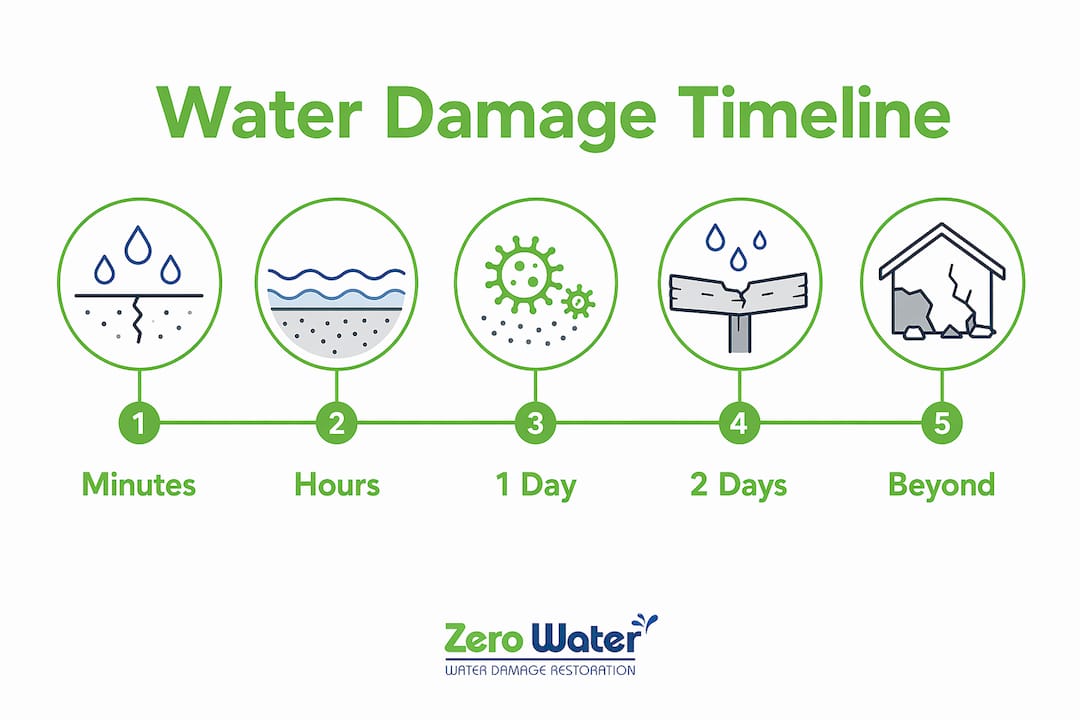
Visualizing the timeline of water damage progression makes the urgency concrete. The following table shows what happens at each stage and what it means for your property.
| Time frame | What happens | Implication |
|---|---|---|
| Within minutes | Water spreads across floors, seeps under baseboards, and begins absorbing into porous surfaces | Visible spread is already behind the actual moisture front |
| 1 hour | Capillary action moves water 1-2 feet beyond visible marks; wood begins swelling; chemical breakdown starts | Hidden damage is already occurring in walls and subfloors |
| 1 to 24 hours | Drywall softens; furniture warps; fabric dyes bleed; initial mold germination conditions are met | Structural and cosmetic damage accelerates rapidly |
| 24 to 48 hours | Mold colonies develop; corrosion begins on metals; contamination category of water worsens | Remediation scope expands significantly; health risks emerge |
| Beyond 48 hours | Mold penetrates structural materials; wood rot sets in; irreversible damage requires replacement rather than drying | Restoration costs multiply; reconstruction replaces repair |
The 48-hour threshold is the line between repair and replacement. Waiting beyond 48 hours significantly increases both restoration cost and complexity because mold penetrates into the cellular structure of wood and drywall, making drying alone insufficient. At that point, materials must be removed and replaced, not dried and treated.
Pro Tip: Document everything with photos and video within the first hour. Insurance adjusters rely on timestamped documentation to assess the original scope of damage. Waiting to document until after cleanup can reduce your claim payout.
The water damage restoration timeline for a typical home follows this progression closely, and knowing where you are in it helps you make faster, better decisions.
What pathways allow water to spread through a home unseen?
Water finds routes through a building that most homeowners never consider until the damage is already done. The obvious path is along floors and down walls. The less obvious paths are the ones that turn a contained leak into a whole-house problem.
HVAC systems are one of the most overlooked vectors for moisture spread. HVAC systems distribute moisture-laden air to multiple rooms when a leak occurs near ductwork or when condensation builds up inside the system. A single wet event near an air handler can push humid air through every room connected to that duct run, depositing moisture on cool surfaces throughout the property. This is how a basement leak becomes a mold problem on the second floor.
Wall cavities and subfloor assemblies act as hidden highways for water movement. Water that enters at a roof penetration or window seal travels down inside the wall cavity, pooling at the bottom plate and saturating the subfloor from below. You see no surface moisture. The damage is entirely hidden until the floor begins to feel soft or a musty odor appears weeks later.
Flooring gaps, expansion joints, and the seam between baseboard and floor are all entry points for water to migrate into adjacent rooms. A flooded bathroom does not stay in the bathroom. Water moves under the door, through the gap at the base of the wall, and into the hallway or bedroom carpet within minutes.
Slow leaks behind appliances like dishwashers, refrigerators with ice makers, and washing machines are particularly dangerous. They allow moisture to spread and saturate materials for weeks or months before detection. By the time a homeowner notices discoloration or odor, the subfloor and lower wall framing may already require full replacement. Understanding secondary water damage helps explain why these hidden leaks cause disproportionate harm relative to their size.
How to stop water damage from spreading fast
Slowing or stopping water damage spread requires immediate, specific action. General cleanup is not enough. Here is the sequence that limits scope and cost:
- Shut off the water source immediately. If a pipe has burst or an appliance is leaking, cut the supply at the nearest shutoff valve. Every minute of continued flow adds to the saturation depth and spread radius.
- Remove standing water as fast as possible. Wet-dry vacuums handle small volumes. For larger events, professional extraction equipment removes water far faster than consumer tools and reaches into carpet padding and subfloor assemblies.
- Use moisture meters and thermal imaging cameras to find hidden water. Visual inspection misses the moisture that has wicked into walls, under floors, and into insulation. Thermal cameras detect temperature differentials caused by evaporative cooling in wet materials, revealing hidden saturation that looks dry to the eye.
- Start air movement and dehumidification immediately. Professional drying controls temperature, relative humidity, and vapor pressure together. Running a fan alone without dehumidification can spread moisture-laden air to dry areas rather than removing it from the structure.
- Call a certified restoration professional within the first few hours. Restoration procedures follow IICRC S500 standards, where the water contamination category and intrusion class determine the equipment, scope, and drying strategy required. A professional assessment within the first hour can mean the difference between drying and demolition.
Pro Tip: Turn off your HVAC system if water has entered near ductwork or the air handler. Running the system spreads contaminated air and moisture throughout the building, expanding the remediation zone significantly.
Knowing the risks of delayed repair reinforces why each step on this list is time-sensitive, not optional.
Key takeaways
Water damage spreads quickly because capillary action, chemical breakdown, and microbial growth work simultaneously from the moment water contacts building materials, making the first 48 hours the only window for cost-effective intervention.
| Point | Details |
|---|---|
| Capillary action drives hidden spread | Water wicks 1-2 feet beyond visible marks within the first hour, into walls and subfloors. |
| Mold starts within 24-48 hours | Germination begins fast; waiting past 48 hours converts a drying job into a demolition and replacement project. |
| HVAC spreads moisture building-wide | Moisture near ductwork can distribute humid air to every connected room, expanding the damage zone. |
| 48-hour threshold is the cost line | Damage becomes irreversible after 48-72 hours, requiring replacement rather than drying and repair. |
| Professional tools find what eyes miss | Moisture meters and thermal cameras detect hidden saturation that looks dry on the surface. |
What I’ve learned from watching homeowners underestimate this
After more than a decade responding to water damage events across the northwest suburbs of Chicago, the pattern I see most often is not panic. It is false confidence. A homeowner sees a wet floor, throws down towels, runs a box fan, and assumes they have handled it. Three weeks later, they call because the floor is soft and the room smells like a basement.
The invisible spread is what gets people. You cannot see capillary action working inside your drywall. You cannot smell mold in its first 24 hours. The damage that costs the most is always the damage that was already done before anyone realized the situation was serious.
The other mistake I see constantly is relying on visual inspection to declare an area dry. A surface that feels dry to the touch can still hold enough moisture inside the wall assembly to sustain mold growth for weeks. The only way to know is with a moisture meter or thermal camera. Professionals use these tools not because they are expensive equipment, but because they are the only way to know what is actually happening inside your walls.
The homeowners who come out of a water event with the lowest repair bills are the ones who called for professional assessment within the first two hours, not the ones who waited to see if things dried out on their own. Prompt action is not an overreaction. It is the only decision that consistently saves money and prevents health problems.
— Jim
How Zerowaterrestoration responds when water damage spreads fast
When water is moving through your home, every hour matters. Zerowaterrestoration provides 24/7 emergency response to homeowners and property managers throughout Schaumburg, Arlington Heights, Barrington, and the greater Chicagoland area. The team uses professional moisture detection equipment, industrial extraction tools, and IICRC-certified drying protocols to stop damage at its source and prevent mold from taking hold.
For homeowners in the northwest suburbs dealing with a burst pipe, storm flooding, or a slow leak that has already spread, water damage restoration in Barrington and surrounding communities is available now. Zerowaterrestoration also handles certified mold remediation when moisture has already created a biological problem. The team works directly with insurance providers to manage documentation and reduce out-of-pocket costs. Call (847) 515-7000 for a free inspection.
FAQ
Why does water damage spread so fast in drywall?
Drywall is highly porous. Its paper facing and gypsum core absorb water immediately through capillary action, wicking moisture sideways and upward well beyond the original wet area. Damage typically extends one to two feet past any visible mark within the first hour.
How quickly can mold grow after water damage?
Mold spores germinate within 24 to 48 hours of water exposure when moisture and a food source are present. Building materials like drywall and wood provide both, making rapid drying within the first 24 hours the only reliable way to prevent mold growth.
Can water damage spread to rooms that were not directly flooded?
Yes. Water travels through wall cavities, subfloor assemblies, flooring gaps, and HVAC ductwork into rooms that show no surface moisture. HVAC systems are a particularly common pathway, distributing moisture-laden air throughout the entire duct network.
What is the most important thing to do immediately after a water leak?
Shut off the water source first, then remove standing water as fast as possible using extraction equipment. Call a certified restoration professional within the first two hours to assess hidden moisture with thermal imaging and moisture meters before the 48-hour mold germination window closes.
Does homeowner’s insurance cover rapid water damage spread?
Most standard homeowner’s insurance policies cover sudden and accidental water damage, such as a burst pipe. Coverage depends on the source and cause of the damage. Documenting the event with timestamped photos immediately and contacting your insurer promptly strengthens your claim.