Water damage is defined as the progressive deterioration of building materials, air quality, and structural integrity caused by uncontrolled moisture intrusion. Why water damage worsens over time comes down to three forces working simultaneously: water migrates deeper into porous materials, microbial growth accelerates within hours, and secondary structural decay compounds the original problem. The industry term for stopping this progression is water damage mitigation, and the window to act is narrow. Areas dried within 24 to 48 hours typically avoid mold growth entirely. Wait longer, and you are no longer dealing with a drying job. You are dealing with a remediation project.
Why water damage worsens over time: the physics of moisture migration
Water does not stay where it lands. The moment moisture contacts a porous material, capillary action pulls it deeper into the substrate. This is the same force that draws water up a paper towel, and it works just as efficiently in drywall, wood framing, and fiberglass insulation.
The materials most vulnerable to sustained moisture include:
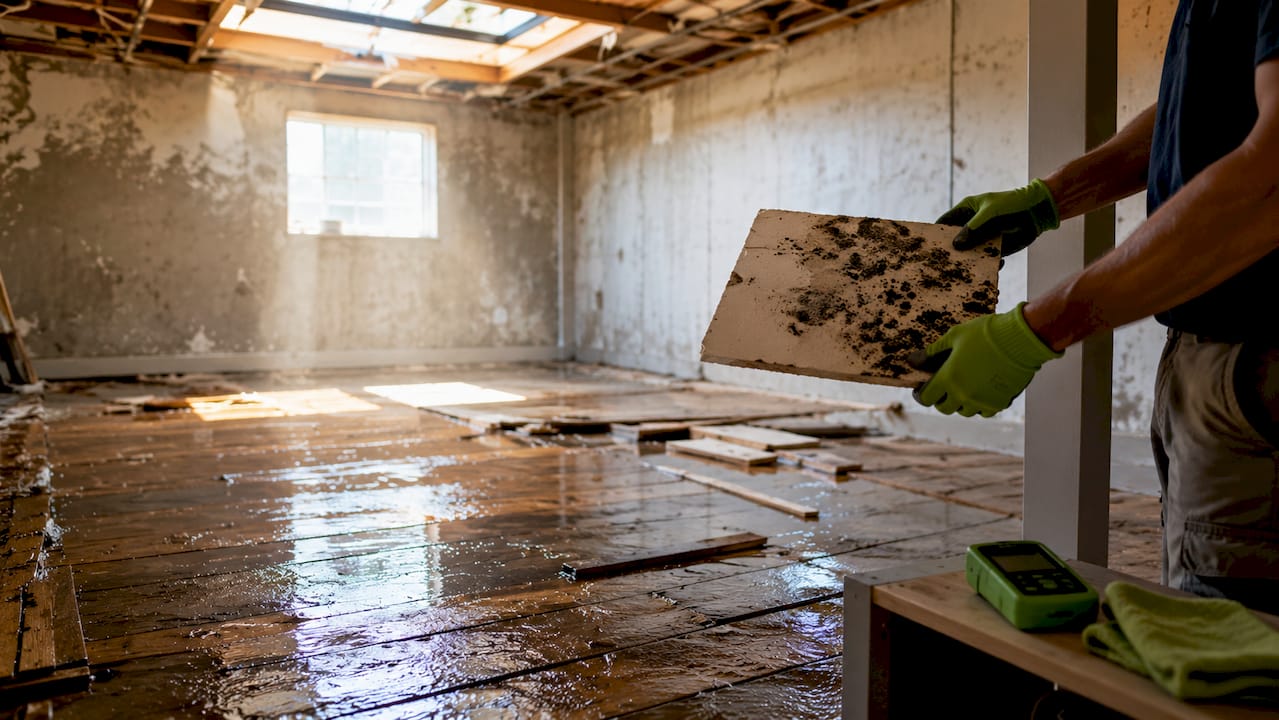
- Drywall (gypsum board): Absorbs water rapidly and begins to lose structural integrity within hours. Paper facing delaminates and becomes a prime surface for mold colonization.
- Wood framing and subfloor: Cellulose fibers swell, warp, and begin to degrade. Prolonged moisture causes cellulose degradation that compromises load-bearing framing over days to weeks.
- Fiberglass and cellulose insulation: Both lose thermal performance when wet and trap moisture against wall cavities for extended periods.
- Concrete and masonry: Absorb water slowly but release it even more slowly, creating hidden moisture reservoirs that resist standard drying equipment.
The concept of moisture-hours explains why speed matters so much. Total time materials remain wet correlates directly with damage severity and microbial growth risk. A floor assembly wet for 6 hours is a drying problem. The same assembly wet for 60 hours is a replacement problem.
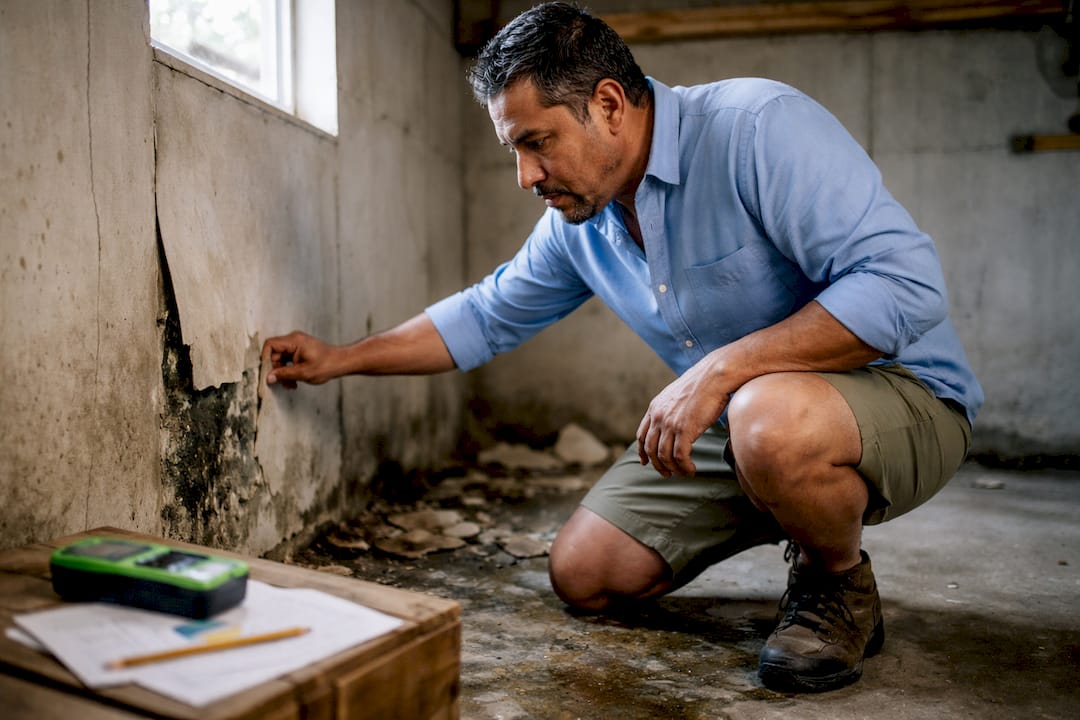
Pro Tip: Use a non-invasive moisture meter on walls and floors around the visible wet area. Water travels 12 to 18 inches beyond the visible boundary in most residential materials, so map a wider zone than you think is necessary.
How does water damage spread to mold so quickly?
Mold is not a slow-moving threat. Mold spore germination begins within 24 hours of water intrusion when moisture, temperature, and an organic food source are present. Visible colonies typically appear within 24 to 72 hours. That timeline is shorter than most homeowners expect, and it is the core reason water damage repair urgency is not an exaggeration.
The progression follows a predictable sequence:
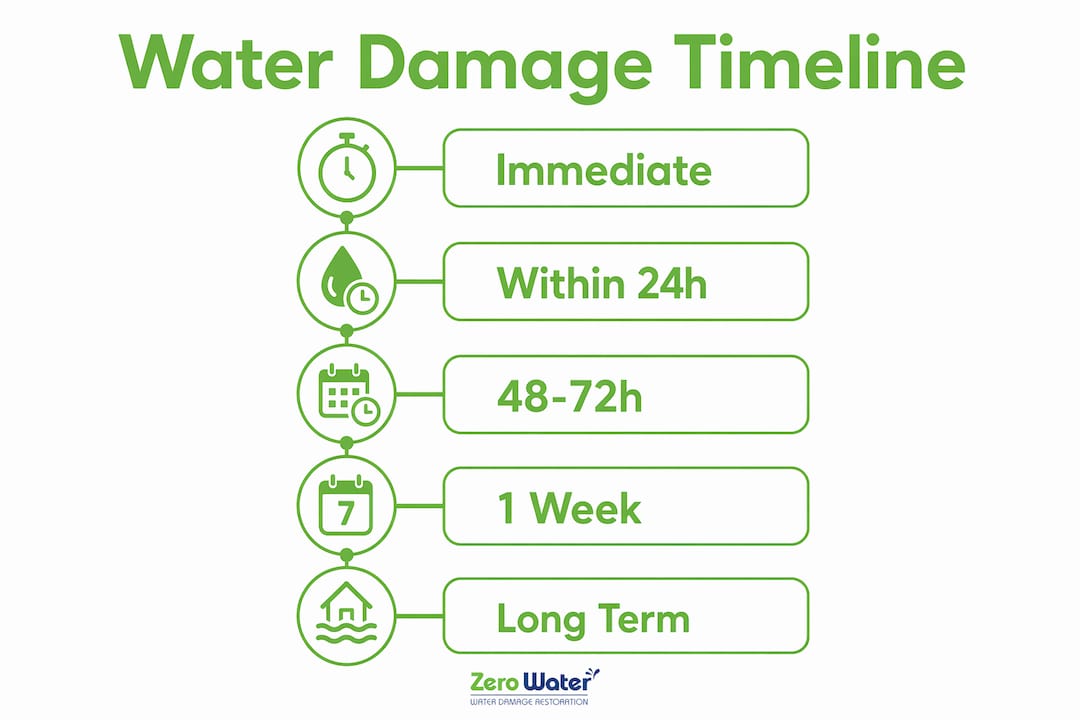
- Hour 1 to 24: Moisture saturates surface materials. Dormant mold spores present in virtually every home begin absorbing water and initiating germination.
- Hour 24 to 72: Visible mold colonies form on drywall paper, wood surfaces, and organic debris. Musty odors become detectable.
- Day 3 to 7: Mold penetrates deeper into substrate materials. Surface cleaning alone no longer addresses the contamination.
- Week 2 and beyond: Biofilm formation begins. Biofilm by microbes in water-damaged buildings resists standard cleaning and antimicrobial agents, significantly complicating remediation.
“Visible mold and musty odors are lagging indicators. Substrate moisture content is the leading indicator that predicts mold growth before it becomes visible.” — Sensorahome Mold Growth Guide
The distinction between mitigation and remediation matters here. The IICRC S500 standard governs water damage mitigation, which covers extraction and drying. Once mold is confirmed, the scope shifts to the IICRC S520 standard for mold remediation. These are separate scopes of work with different protocols, different containment requirements, and different costs. Catching the problem in the mitigation window is always less expensive than entering the remediation window.
HVAC systems add another layer of risk. Water intrusion near ductwork or condensation inside air handlers can spread mold spores throughout a building, turning a localized problem into a whole-home contamination event. The CDC recommends professional inspection and cleaning of HVAC systems after any flood event for exactly this reason.
What are the structural and health effects of prolonged water exposure?
The structural effects of prolonged water exposure follow a timeline that accelerates faster than most homeowners realize. Here is what the research shows across the key damage categories:
| Damage Category | What Happens | Typical Onset |
|---|---|---|
| Drywall disintegration | Paper facing delaminates; gypsum crumbles | 24 to 48 hours |
| Wood warping and swelling | Framing and subfloor lose dimensional stability | 48 to 72 hours |
| Structural framing compromise | Load-bearing members weaken from cellulose decay | 1 to 2 weeks |
| Indoor air quality decline | Microbial volatile organic compounds (MVOCs) accumulate | 3 to 7 days |
| Systemic health effects | Respiratory and multisystem illness from sustained exposure | Weeks to months |
The health dimension is the one most homeowners underestimate. Chronic exposure to water-damaged buildings is linked to respiratory issues and multisystem illnesses from sustained microbial contamination. Research shows more than 98% support for the association between indoor dampness, mold exposure, and health symptoms. Children, elderly residents, and anyone with asthma or immune compromise face the highest risk.
The physical signs of worsening water damage that homeowners should watch for include paint bubbling or peeling from walls and ceilings, soft spots or springiness in flooring, visible staining that expands over days, persistent musty odor even after surfaces appear dry, and doors or windows that suddenly stick due to frame swelling.
Pro Tip: If you notice a musty smell but see no visible mold, do not assume the problem is minor. Odor is a lagging indicator. The active growth is almost certainly inside a wall cavity or under flooring where you cannot see it. Check out real examples of mold growth after leaks to understand what hidden contamination actually looks like.
Why does water damage worsen even after initial cleanup?
This is the scenario that catches homeowners off guard. The visible water is gone. The fans ran for two days. The floor feels dry. Then three weeks later, the baseboards are black with mold and the subfloor is soft. What went wrong?
The answer almost always comes down to hidden moisture pockets and inadequate verification. Several specific failure points drive this pattern:
- Moisture trapped in wall cavities: Standard box fans and consumer dehumidifiers cannot dry inside wall assemblies. Moisture sits against the back of drywall and the face of insulation, sustaining microbial growth invisibly.
- Flooring systems acting as moisture traps: Hardwood, laminate, and vinyl plank flooring hold water beneath them. The surface feels dry while the subfloor underneath remains saturated.
- Premature equipment removal: Skipping stabilization or rushing drying increases total drying time and leads to preventable secondary damage. Removing drying equipment before materials reach target moisture content restarts the damage clock.
- No moisture mapping documentation: Failures in documenting moisture progress cause both insurance denials and prolonged damage. Without systematic measurement from baseline through final dry verification, there is no way to confirm the job is actually complete.
- Uncontrolled environment: Humidity and temperature that remain uncontrolled extend moisture-hours and accelerate microbial growth even while drying equipment runs. Pre-restoration stabilization controls the environment before drying begins.
The water damage restoration timeline for a properly executed job includes baseline moisture readings, daily monitoring, and a final clearance check. Without all three, the cleanup is incomplete regardless of how dry things look.
How to prevent water damage from escalating after a leak
Speed and verification are the two variables that determine whether a water event stays manageable or becomes a major restoration project. Here is the sequence that limits escalation:
- Stop the source first. Shut off the water supply or address the roof breach before any drying begins. Drying an active leak is wasted effort.
- Extract standing water within the first hour. Wet vacuums handle small volumes. Submersible pumps handle larger accumulations. Every hour of standing water increases material saturation depth.
- Begin controlled drying within 24 hours. Professional-grade air movers and dehumidifiers are required to dry wall cavities and flooring systems. Consumer equipment is insufficient for anything beyond surface moisture.
- Monitor substrate moisture content daily. Use a pin-type or non-invasive moisture meter to track readings in affected materials. Target moisture content for wood framing is below 19%. Drywall targets vary but should return to pre-loss baseline.
- Verify before closing walls or replacing flooring. Final moisture readings should match unaffected areas of the same material in the same building before any reconstruction begins.
- Assess for mold at the 48-hour mark. If drying was not initiated within 24 hours, treat the affected area as a potential mold zone and consult a certified remediator. Learn how to prevent mold after a water leak before the window closes.
Pro Tip: Locate your main water shutoff valve before you ever need it. In a burst pipe scenario, every minute before shutoff is additional saturation depth in your floors and walls. Schaumburg and northwest Chicago suburb homes built before 1990 often have shutoffs in non-obvious locations. Know yours.
Key takeaways
Water damage worsens over time because moisture migrates into hidden cavities, mold germinates within 24 hours, and structural decay accelerates with every hour materials remain wet.
| Point | Details |
|---|---|
| The 24-hour mold window | Mold germination begins within 24 hours; areas dried in this window typically avoid remediation. |
| Moisture-hours drive severity | Total time materials stay wet directly determines damage depth and microbial risk. |
| Hidden moisture causes recurrence | Damage worsening after cleanup almost always traces to unverified moisture in wall cavities or under flooring. |
| Structural decay is cumulative | Wood framing and drywall degrade progressively; delays convert drying jobs into replacement projects. |
| Health risks are real and documented | Sustained exposure to water-damaged buildings is linked to respiratory illness in more than 98% of reviewed studies. |
What I’ve learned after a decade of watching water damage escalate
After years of responding to water events across Schaumburg, Arlington Heights, and the northwest suburbs, the pattern I see most often is not negligence. It is misplaced confidence in incomplete drying.
Homeowners run fans, pull up wet carpet, and genuinely believe the problem is handled. What they cannot see is the moisture sitting inside the wall assembly at 28% wood moisture content, right at the threshold where mold growth accelerates. Three weeks later, they call back with a mold problem that is now twice the scope and twice the cost of the original water event.
The other thing I have found is that identifying the moisture source is harder than it looks. A ceiling stain is not always directly below the leak. Water travels along framing members, follows electrical conduit, and pools in unexpected locations. Moisture mapping with calibrated equipment is not optional for a thorough job. It is the only way to know where the water actually went.
My honest observation is this: the homeowners who call within the first few hours almost always avoid mold remediation entirely. The ones who wait three or four days to see if things dry out on their own almost always end up in a larger, more expensive project. The cost of professional emergency water mitigation in the first 24 hours is consistently lower than the cost of mold remediation three weeks later. That math holds up every single time.
— Jim
Stop water damage from escalating with Zero Water Restoration
Zero Water Restoration responds 24/7 to water events across Schaumburg, Barrington, Arlington Heights, and the greater northwest Chicago suburbs. The team uses professional-grade moisture mapping, air movers, and dehumidification systems to verify complete drying, not just surface drying. Certified protocols follow IICRC S500 for mitigation and IICRC S520 for mold remediation, so the scope of work matches the actual condition of your property. The team also works directly with insurance adjusters to document moisture readings and manage claims, reducing your out-of-pocket exposure. If you have experienced a burst pipe, roof leak, storm flooding, or any water intrusion event, contact Zero Water Restoration immediately for a free inspection. Call (847) 515-7000 or visit zerowaterrestoration.com/water-damage-restoration-in-barrington to get a certified team on-site fast.
FAQ
How quickly does water damage get worse?
Water damage begins worsening within the first hour as moisture migrates into porous materials. Mold germination can start within 24 hours, and structural materials like drywall and wood framing begin to degrade within 48 to 72 hours of sustained exposure.
What are the signs that water damage is getting worse?
Signs of worsening water damage include expanding stains on walls or ceilings, soft or springy flooring, paint bubbling, doors and windows that stick, and a persistent musty odor even after visible water is removed. Musty odor is a lagging indicator of active mold growth inside wall cavities.
Can water damage spread after the leak is fixed?
Yes. Fixing the source stops new water from entering, but moisture already absorbed into wall assemblies, insulation, and subfloor continues to spread through capillary action. Without professional drying and moisture verification, damage progresses even after the leak itself is repaired.
Why do water leaks lead to mold?
Water leaks create the moisture conditions mold spores need to germinate. Spores are present in virtually every indoor environment and require only moisture, a food source like drywall paper or wood, and temperatures between 40°F and 100°F to begin growing. The EPA notes that areas not dried within 24 to 48 hours are at high risk for mold colonization.
How does humidity make water damage worse?
Elevated indoor humidity extends the time building materials remain above safe moisture thresholds, which the industry calls moisture-hours. Uncontrolled humidity and temperature accelerate microbial growth and material degradation even when standing water has been removed, which is why professional dehumidification is a required part of any complete mitigation process.