

Water restoration permits are required whenever repair work touches structural, electrical, or plumbing systems in your property. This applies whether the damage came from a burst pipe in Schaumburg, storm flooding in Barrington, or a roof leak in Arlington Heights. Understanding why water restoration permits are required protects you from fines, insurance denials, and costly rework down the road. Illinois does not operate under a single statewide permit rule. Instead, each municipality controls its own building department and sets its own thresholds. That means what triggers a permit in Palatine may differ from what triggers one in Hoffman Estates, making local knowledge non-negotiable.
Why water restoration permits are required for illinois properties
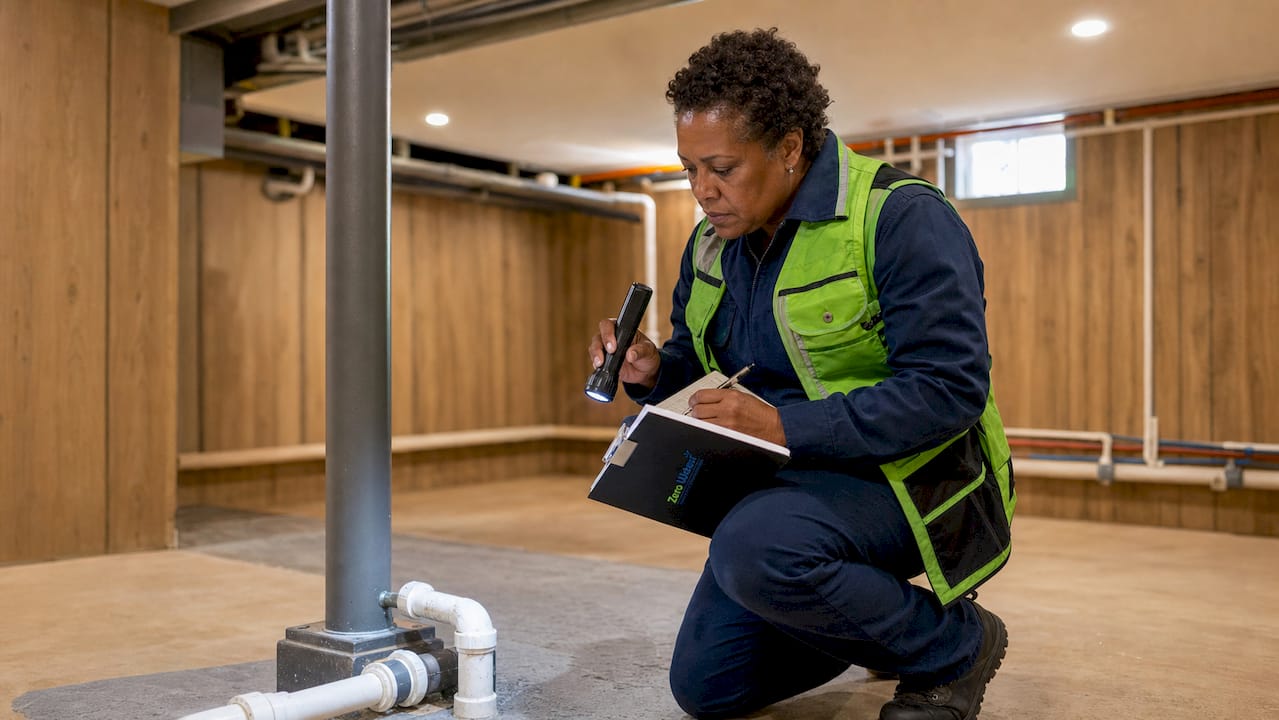
Permits exist to guarantee that restoration work meets safety and building codes, not just to create paperwork. When a contractor replaces water-damaged framing, reroutes plumbing, or repairs electrical wiring, an independent inspector verifies the work before walls close. That third-party check catches problems that even experienced contractors sometimes miss.
Permits and inspections ensure restoration work meets applicable safety and building codes, preventing hazards and costly rework. A failed inspection before drywall goes up costs far less than tearing out finished walls after the fact.
Permits also create a legal record. Documentation of permits and inspections is critical for future due diligence by home buyers and insurance adjusters. Without that record, you face complications at every future transaction or claim.
The importance of water restoration permits extends beyond safety. They protect your investment, your liability exposure, and your ability to sell the property at full value.
What types of water restoration work require permits in illinois?
In Illinois, cosmetic or non-structural repairs typically do not require permits, but structural, plumbing, or electrical repairs usually do. The line between cosmetic and structural is where most property owners get confused.
Work that generally does not require a permit:
- Replacing drywall with no structural changes
- Painting or refinishing floors
- Swapping out fixtures like faucets or light switches in kind
- Installing new carpet or flooring over an undamaged subfloor
Work that typically does require a permit:
- Repairing or replacing load-bearing walls, beams, or floor joists
- Any plumbing rerouting or new drain installation
- Electrical panel work, new circuits, or rewiring
- Foundation repairs or waterproofing that alters drainage
- HVAC modifications connected to water damage
Permits depend on affected systems, not the cause of the damage. Water presence alone does not trigger a permit. The scope of building alterations does. A contractor replacing a rotted floor joist needs a permit in virtually every Illinois municipality, regardless of whether the damage came from a pipe or a flood.
Pro Tip: Before any work begins, call your local building department with a written description of the planned repairs. Ask directly whether each item on your scope list requires a permit. Get the answer in writing or by email.
How do permits and inspections protect property owners and contractors?
Permitting is fundamentally about independent third-party verification to catch issues early, protecting both homeowners and the broader community. That protection shows up in several concrete ways.
-
Code compliance verification. An inspector confirms that structural repairs meet load requirements and that plumbing and electrical work follows current Illinois Plumbing Code and National Electrical Code standards. Work that looks correct can still fail inspection for hidden deficiencies.
-
Stage-based inspections prevent buried problems. Rough plumbing and electrical inspections must be completed before covering work. This means an inspector sees the framing, pipes, and wiring before drywall goes up. Catching a code violation at that stage costs hours, not weeks.
-
Insurance claim protection. Insurance adjusters review permit records when processing claims. Unpermitted work can reduce your payout or void coverage entirely. Proper water damage insurance documentation that includes permit records strengthens every claim.
-
Contractor liability protection. A licensed contractor who pulls permits is legally protected if a dispute arises. One who skips permits carries full liability for any failure, injury, or code violation discovered later.
-
Resale value and due diligence. Buyers and their attorneys check permit records during real estate transactions. Unpermitted work discovered at closing can kill a sale or force a price reduction.
“Many mistakenly think water restoration is a single step when it actually includes multiple regulated trades, each with its own permit needs.” — Understanding the Impact of Local Building Codes
What is the permitting process for water restoration work in illinois?
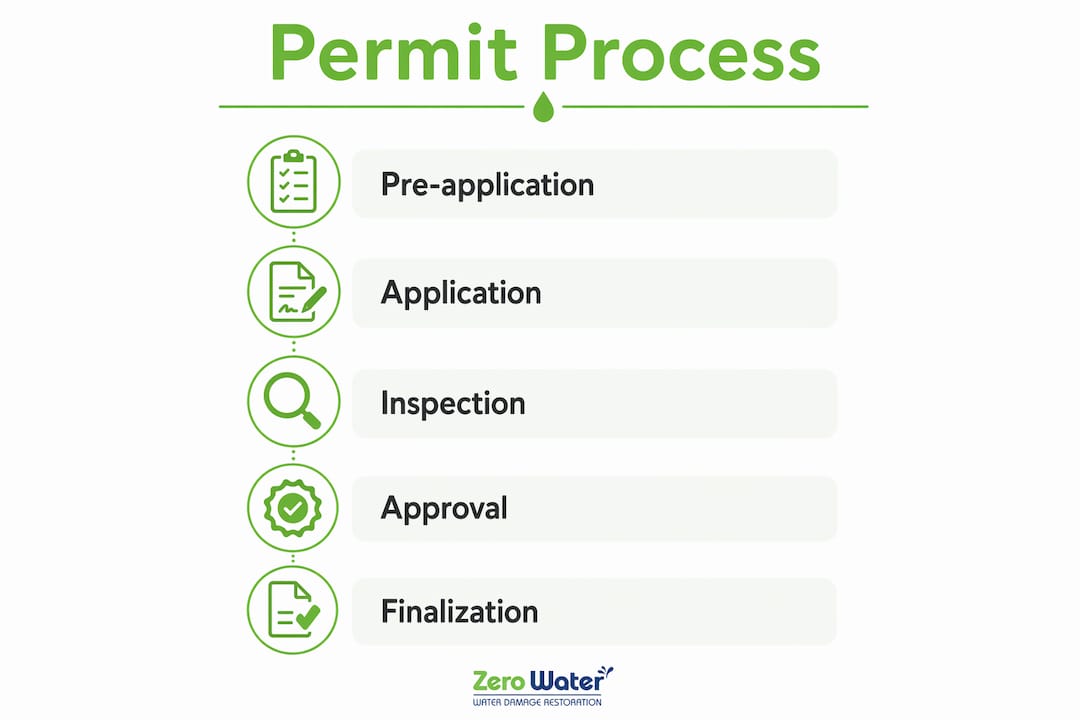
The water restoration permit process in Illinois follows a consistent pattern across municipalities, even though specific requirements vary. Illinois contractors avoid permit surprises by defining project scope first and consulting local building departments, since requirements vary greatly by city and village.
Follow these steps to move through the process without delays:
-
Write out your full project scope. List every repair by trade: structural, plumbing, electrical, HVAC. Be specific. “Replace damaged floor joists in kitchen” is more useful than “fix floor damage.”
-
Contact the Authority Having Jurisdiction (AHJ). The AHJ is your local building department. In Illinois, this could be a city, village, or township office. Call or visit before submitting anything.
-
Submit your permit application with supporting documents. Most municipalities require a completed application form, a site plan or drawings for structural work, and contractor license numbers. Some villages in the northwest suburbs accept online submissions; others require in-person filing.
-
Schedule rough-in inspections before closing walls. Once framing, plumbing, and electrical rough-in work is complete, call to schedule inspection before any drywall or insulation goes in. Missing scheduled inspections can result in reopening finished work and significant delays.
-
Pass final inspection and receive sign-off. After all work is complete, a final inspection closes the permit. Keep the signed permit card and inspection records permanently.
| Permit Stage | What Happens | Common Pitfall |
|---|---|---|
| Pre-application | Scope definition and AHJ consultation | Starting work before confirming requirements |
| Application submission | Forms, drawings, and contractor info submitted | Incomplete documentation causes delays |
| Rough-in inspection | Framing, plumbing, electrical checked open | Closing walls before inspection is scheduled |
| Final inspection | All completed work reviewed for code compliance | Skipping final leaves permit open on record |
| Record keeping | Permit card and sign-off stored permanently | Losing records creates resale complications |
Pro Tip: Photograph every stage of the work before walls close. Pair those photos with your permit and inspection records. That file becomes your strongest asset when selling the property or filing a future insurance claim.
Are emergency water restoration actions exempt from permit requirements?
Emergency mitigation and permitted reconstruction are two separate phases, and confusing them creates legal exposure. Emergency water mitigation covers immediate actions to stop damage from spreading: water extraction, drying, dehumidification, and temporary protection of the structure. These steps generally do not require permits.
The reconstruction phase is different. Even emergency water damage actions may require permits for subsequent extensive repairs. An emergency does not exempt regulated work from permit requirements.
Key distinctions to understand:
- Extraction and drying: No permit required in virtually all Illinois municipalities.
- Temporary boarding or tarping: No permit required for short-term protective measures.
- Structural repairs after emergency stabilization: Permit required in most cases.
- Plumbing or electrical repairs following water damage: Permit required regardless of how the damage occurred.
- Contaminated water scenarios: Category 3 water damage (sewage or floodwater) may trigger additional health department notifications beyond standard building permits.
Projects involving contaminants like asbestos require additional permits and specialized contractors beyond standard building permits. Older homes in communities like Elk Grove Village or Mount Prospect may contain asbestos in floor tiles, insulation, or pipe wrap. Disturbing those materials during water restoration creates a separate permitting and notification obligation under Illinois Environmental Protection Agency rules.
Emergency water damage compliance demands rapid action alongside regulatory awareness. Working with an experienced licensed contractor from the start keeps both priorities in balance.
What risks do property owners and contractors face without permits?
Skipping permits during water restoration creates compounding problems that grow more expensive over time. The unknown risks of unpermitted work affect safety, finances, and legal standing simultaneously.
The consequences break down into four categories:
- Safety hazards. Unpermitted structural repairs may not meet load requirements. Unpermitted electrical work is a leading cause of residential fires. Plumbing code violations create leak and contamination risks. These are not theoretical. They are documented outcomes of work done without inspection.
- Legal and financial penalties. Illinois municipalities issue stop-work orders for unpermitted construction. Fines vary by jurisdiction but can reach hundreds of dollars per day. In serious cases, the building department can require demolition of completed work.
- Insurance claim denial. Adjusters reviewing a claim for a second water event may discover the prior unpermitted repair. That discovery can void coverage for the new claim entirely. Proper insurance claim navigation depends on a clean permit record from prior work.
- Real estate complications. Unpermitted work appears as a red flag during title searches and home inspections. Buyers can demand price reductions, require the seller to retroactively permit and inspect the work, or walk away from the deal.
The impact of not having a permit is rarely limited to a single consequence. One unpermitted repair can trigger a chain of problems that costs far more than the permit fee ever would have.
Key takeaways
Water restoration permits are required in Illinois whenever repairs involve structural, plumbing, or electrical systems, and skipping them creates safety risks, legal penalties, and insurance complications that far outweigh the cost of compliance.
| Point | Details |
|---|---|
| Permits are scope-driven, not damage-driven | The type of repair, not the water event itself, determines whether a permit is required. |
| Illinois rules vary by municipality | Contact your local AHJ before starting any regulated repair work to confirm exact requirements. |
| Inspections protect all parties | Stage-based inspections catch code violations before walls close, preventing costly rework. |
| Emergency mitigation is not exempt from permits | Extraction and drying are permit-free, but structural and trade repairs require permits regardless of urgency. |
| Permit records protect your investment | Documentation supports insurance claims, contractor liability, and future property sales. |
What i’ve learned after a decade of illinois water restoration permits
The single biggest mistake I see property owners make is assuming that because the damage was an emergency, the rules are flexible. They are not. Illinois building departments are consistent on this point: the urgency of the event does not change the permit requirement for regulated work.
The second mistake is assuming that permit rules are uniform across the northwest suburbs. They are not. Schaumburg, Palatine, and Barrington each operate their own building departments with their own thresholds, fee schedules, and inspection processes. What passes in one village may require additional documentation in the next. I have seen contractors get caught off guard by this more than once, and the delays are always avoidable.
My practical advice: define your scope in writing before you make a single call. Know exactly what trades are involved. Then contact the AHJ directly and ask specific questions. Keep every response documented. That written record protects you if a dispute arises later.
Working with a licensed restoration contractor who knows the local permit landscape is the most reliable way to move fast and stay compliant. The permit process does not have to slow your project down if it is managed correctly from day one.
— Jim
How Zerowaterrestoration handles permits so you don’t have to
Zerowaterrestoration has worked through the permit processes of municipalities across the northwest suburbs of Chicago for over 10 years. The team knows the specific requirements in Schaumburg, Barrington, Palatine, Hoffman Estates, and surrounding communities, and handles permit applications, inspection scheduling, and code compliance documentation as part of every restoration project.
Whether your property needs water damage restoration in Barrington or anywhere across the Chicagoland area, Zerowaterrestoration manages the full scope from emergency mitigation through final inspection sign-off. The team also works directly with insurance adjusters to keep your claim documentation aligned with permit records. Call (847) 515-7000 or visit zerowaterrestoration.com for a free inspection and estimate.
FAQ
Do i need a permit for water restoration in illinois?
You need a permit when restoration work involves structural repairs, plumbing, or electrical systems. Cosmetic repairs like drywall replacement or painting generally do not require permits, but requirements vary by municipality.
What happens if i skip a permit during water restoration?
Skipping a permit can result in stop-work orders, daily fines, forced demolition of completed work, insurance claim denials, and complications when selling your property.
Does an emergency waive the permit requirement?
Emergency mitigation steps like water extraction and drying are permit-free. However, subsequent structural, plumbing, or electrical repairs still require permits even when the original damage was an emergency.
How do i find out what permits my project requires?
Contact your local building department, also called the Authority Having Jurisdiction, with a written description of all planned repairs. Ask specifically which items on your scope list require permits before any work begins.
Can unpermitted water restoration work affect my homeowner’s insurance?
Yes. Insurance adjusters check permit records when processing claims. Unpermitted prior repairs can reduce your payout or void coverage for a new claim tied to the same area of the property.