Professional water restoration is defined as a structured process of water extraction, structural drying, and mold prevention performed by trained technicians using industrial equipment. The water restoration vs DIY comparison comes down to one core fact: most homeowners lack the tools and training to confirm their property is truly dry. The industry standard for this work is set by the IICRC S500, a technical document governing water damage restoration procedures. Moisture meters, thermal imaging cameras, and truck-mounted extractors are not household items. Choosing the wrong approach after a flood or burst pipe can turn a $3,000 repair into a $25,000 rebuild.
1. What are the key differences in equipment and technique?
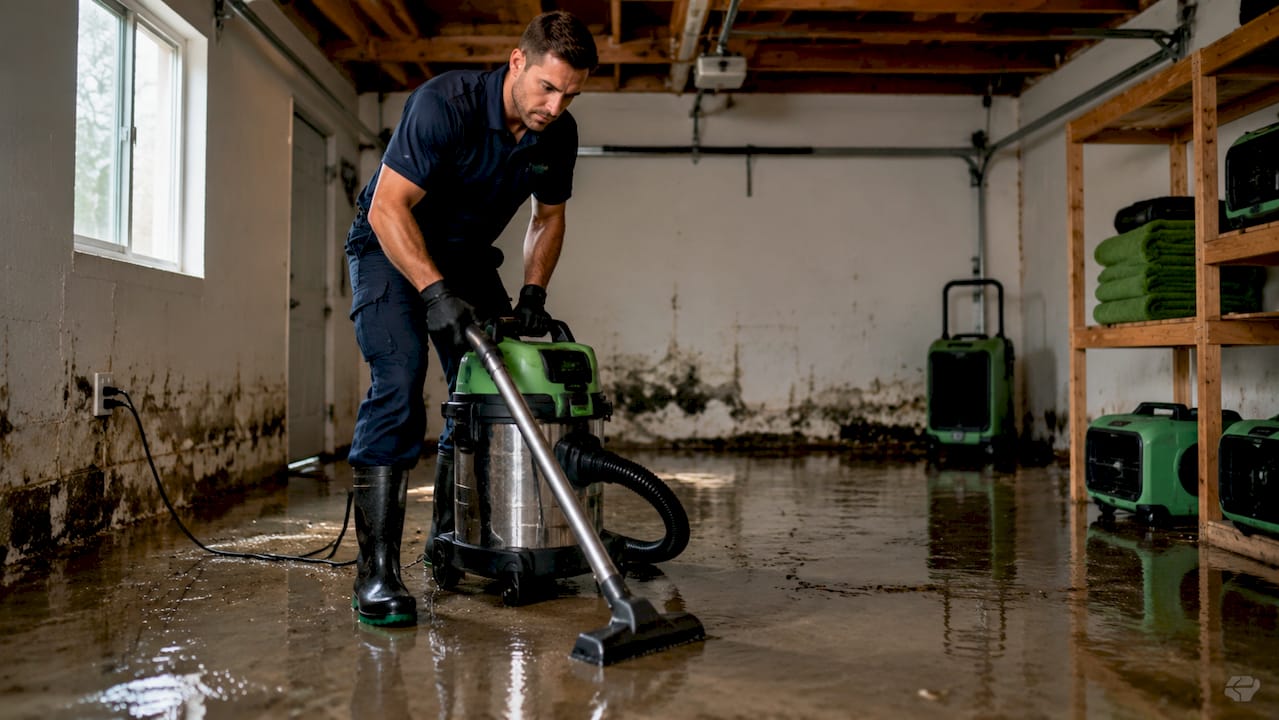
Professional restorers use industrial-grade equipment that no homeowner has in their garage. Truck-mounted extractors pull thousands of gallons per hour. Commercial dehumidifiers and axial fans create controlled drying conditions that match IICRC S500 specifications. A shop vac and box fan simply cannot replicate that output.
The deeper issue is detection. Thermal imaging and moisture meters allow professionals to find moisture trapped inside wall cavities, under subfloors, and behind baseboards. A surface that looks and feels dry can still hold enough moisture to grow mold within 48–72 hours.
- Truck-mounted extractors vs. shop vacs: professionals remove water at a rate that prevents secondary absorption into structural materials
- Commercial dehumidifiers maintain precise humidity targets that consumer units cannot reach
- Thermal imaging cameras identify wet zones invisible to the naked eye
- Moisture meters provide numerical readings that confirm dryness, not just appearance
- Daily moisture logs track drying progress and document compliance with IICRC standards
Pro Tip: Surface dryness is not structural dryness. A floor that feels dry underfoot can still hold moisture inside the subfloor or joists. Only a calibrated moisture meter reading confirms the job is done.
2. What are the health and safety risks of DIY water cleanup?
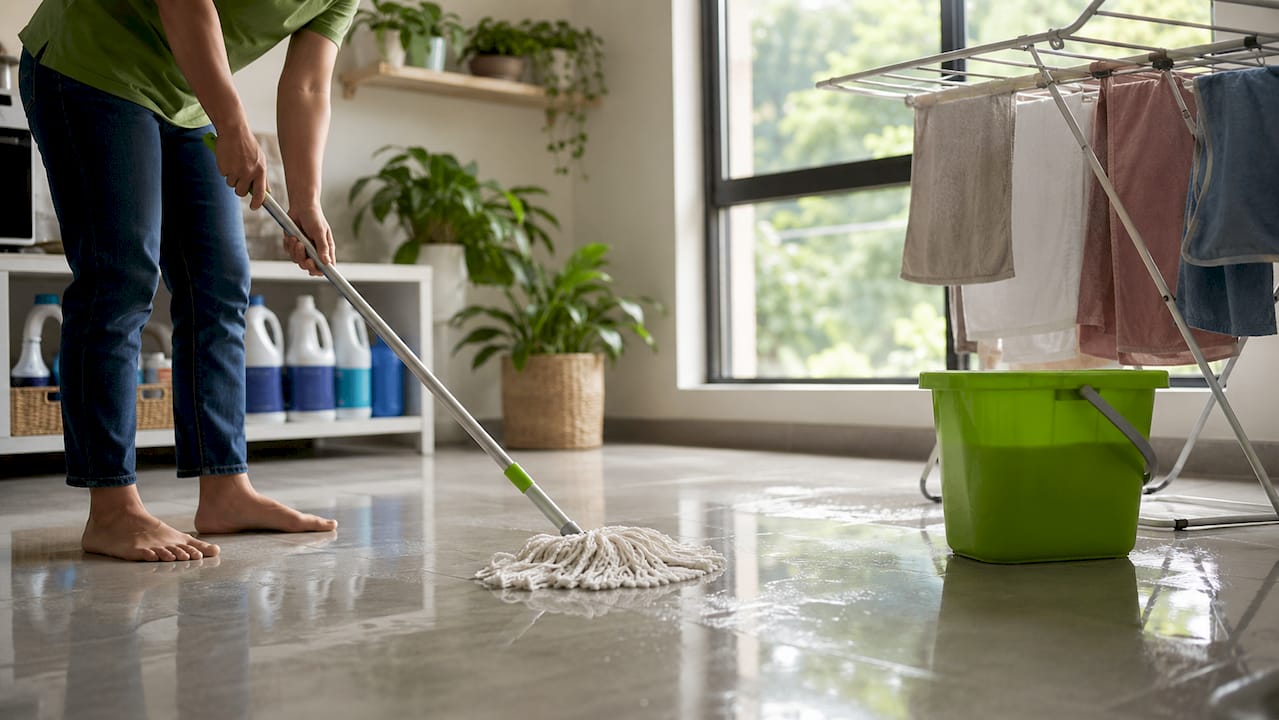
Water damage is classified into three contamination categories, and DIY cleanup is only safe for Category 1 clean water in a small, contained area. Category 2 gray water from appliance leaks or toilet overflows contains bacteria. Category 3 black water from sewage backups or floodwater is a biohazard requiring full personal protective equipment and professional decontamination.
Mold is the second major risk. Mold colonies can begin forming within 24–72 hours of water exposure. Missed moisture inside structures is the most common cause of post-cleanup mold growth, and it happens because DIYers rely on visual inspection rather than instrumentation.
- Category 1 (clean water): DIY is acceptable for small spills only
- Category 2 (gray water): requires protective gear and professional disinfection
- Category 3 (black water): biohazard, always requires professional remediation
- Mold growth begins in 24–72 hours when moisture is trapped in porous materials
- Long-term mold exposure causes respiratory illness, allergic reactions, and structural decay
Professional restorers use containment barriers, air scrubbers, and EPA-registered disinfectants to prevent cross-contamination. A homeowner with a mop and bleach spray cannot achieve the same result. The mold prevention process that professionals follow is systematic, not reactive.
3. How do costs compare between DIY and professional restoration?
Professional water damage restoration typically costs $3,000–$25,000+, depending on the scope of damage. That number sounds large until you compare it to the alternative. DIY attempts that miss hidden moisture routinely lead to mold remediation bills exceeding $10,000, on top of the original repair costs.
| Factor | Professional Restoration | DIY Approach |
|---|---|---|
| Upfront cost | $3,000–$25,000+ | $200–$1,500 in equipment |
| Mold risk cost | Minimized with proper drying | Can exceed $10,000 if moisture is missed |
| Insurance coverage | Often covered minus deductible | Rarely covered for DIY failures |
| Material preservation | High within 48-hour window | Low without proper equipment |
| Documentation | Full moisture logs and reports | None |
Insurance often covers professional restoration minus your deductible, which changes the financial picture entirely. Many homeowners pay far less out of pocket for professional work than they expect. DIY repairs, by contrast, are rarely covered by insurance, and failed DIY attempts can void coverage for subsequent damage.
Pro Tip: Call your insurance provider before you touch anything. A professional restoration company like Zerowaterrestoration can document the damage immediately, which protects your claim and your coverage.
4. When is DIY water restoration actually acceptable?
DIY water cleanup is acceptable in exactly one scenario: a small spill of clean water on a non-porous surface that you can fully dry within a few hours. Think a knocked-over fish tank on a tile floor, not a burst pipe in a finished basement.
The moment any of these conditions apply, you need a professional:
- Water has been standing for more than 24 hours
- The source is gray water or black water
- Water has reached drywall, insulation, flooring, or wood framing
- You cannot confirm dryness with a moisture meter
- The affected area exceeds a few square feet
General contractors are not substitutes for restoration specialists. A contractor who replaces drywall without first confirming the framing behind it is dry will seal moisture inside the wall. That moisture grows mold, and the wall has to come out again. The water damage restoration timeline matters more than most homeowners realize. Acting within 24–48 hours is not a suggestion. It is the difference between restoration and replacement.
5. What does the professional restoration process actually look like?
Professional water damage restoration follows a defined sequence. Each step builds on the last, and skipping any one of them creates risk downstream. Here is what a qualified restoration company does from start to finish:
- Assessment: Technicians identify the water source, classify contamination category, and map the affected area using moisture meters and thermal imaging
- Extraction: Industrial extractors remove standing water from floors, carpets, and structural cavities
- Structural drying: Commercial dehumidifiers and air movers run continuously, with settings adjusted daily based on moisture readings
- Moisture mapping: Technicians log readings at multiple points each day to confirm drying progress meets IICRC S500 targets
- Mold prevention: Antimicrobial treatments are applied to at-risk surfaces during the drying phase
- Clearance testing: Final moisture readings confirm all materials have reached acceptable levels before any reconstruction begins
- Documentation: Full written reports, photos, and moisture logs are compiled for insurance submission
Early professional intervention can save 40–60% in replacement costs by preserving porous materials that would otherwise need to be torn out. Drywall, hardwood floors, and insulation can often be dried in place if the process starts within 48 hours. After that window closes, removal becomes the only option.
Fast response and professional documentation also directly affect insurance claim approval rates. Adjusters rely on moisture logs and written assessments to validate claims. A homeowner with no documentation has a much harder time recovering full value.
6. Why a general contractor is not the same as a restoration company
This is one of the most expensive mistakes homeowners make. A general contractor builds and repairs. A restoration company dries, decontaminates, and documents. These are different disciplines with different tools and different training.
Replacing drywall without drying the structure first traps moisture inside the wall cavity. The new drywall looks fine for weeks, sometimes months. Then the mold appears, and the wall has to come out again. Now you are paying for two demolitions instead of one. The second remediation is always more expensive than the first would have been if done correctly.
A certified restoration company holds IICRC credentials and follows documented drying protocols. Ask any contractor you consider for water damage work whether they use moisture meters, whether they produce daily drying logs, and whether they follow IICRC S500. If the answer to any of those questions is no, they are not the right person for the job.
Key takeaways
Professional water restoration outperforms DIY in every scenario involving contaminated water, standing water over 24 hours, or any moisture that has reached structural materials.
| Point | Details |
|---|---|
| Equipment gap is decisive | Industrial extractors and thermal imaging find moisture that shop vacs and visual checks miss entirely. |
| The 48-hour window is real | Acting within 48 hours preserves porous materials and can reduce replacement costs by 40–60%. |
| Insurance changes the math | Professional restoration is often covered by insurance, making it less expensive out of pocket than failed DIY. |
| General contractors are not restorers | Replacing materials without drying first seals moisture in and creates mold requiring costly second remediation. |
| DIY has one valid use case | Clean water, small area, non-porous surface, fully dried within hours. Everything else needs a professional. |
What I have learned after years of watching homeowners make this call
I have seen the same pattern repeat itself more times than I can count. A homeowner finds water in their basement on a Saturday morning. They rent a wet vac, run some fans, and figure they have handled it. Two months later, they are calling about a mold smell behind the drywall.
The problem is not that people are careless. The problem is that water damage is deceptive. Floors feel dry. Walls look fine. Nothing smells yet. But moisture is sitting inside the framing, and without a moisture meter, there is no way to know it is there.
The homeowners who come out of water damage events in the best shape are the ones who call a professional within the first few hours and let the insurance process work the way it is designed to. They pay their deductible. The restoration company documents everything. The claim gets approved. The house gets dried properly. They move on.
The homeowners who struggle are the ones who try to save money upfront and end up spending far more on mold remediation, drywall replacement, and sometimes structural repairs six months later. I am not saying DIY is never appropriate. For a small clean water spill on a hard surface, you can handle it yourself. But the moment water touches drywall, insulation, or wood, the calculus changes completely. Rapid professional response is not a luxury. It is the most cost-effective decision you can make.
— Jim
How Zerowaterrestoration handles water damage from start to finish
When water damage hits your home, the clock starts immediately. Zerowaterrestoration responds 24/7 to water damage emergencies throughout Schaumburg, Arlington Heights, Barrington, and the greater Chicagoland area. The team brings industrial extraction equipment, commercial drying systems, and moisture mapping technology to every job.
Zerowaterrestoration also manages the insurance side of your claim directly, handling documentation, adjuster communication, and moisture logs so your out-of-pocket costs stay as low as possible. If you are dealing with water damage right now, do not wait. Call (847) 515-7000 or visit the water damage restoration service page to schedule a free inspection. The faster you act, the more your home can be saved rather than replaced.
FAQ
Is DIY water restoration ever safe?
DIY water cleanup is safe only for small Category 1 clean water spills on non-porous surfaces that can be fully dried within a few hours. Any standing water, contaminated water, or moisture that has reached drywall or flooring requires professional intervention.
How much does professional water restoration cost?
Professional restoration costs $3,000–$25,000+ depending on the extent of damage. Most homeowner insurance policies cover professional restoration minus the deductible, which often makes it less expensive out of pocket than a failed DIY attempt followed by mold remediation.
How quickly does mold grow after water damage?
Mold can begin growing within 24–72 hours of water exposure, particularly in porous materials like drywall, insulation, and wood framing. Professional drying within the first 48 hours is the most reliable way to prevent mold from establishing.
Can a general contractor handle water damage restoration?
A general contractor is not a substitute for a certified restoration company. Contractors who replace materials without drying first trap moisture inside walls, which leads to mold and requires a second, more expensive remediation.
What does professional water damage documentation include?
Professional restorers produce moisture logs, thermal imaging reports, daily drying records, and written damage assessments. This documentation is what insurance adjusters use to approve claims, and it is something no DIY cleanup can provide.