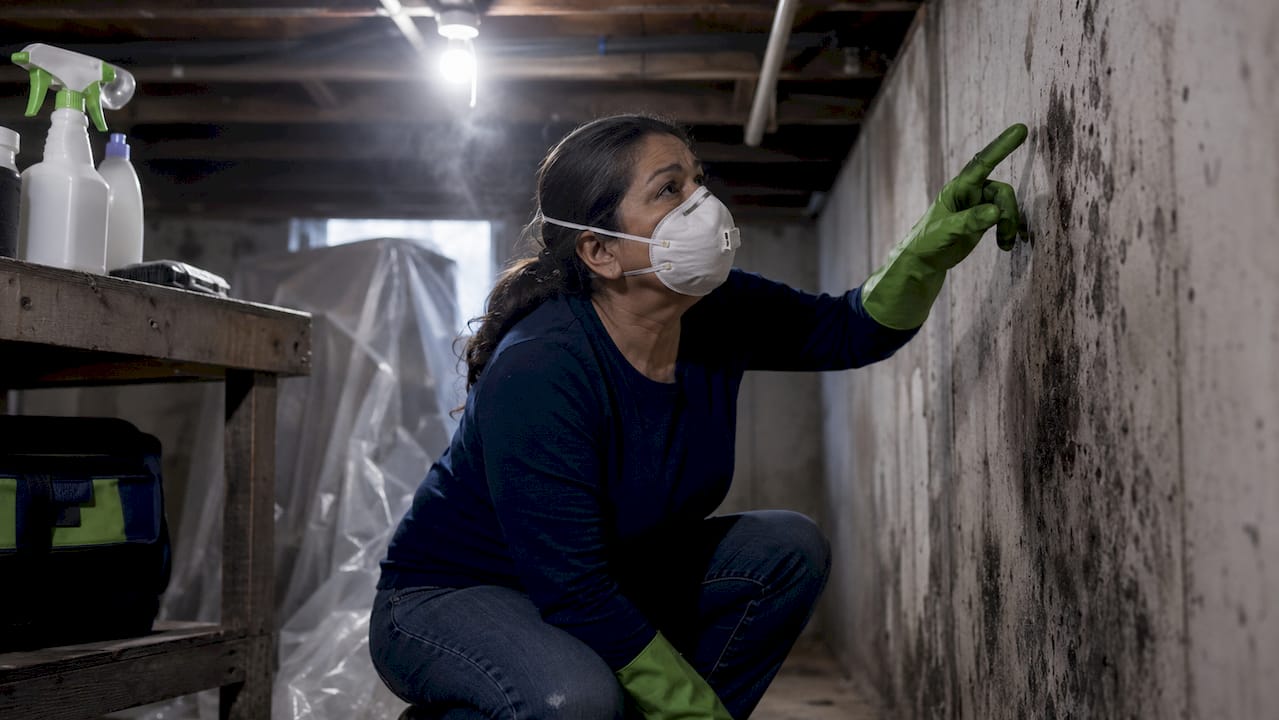
Safe mold remediation is defined as the controlled removal of mold growth using methods that protect human health, prevent spore spread, and eliminate the moisture source causing regrowth. To remediate black mold safely, you need to assess the scope, gear up properly, apply the right cleaning agents, and verify the result. The IICRC S520 standard governs professional mold remediation in the United States and sets the benchmark for both containment and clearance testing. Getting this process right the first time saves you from repeat infestations and costly structural repairs.
How to remediate black mold safely: DIY or call a pro?
The EPA’s 10-square-foot rule is the clearest decision point available to homeowners. Mold patches under 10 sq ft on hard, non-porous surfaces are DIY-eligible. Anything larger, or any growth on porous materials like drywall or insulation, requires professional remediation.
The size rule is a starting point, not the whole picture. Location and material type matter just as much. Mold inside HVAC ducts, behind walls, or under flooring spreads spores through the entire building every time the system runs. Those situations require professional containment regardless of the visible patch size.
Here are the key risk factors that push a job beyond DIY:
- Porous materials involved: Drywall, wood framing, carpet, and insulation absorb mold roots. Surface cleaning does not reach them.
- HVAC contamination: Any mold near or inside ductwork requires professional scope and air testing.
- Visible water damage: Staining, warping, or soft spots indicate moisture has penetrated deep into the structure.
- Health vulnerabilities: Anyone in the home with asthma, allergies, or a compromised immune system raises the risk threshold significantly.
- Mold returns after cleaning: Recurrence within weeks means the moisture source was never fixed or the mold was not fully removed.
Professional remediation costs range from $1,200 to $6,000 depending on severity and affected area. That range reflects the difference between a contained bathroom ceiling patch and a basement with flood-related mold across multiple surfaces. Hiring a certified remediator for a large job is not optional. It is the only way to meet IICRC S520 clearance standards and protect your property’s value.
What PPE and cleaning agents do you need for safe black mold removal?
Personal protective equipment is non-negotiable before you touch any mold. N95 respirators are mandatory for DIY remediation. Standard surgical masks and cloth masks do not filter mold spores. For confirmed large-scale black mold colonies, P100 respirators and full protective gear are the minimum safe standard.
Your full PPE setup for any mold cleanup should include:
- Respirator: N95 at minimum; P100 for larger or confirmed Stachybotrys infestations
- Gloves: Nitrile or rubber gloves that extend past the wrist
- Eye protection: Sealed safety goggles, not open-frame glasses
- Coveralls: Disposable Tyvek suits prevent spores from contaminating your clothing and spreading to other rooms
- Shoe covers: Disposable booties keep spores from tracking through the house
Cleaning agent selection is where most homeowners make costly mistakes. Bleach kills only surface mold on hard, non-porous materials. On porous surfaces, bleach leaves the mold roots intact, and regrowth follows within weeks. White vinegar kills 82% of mold species and penetrates porous surfaces far better than bleach. For hard surfaces, a mixture of hydrogen peroxide and dish soap at 3 parts 3% hydrogen peroxide to 1 part dish soap outperforms bleach. The dish soap acts as a surfactant, breaking the mold’s surface tension so the peroxide penetrates deeper.
Pro Tip: Apply your cleaning solution and let it sit for at least 10 minutes before scrubbing. Contact time is what kills the mold. Wiping immediately after application wastes the product and leaves live spores behind.
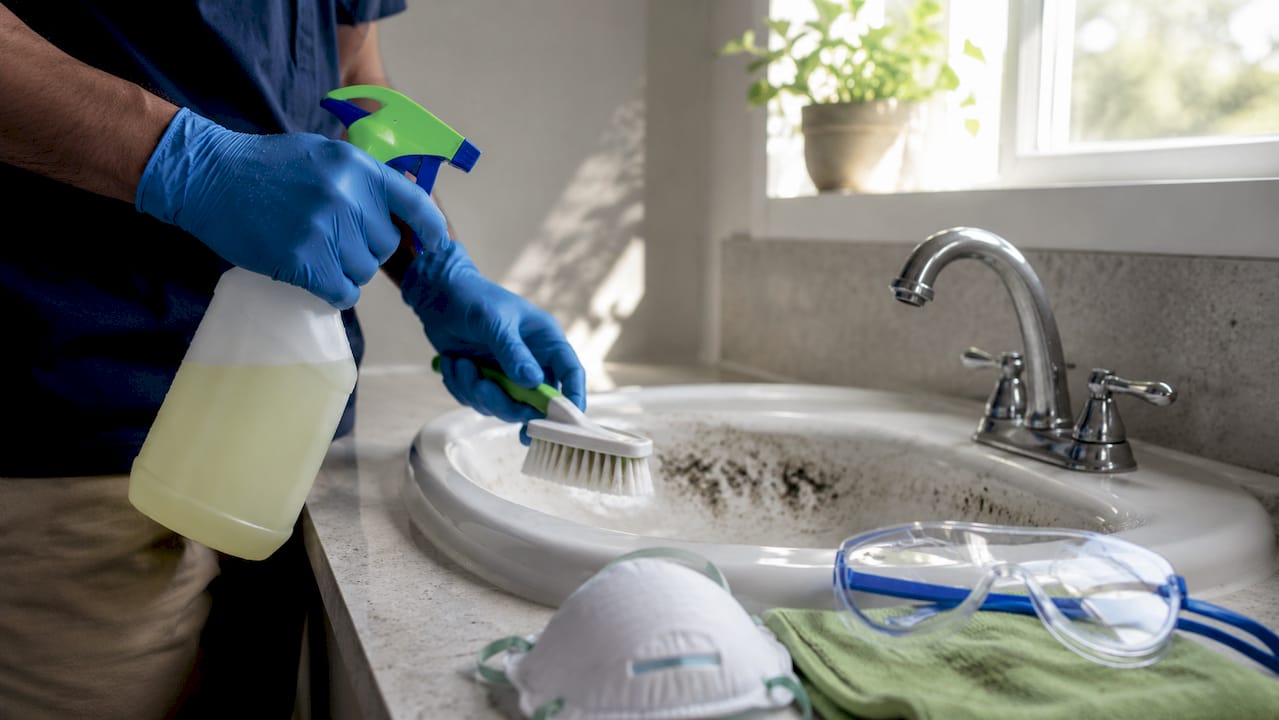
Choosing the right product also depends on the surface. Knowing how to choose cleaning products for your specific surfaces prevents damage and improves mold kill rates. Baking soda mixed with water works as a mild scrubbing agent for light surface mold and leaves a residue that discourages regrowth.
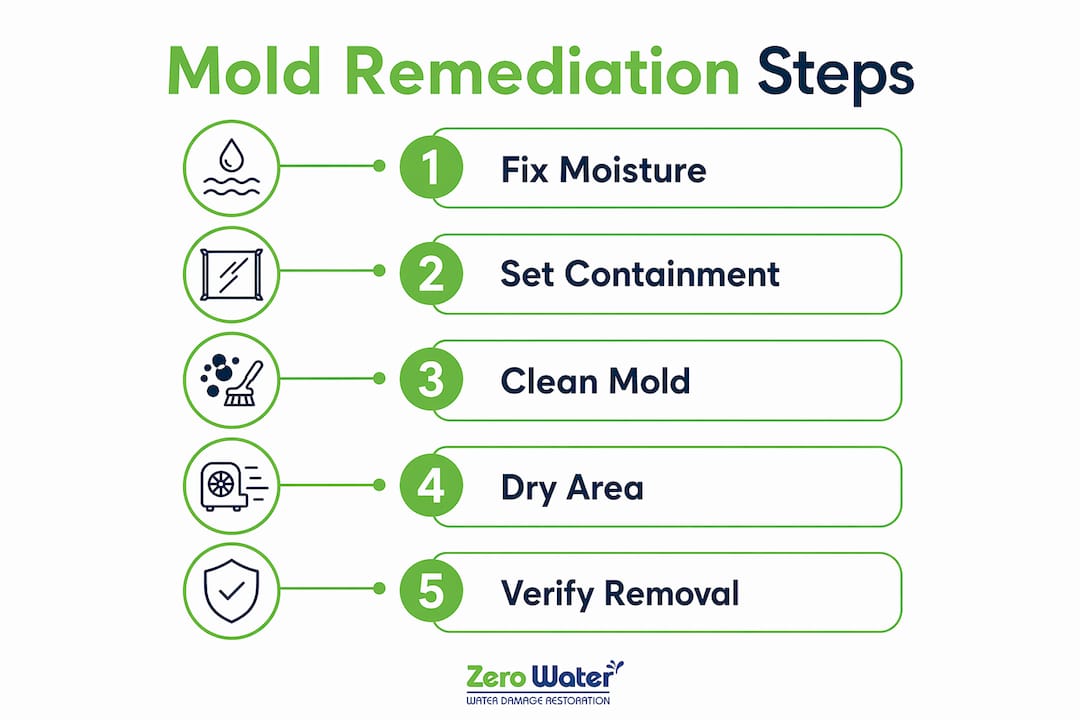
Step-by-step process for safe mold remediation at home
Fix the moisture source first
Every successful remediation starts with stopping the water. Ignoring the moisture source causes mold to return within weeks, no matter how thorough the cleaning. Locate and repair the leak, condensation point, or humidity problem before touching the mold. This step is 90% of the job.
Set up containment
For patches larger than a few square feet, containment prevents spores from spreading to clean areas. Seal doorways with plastic sheeting and tape. Professional remediators use two-stage containment with airlocks and negative air machines that maintain negative air pressure inside the work zone. Simply closing a door is not containment. For DIY jobs, at minimum seal the work area and run an air purifier with a HEPA filter pointed toward an exterior window. For larger jobs, read about negative air pressure methods before proceeding.
Clean the mold
Follow this sequence for hard, non-porous surfaces:
- Mist the mold lightly with water before disturbing it. This reduces airborne spore release during scrubbing.
- Apply your cleaning solution (3 parts 3% hydrogen peroxide to 1 part dish soap, or undiluted white vinegar for porous-adjacent surfaces).
- Let the solution sit for 10–15 minutes.
- Scrub with a stiff-bristled brush. Use firm, controlled strokes to avoid flinging spores.
- Wipe the area clean with disposable rags. Bag and seal all rags immediately.
- Apply a second coat of solution and let it air dry.
For porous materials like drywall or wood, surface cleaning is rarely enough. Drywall with mold penetration deeper than the surface layer should be cut out and replaced. The role of containment in mold remediation becomes critical when cutting out materials, since demolition releases large numbers of spores.
Pro Tip: Never dry a mold-affected area before removing the mold. Drying before remediation aerosolizes spores and, with Stachybotrys mold, increases mycotoxin release. Remove the mold first, then dry.
Dry the area completely
After cleaning, dry the area to below 50% relative humidity before any reconstruction or finishing work. Use dehumidifiers and fans directed away from clean areas. Measure moisture content with a calibrated moisture meter. Reconstruction over damp materials traps moisture and guarantees mold recurrence.
| Step | Action | Key standard |
|---|---|---|
| 1. Source fix | Repair leak or condensation point | Required before any cleaning |
| 2. Containment | Seal work area; use negative air for large jobs | IICRC S520 |
| 3. Clean | Apply solution, wait 10–15 min, scrub, wipe | 3% H2O2 + dish soap |
| 4. Remove porous material | Cut out and bag affected drywall or insulation | Bag and seal immediately |
| 5. Dry | Reduce RH below 50% before reconstruction | Verified by moisture meter |
How do you verify black mold removal was successful?
Post-remediation verification, known as PRV, is the formal confirmation that mold removal worked. PRV per IICRC S520 requires independent air and surface sampling, with clearance issued only when indoor spore counts return to normal outdoor levels and moisture content stays below 50% relative humidity. For professional jobs, an independent hygienist conducts this testing, not the remediator who did the work.
For DIY jobs, you can use a calibrated moisture meter to confirm the area is dry. Visual inspection alone is not reliable. Mold can remain invisible on surfaces while still active. If you want formal confirmation, professional mold testing provides air and surface samples analyzed by a certified lab.
Signs that mold may be returning include:
- A musty odor that reappears within days or weeks of cleaning
- Visible discoloration at the same location or nearby surfaces
- Condensation forming repeatedly on walls, windows, or pipes
- Allergy or respiratory symptoms that improve when occupants leave the building
Ongoing prevention requires keeping indoor relative humidity below 50% year-round. Use bathroom exhaust fans during and after showers. Fix any plumbing drips immediately. Inspect roof flashing, gutters, and window seals each spring and fall. Periodic professional inspections catch moisture problems before they become mold problems. Understanding residential cleaning standards helps homeowners set realistic benchmarks for what clean actually means after remediation.
Key Takeaways
Safe black mold remediation requires fixing the moisture source first, using proper PPE and effective cleaning agents, and verifying removal with moisture measurement or independent air testing before closing up the space.
| Point | Details |
|---|---|
| DIY size limit | Patches under 10 sq ft on non-porous surfaces are DIY-eligible; larger jobs need professionals. |
| Moisture source is primary | Fix the leak or humidity problem before cleaning or mold returns within weeks. |
| PPE is mandatory | Use an N95 respirator at minimum; P100 and full coveralls for large or confirmed Stachybotrys jobs. |
| Bleach has limits | Use hydrogen peroxide plus dish soap on hard surfaces; use vinegar on porous-adjacent areas. |
| Verify with data | Confirm removal with a moisture meter and, for professional jobs, independent PRV air sampling. |
What I’ve learned from watching homeowners get mold remediation wrong
The most common failure I see is not skipping PPE or using the wrong cleaner. It is cleaning the mold without fixing the water first. Homeowners scrub a bathroom ceiling, feel satisfied, and two weeks later the mold is back. The mold was never the problem. The slow drip behind the wall or the exhaust fan that vents into the attic was the problem.
The second failure is underestimating airborne spore risk. People walk into a moldy basement with a paper mask and a bottle of bleach. They scrub hard, stir up thousands of spores, and breathe them in for an hour. An N95 respirator costs a few dollars. The health consequences of repeated high-dose spore exposure are not worth the savings.
Professional containment is genuinely beyond what most homeowners can replicate. Two-stage airlocks, negative air machines, and HEPA filtration are not overkill. They are the only way to guarantee that remediation in one room does not contaminate the rest of the building. If your mold covers more than a small patch, or if it is anywhere near your HVAC system, call a certified remediator. The cost is real. So is the cost of doing it wrong twice.
— Jim
Zerowaterrestoration’s certified mold remediation services
When the mold patch is too large, too deep, or too close to your HVAC system for a safe DIY approach, Zerowaterrestoration handles the full job from containment through clearance testing.
The Zerowaterrestoration team uses professional containment, HEPA filtration, and post-remediation verification that meets IICRC S520 standards. The company also works directly with insurance providers to manage documentation and reduce out-of-pocket costs. Zerowaterrestoration serves Schaumburg, Arlington Heights, Barrington, Lake Zurich, Streamwood, and communities throughout the northwest suburbs of Chicago. For a free inspection, visit the mold remediation services page or call (847) 515-7000.
FAQ
What is the EPA’s rule for DIY black mold removal?
The EPA recommends DIY remediation only for mold patches smaller than 10 square feet on hard, non-porous surfaces. Larger infestations or mold on porous materials require professional help.
Does bleach kill black mold completely?
Bleach kills surface mold on non-porous materials but leaves roots intact in porous surfaces like drywall, causing regrowth. White vinegar or hydrogen peroxide with dish soap are more effective for most home surfaces.
How do I know if mold removal worked?
Clearance requires indoor spore counts at normal outdoor levels and moisture content below 50% relative humidity, per IICRC S520. Use a moisture meter for DIY jobs, or hire an independent hygienist for formal air sampling.
What respirator do I need for black mold cleanup?
An N95 respirator is the minimum for any DIY mold work. For large infestations or confirmed Stachybotrys colonies, a P100 respirator with full coveralls and sealed goggles is the correct standard.
How do I prevent black mold from coming back?
Fix the moisture source before or during remediation, keep indoor humidity below 50%, run exhaust fans in bathrooms and kitchens, and inspect roof seals and plumbing connections each spring and fall.