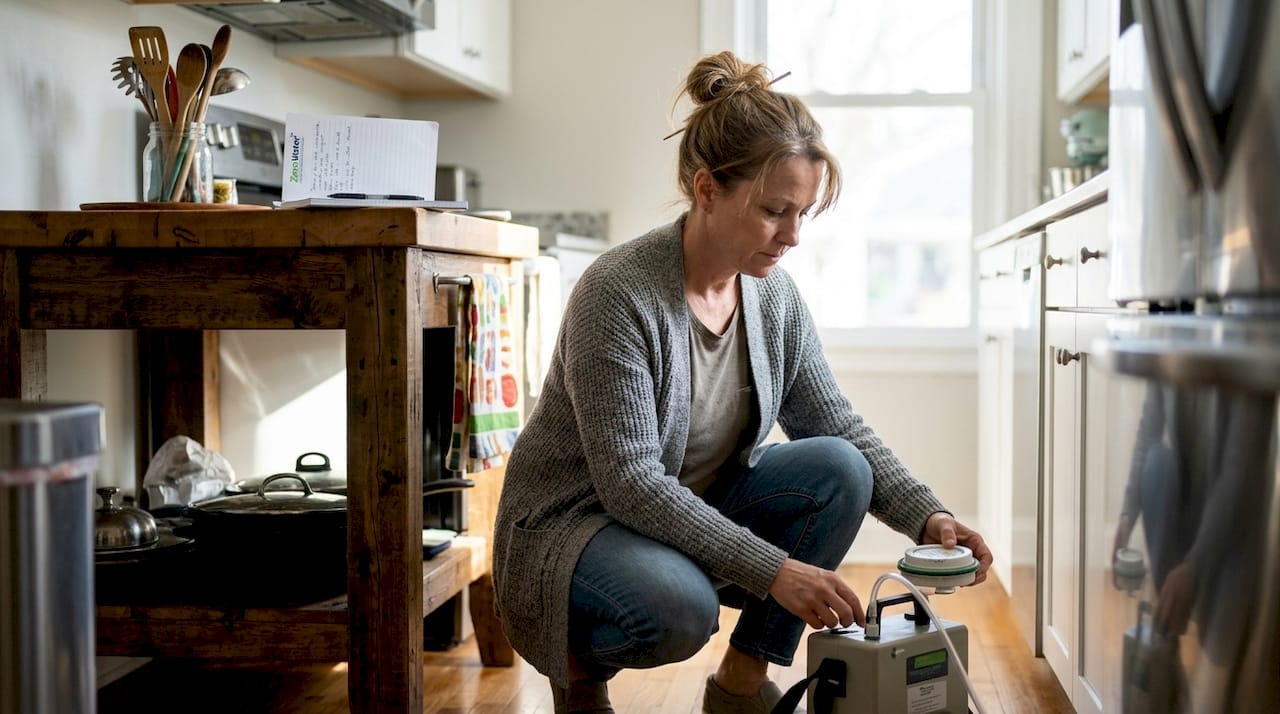
Mold testing is the collection and laboratory analysis of samples from your indoor environment to identify mold species and measure their concentrations. The process is formally called mold sampling, and it is distinct from a mold inspection, which relies on visual assessment, moisture readings, and tools like thermal imaging under ASTM D7338. No federal health standards set a legal limit for indoor mold spore counts. That single fact changes everything about how you should interpret results. Authorities including the EPA, CDC, and the Minnesota Department of Health treat mold testing as a diagnostic tool, not a routine first step. Understanding what testing can and cannot tell you protects your home, your budget, and your health decisions.
What is mold testing and how does it differ from inspection?
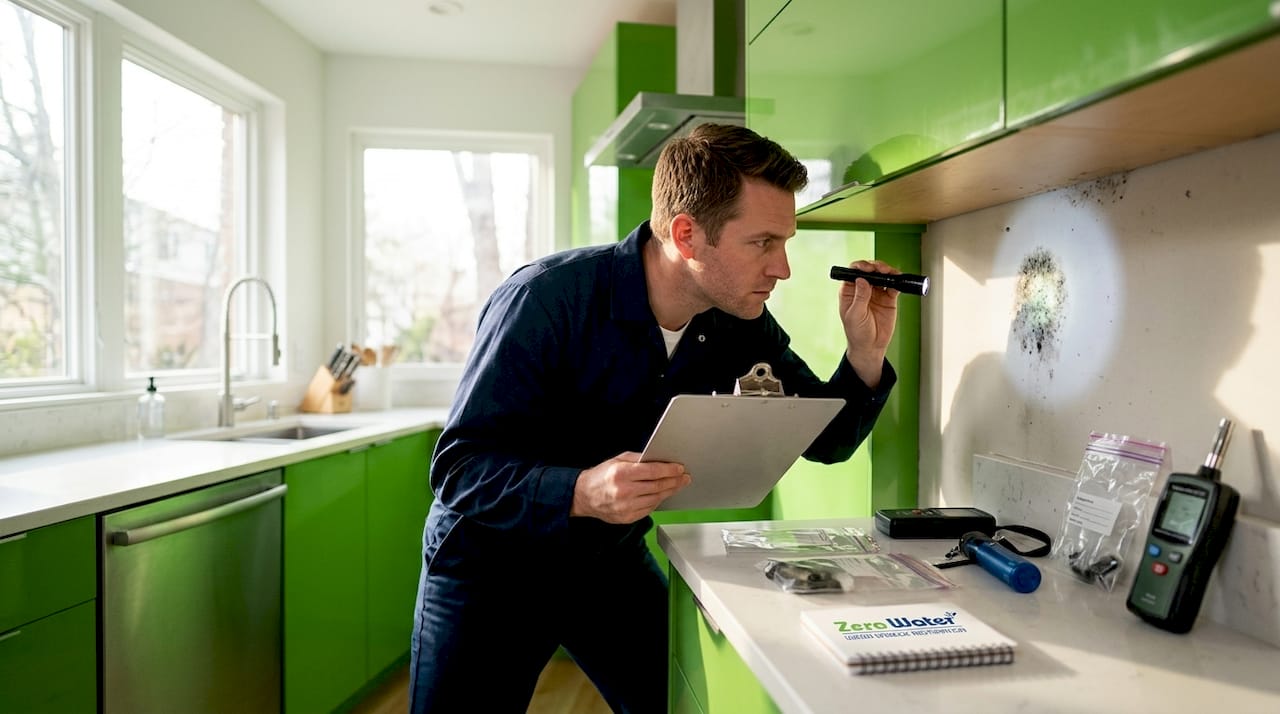
Mold testing is the sampling and lab analysis step. A mold inspection is the broader process of finding where mold lives and why it is growing. Inspectors use visual checks and moisture tools like humidity meters and thermal cameras to locate hidden growth environments. Testing adds a layer of data by identifying specific species and counting spores. The two processes work together but serve different purposes. Skipping the inspection and going straight to testing is like ordering a blood test before a doctor has examined you.
How is mold testing done?
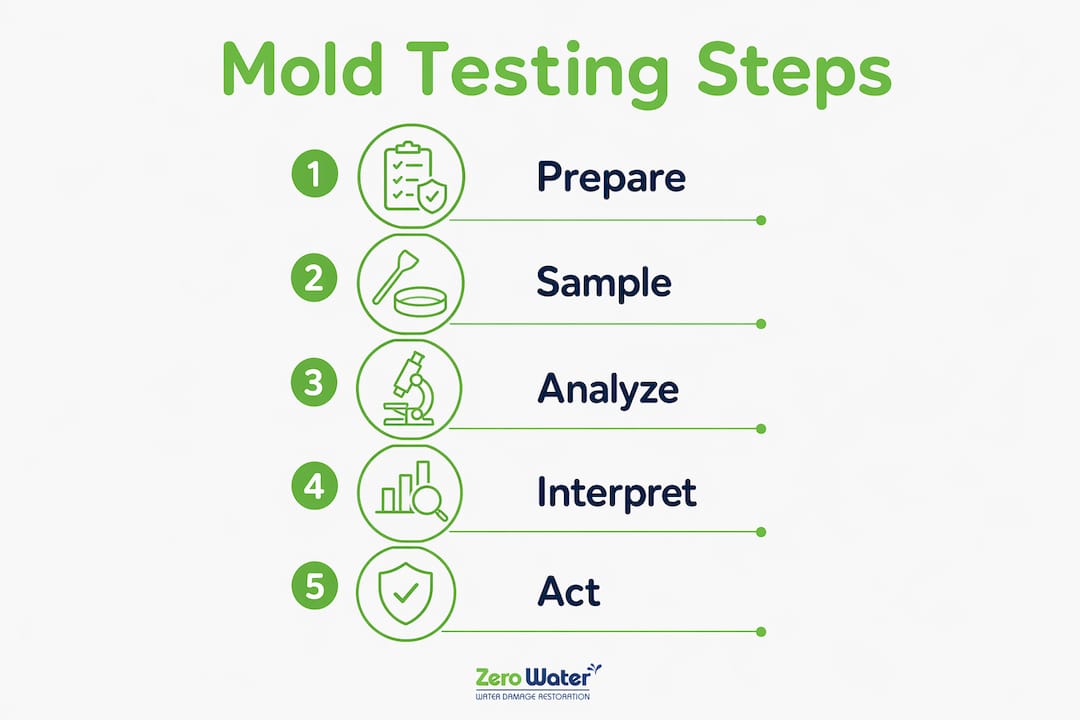
Professional mold testing follows a structured set of mold testing procedures that take 1–3 hours on site, with lab results returned in 2–5 days from an AIHA-accredited laboratory.
The three main sample types
-
Air sampling. A calibrated pump draws a measured volume of air, typically 75–150 liters over 5–10 minutes, through a spore trap cassette. The cassette captures airborne particles for lab analysis. This is the most common method for detecting hidden mold problems.
-
Surface sampling. A technician swabs or tapes a visible surface to collect spores directly. This method confirms what species are present on a specific material, such as drywall or wood framing.
-
Bulk sampling. A physical piece of building material is removed and sent to the lab. This method gives the clearest picture of mold growth inside a wall or floor cavity.
Why outdoor control samples matter
Proper mold testing always includes at least one outdoor air sample collected at the same time as indoor samples. Without that baseline, the indoor numbers have no reference point. A high spore count indoors means nothing if outdoor counts are equally high that day due to weather or season.
Chain-of-custody documentation
Professional testers follow strict chain-of-custody protocols. This includes photographic evidence and secure sample sealing, which makes results defensible for insurance claims or legal disputes. DIY kits do not include this documentation, which limits their usefulness in any formal context.
Pro Tip: Hire an inspector who references ASTM D7338 standards. That reference signals they follow a recognized protocol, not a self-invented checklist.
When is mold testing necessary and when is it not?
The EPA and CDC give clear guidance: skip testing when mold is visible or smellable. If you can see a patch of mold or detect a persistent musty odor, the correct response is to fix the moisture source and remediate the mold. Testing will not change those steps. The CDC reinforces this position, stating that removing visible mold and correcting moisture problems takes priority over any sampling.
Valid reasons to test
- You suspect hidden mold behind walls or under flooring but have no visible growth.
- You are buying or selling a property and need documented evidence of air quality.
- An insurance claim requires proof of mold presence and species identification.
- Occupants report health symptoms that a doctor links to possible mold exposure, and you need data to guide remediation scope.
- You have completed remediation and want post-clearance verification that spore levels have returned to normal.
Invalid reasons to test
- Mold is already visible. Testing confirms what you already know and delays action.
- You want a “pass” or “fail” result. No such standard exists at the federal level.
- You are hoping testing will tell you whether your home is “safe.” Testing measures spore counts, not health outcomes.
- A contractor recommends testing before every job as a standard upsell. Reputable professionals test when the situation calls for it, not by default.
Pro Tip: Before scheduling any test, investigate your moisture sources first. A humidity and mold connection is almost always the root cause. Fix the water problem, and you may not need testing at all.
How to interpret mold test results
Mold test results are not a report card. No single spore count indicates safety or toxic conditions. Results require interpretation against the outdoor baseline sample, the building’s history, the time of year, and the specific species identified. A count of 500 spores per cubic meter of Cladosporium indoors may be completely normal if outdoor counts are 800. The same number of Stachybotrys chartarum indoors is a different situation entirely, because that species requires chronic moisture and is rarely found outdoors in comparable quantities.
The Minnesota Department of Health is direct on this point: mold air testing cannot classify a home as safe or toxic. Testing is diagnostic. It helps locate hidden moisture problems and guide remediation scope. It does not certify health safety.
Viable vs. non-viable sampling
Viable sampling grows collected spores in a culture to identify living organisms. Non-viable sampling counts all spores, living or dead, under a microscope. Non-viable methods are faster and cheaper. Viable methods give more detail about which species are actively growing. Most residential testing uses non-viable spore trap cassettes because they are faster and still provide species identification.
| Method | Strengths | Limitations |
|---|---|---|
| Air sampling (non-viable) | Fast, covers whole room, detects hidden mold | Cannot distinguish living from dead spores |
| Air sampling (viable) | Identifies actively growing species | Slower, more expensive, some spores don’t culture |
| Surface swab | Confirms species on a specific surface | Misses airborne spores not on that surface |
| Bulk sampling | Most detailed for wall cavities | Destructive, requires patching afterward |
Pro Tip: Always have a qualified professional interpret your lab report. The numbers alone tell you very little. Context, species identification, and the outdoor baseline together tell the real story.
What does professional mold testing cost?
Professional mold testing costs $300–$900 for a comprehensive service that includes inspection, sampling, and lab analysis. That price reflects calibrated equipment, an accredited lab, professional interpretation, and documentation that holds up for insurance or legal purposes.
DIY test kits cost $50–$150 but deliver significantly less. They typically collect a single surface or air sample with no outdoor baseline, no chain-of-custody documentation, and no professional interpretation. DIY kits lack the chain-of-custody protocols required for insurance claims. They can also miss mold problems entirely or produce results that look alarming without any context to explain them.
Professional vs. DIY testing: key differences
- Equipment. Professional testing uses calibrated pumps and certified spore trap cassettes. DIY kits use passive collection methods with no volume control.
- Lab accreditation. Professional samples go to AIHA-accredited labs. DIY samples often go to unspecified labs with no public accreditation status.
- Outdoor baseline. Professional testers always collect an outdoor control sample. DIY kits do not include this step.
- Documentation. Professional reports include chain-of-custody records, photos, and signed lab reports. DIY kits provide a basic printout.
- Interpretation. A professional explains what the results mean for your specific home. A DIY kit gives you numbers with no guidance.
For a serious concern, such as a real estate transaction, an insurance claim, or persistent health symptoms, the $300–$900 professional service is the only option that produces results you can actually use.
Key Takeaways
Mold testing is a diagnostic tool that identifies hidden problems and guides remediation scope. It is not a pass/fail health certification, and it works best when paired with a thorough moisture investigation.
| Point | Details |
|---|---|
| Testing vs. inspection | Mold testing samples and analyzes; inspection locates the source using visual and moisture tools. |
| No federal thresholds | No legal spore count limits exist, so results always require professional interpretation. |
| When to test | Test for hidden mold, insurance claims, real estate transactions, or post-remediation clearance. |
| Outdoor baseline is required | Without an outdoor control sample, indoor spore counts have no scientific reference point. |
| Professional testing is worth the cost | The $300–$900 range includes accredited labs, documentation, and interpretation that DIY kits cannot match. |
What I’ve learned about mold testing after years in restoration
Homeowners call us after getting a mold test report and feeling more confused than before they started. That happens because the report hands them numbers with no story attached. A lab result that says “elevated Aspergillus/Penicillium” sounds alarming. In context, it often points to a bathroom exhaust fan that vents into the attic instead of outside. Fix the fan, and the problem is gone.
The biggest mistake I see is homeowners treating testing as the solution rather than the starting point. Testing tells you what is in the air. It does not fix the moisture problem feeding the mold. I have seen properties where testing was ordered three times over two years while the actual leak behind the shower wall went untouched. Every test confirmed mold. None of them fixed anything.
My honest position: if you can see mold or smell it, call a remediation professional before you call a testing company. Visual and odor evidence is enough to act on. Testing earns its cost when mold is suspected but not visible, when you need documentation for a claim, or when you want clearance confirmation after remediation is complete. Used in those situations, it is genuinely useful. Used as a substitute for fixing the moisture source, it is an expensive delay.
The mold remediation process starts with finding and stopping water intrusion. Testing fits into that process at specific points. It does not replace it.
— Jim
Mold testing found a problem. Here is what to do next.
A test result confirming elevated mold spore counts is the beginning of the process, not the end. The next step is professional remediation by a team that understands both the mold and the moisture driving it.
Zerowaterrestoration has served homeowners across the northwest Chicago suburbs for over 10 years, handling everything from initial moisture investigation to full mold remediation services and structural restoration. If you are in the Barrington area or anywhere in the greater Chicagoland region and your test results have raised concerns, the team at Zerowaterrestoration is available 24/7. Call (847) 515-7000 or visit zerowaterrestoration.com for a free inspection and estimate.
FAQ
What is mold testing used for?
Mold testing identifies the species and concentration of mold spores in your indoor air or on surfaces. It is most useful for detecting hidden mold, supporting insurance claims, or confirming that remediation was successful.
How is mold testing done in a home?
A professional collects air, surface, or bulk samples using calibrated equipment, then sends them to an accredited lab. Results typically come back within 2–5 days and require professional interpretation against an outdoor baseline.
Do I need mold testing if I can already see mold?
No. The EPA and CDC both advise skipping testing when mold is visible or a musty odor is present. The correct response is to fix the moisture source and remediate the mold immediately.
Can mold testing tell me if my home is safe?
Mold testing cannot classify a home as safe or toxic. No federal health standards set a threshold for acceptable indoor spore counts, so results must always be interpreted in context by a qualified professional.
How much does professional mold testing cost?
Professional mold testing typically costs $300–$900, covering inspection, sampling, and lab analysis. DIY kits cost $50–$150 but lack accredited labs, outdoor baselines, and chain-of-custody documentation.