
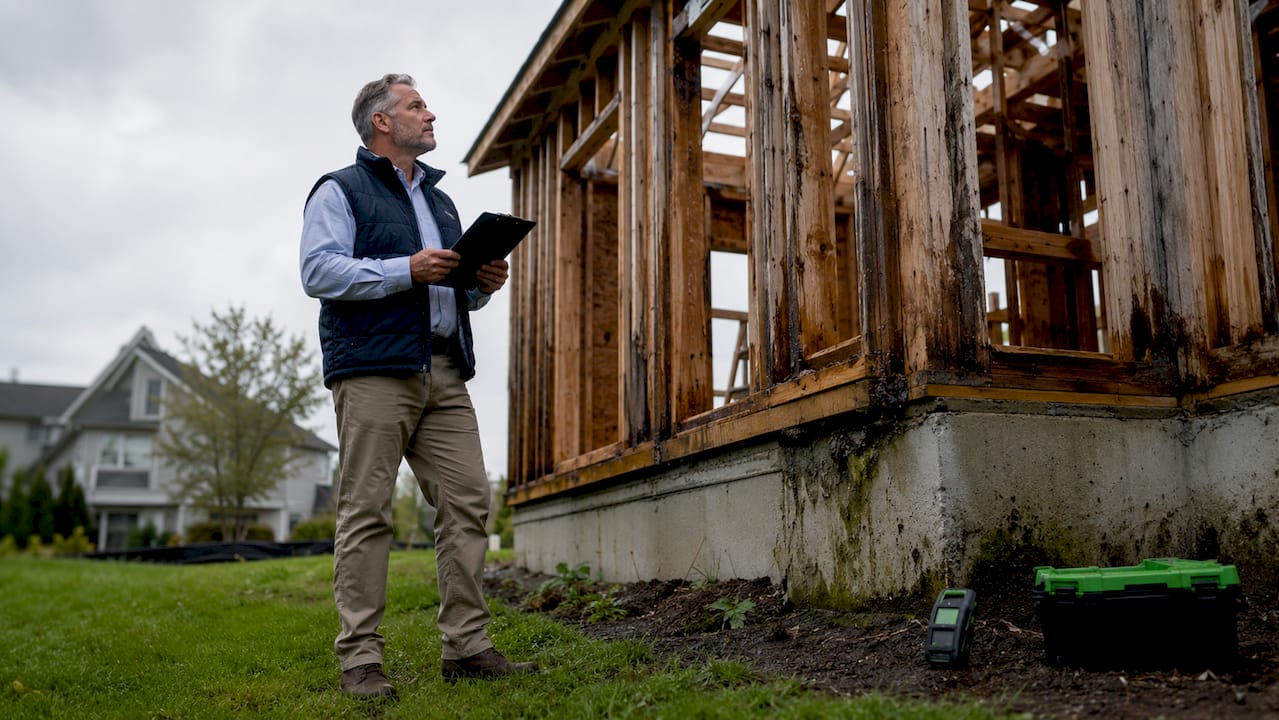
Water damage affects wood framing by raising moisture content past the thresholds that trigger swelling, decay, and structural failure. The process is faster than most homeowners expect. Microbial growth begins within 24–48 hours of sustained moisture, and wood framing is only considered salvageable if dried below 15% moisture content within 3–7 days. Miss that window, and what started as a wet wall can become a compromised load-bearing system. Understanding how water damage affects wood framing is the first step toward protecting your home and acting before the damage becomes irreversible.
How does water damage affect wood framing?
Water damage to wood framing works through two simultaneous processes: physical deformation and biological decay. Both begin the moment moisture content climbs above safe thresholds, and both compound each other over time.
Wood fibers absorb water and swell. When they dry, they shrink. This repeated cycle cracks fibers, weakens grain structure, and permanently reduces the wood’s load-bearing capacity. A stud or joist that has swelled and dried multiple times is measurably weaker than one that stayed dry, even if it looks intact from the outside.
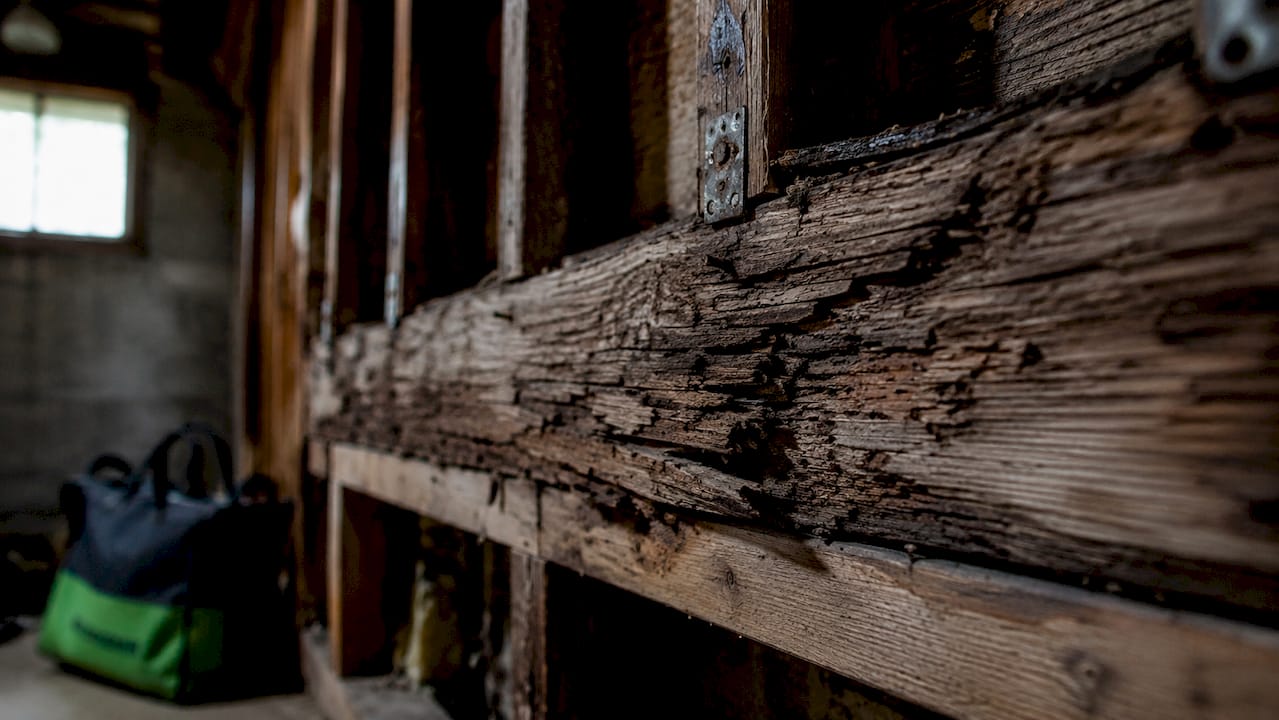
The biological side is equally damaging. Mold and rot fungi colonize wet wood quickly. Visible warping and mold can appear within 1–2 weeks of sustained moisture exposure. Soft rot fungi digest the cellulose in wood fibers, leaving framing members spongy and unable to carry their designed loads. This is the stage where a floor joist stops being a structural member and starts being a liability.
Metal fasteners are a hidden vulnerability. Corrosion of nails and joist hangers in damp wood can fail connections before visible wood decay appears. A joist hanger that has corroded through loses its grip on the beam it supports, creating a collapse risk that no visual inspection of the wood itself would reveal.
The health dimension is also real. Studies on water-damaged buildings report respiratory symptoms and immune system impacts in occupants exposed to microbial growth. Wet framing inside walls creates a hidden reservoir for mold that affects air quality throughout the home.
Key physical and biological effects on wood framing:
- Wood fibers swell and crack through repeated wet-dry cycles
- Soft rot fungi digest cellulose, softening framing members
- Mold colonizes within 24–48 hours of unaddressed moisture
- Metal connectors corrode before wood decay becomes visible
- Load capacity drops as fiber integrity degrades
- Framing geometry shifts, causing doors and windows to bind
Pro Tip: Use a calibrated pin-type moisture meter on framing members after any water event. A reading above 19% means active drying is needed. A reading above 28% means decay is already possible.
What are the signs of water damage in wood framing?
Early detection of moisture damage in wood framing cuts repair costs significantly. The challenge is that the most serious damage often hides behind drywall, under flooring, or inside wall cavities where you cannot see it directly.
Visible warning signs
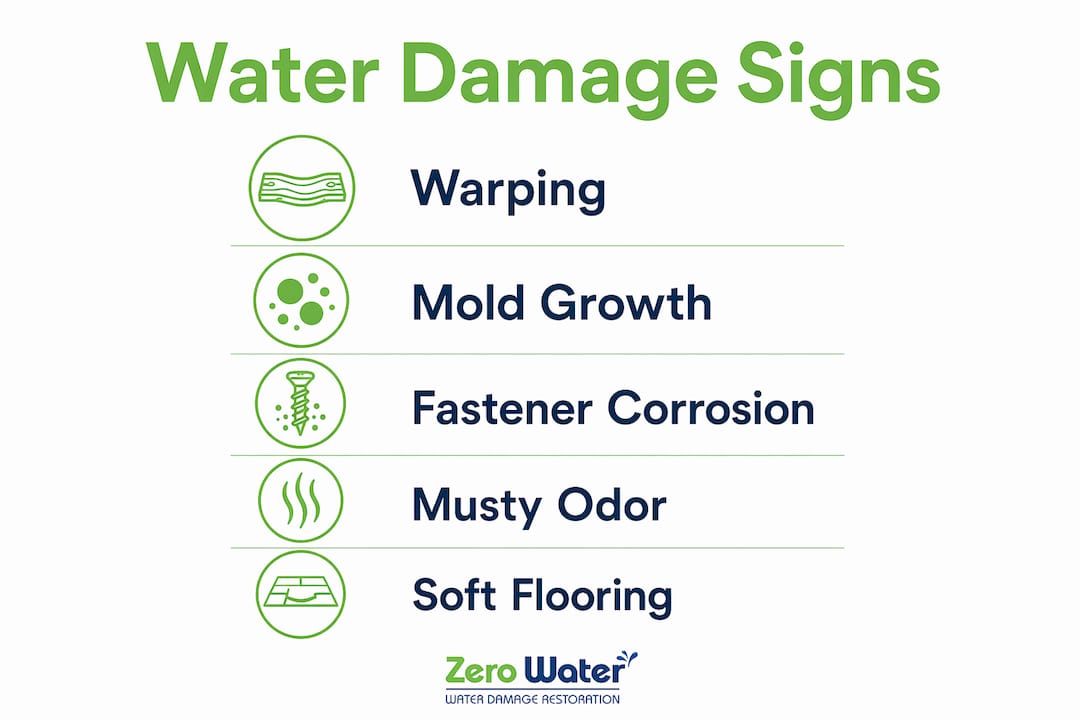
Warping, bowing walls, and sagging ceilings are the most obvious indicators. Doors and windows that suddenly stick or no longer close square are a reliable early signal. Framing members that have swelled push the surrounding structure out of alignment, and that misalignment shows up first in the things you open and close every day.
Peeling paint and cracking drywall seams point to moisture movement behind the surface. Soft or spongy flooring, especially near bathrooms, kitchens, or exterior walls, suggests subfloor or joist damage below. These are not cosmetic issues. They are structural warnings.
Hidden moisture and odor clues
A persistent musty odor is one of the most reliable signs of hidden moisture. Mold growing inside wall cavities produces volatile organic compounds that travel through gaps in drywall and flooring. If a room smells musty and you cannot find an obvious source, the moisture is likely inside the framing assembly.
Hidden pinhole leaks can waste 250–300 gallons per day, saturating framing members over weeks or months before any surface sign appears. Supply line leaks behind walls are a common culprit in older homes. By the time the drywall shows a stain, the framing behind it may already be compromised.
Vacant properties carry a particular risk. Common issues in unoccupied homes include slow leaks that go undetected for extended periods, allowing moisture to saturate framing without anyone noticing the early signs.
Detection tools that work
- Moisture meters measure wood moisture content directly and confirm whether framing is wet or dry.
- Thermal imaging cameras detect temperature differences caused by evaporating moisture, revealing wet areas behind walls without cutting into them.
- Moisture mapping documents the full extent of affected areas so drying can be targeted and verified.
- Visual inspection with drywall removal confirms framing condition when surface tools suggest hidden damage.
Pro Tip: Thermal imaging works best when there is a temperature difference between the wet area and the surrounding material. Run the HVAC for at least 30 minutes before scanning to maximize contrast.
For a broader checklist of what to look for, the water damage warning signs guide from Zerowaterrestoration covers both surface and hidden indicators in detail.
How quickly does water damage deteriorate wood framing?
The timeline for framing damage is shorter than most homeowners assume, and the critical variable is not just how wet the wood got. It is how long it stayed wet.
| Timeframe | What Happens to Wood Framing |
|---|---|
| 0–24 hours | Wood absorbs moisture; swelling begins; no microbial growth yet |
| 24–48 hours | Microbial growth risk escalates; mold spores begin colonizing |
| 3–7 days | Last window to dry below 15% moisture and preserve framing |
| 1–2 weeks | Visible warping and mold colonies appear on framing surfaces |
| Beyond 2 weeks | Soft rot sets in; structural capacity begins to decline measurably |
Wood framing is salvageable if moisture content drops below 15% within 3–7 days. After that window closes, decay organisms colonize the wood and the damage becomes increasingly irreversible, even if the wood is eventually dried.
A single wetting event is far less damaging than repeated or prolonged exposure. Time, saturation, and repetition are the true formula for framing damage. A roof leak that soaks framing once during a storm and dries within a few days causes far less harm than a slow supply line drip that keeps framing at elevated moisture for weeks. This distinction matters because it explains why a house that “got wet during construction” is often fine, while a house with a slow hidden leak for six months may have serious structural issues.
Hidden moisture in wall cavities and under flooring complicates drying. Air movement and dehumidification cannot reach trapped moisture without removing the materials enclosing it. Industry standard IICRC S500 governs professional drying protocols and requires moisture monitoring to verify that framing has reached acceptable levels before enclosure. Skipping that verification step is how moisture gets sealed back inside walls.
Restoration professionals assess water damage using moisture mapping and thermal imaging to confirm drying progress, not just surface appearance.
How do you prevent and restore water-damaged wood framing?
Prevention costs a fraction of what restoration does. The most effective measures address the most common entry points for water.
Prevention priorities for homeowners:
- Inspect and repair roof flashing, gutters, and downspouts every spring and fall
- Waterproof basement walls and maintain proper grading away from the foundation
- Check supply line connections under sinks and behind appliances annually
- Ventilate crawl spaces and attics to prevent condensation buildup
- Install a water leak detection device near water heaters, washing machines, and dishwashers
When prevention fails and water reaches framing, the restoration process follows a defined sequence. Water extraction comes first. Every hour of standing water increases saturation depth and extends the drying timeline. Professional water extraction equipment removes bulk water far faster than consumer-grade wet vacuums.
Moisture mapping follows extraction. Thermal imaging and moisture meters identify every affected framing member, including those hidden behind intact drywall. Wet drywall and insulation must be removed. Both materials hold moisture against framing and prevent it from drying, even with air movers running.
Wood hardeners can stabilize surface-level decay in framing members that retain structural integrity. They penetrate softened wood fibers and bind them, buying time for a structural assessment. They do not restore full strength to severely decayed wood. When a framing member has lost significant cross-section to rot, replacement is the only safe option.
Significant flooding warrants a structural assessment with the same urgency as a medical diagnosis. An engineer may need to evaluate load-bearing members before the structure is considered safe for occupancy. Skipping this step after a major water event is a risk no homeowner should take.
Mold remediation runs parallel to structural repair. Mold remediation services address the biological contamination that develops in wet framing, protecting both the structure and the health of everyone inside.
Pro Tip: Never re-enclose dried framing without a final moisture meter reading. Framing should read below 15% before drywall goes back up. Sealing in moisture above that threshold restarts the decay clock.
Key Takeaways
Water damage destroys wood framing through moisture absorption, microbial decay, and fastener corrosion, and the 3–7 day drying window is the single most important factor in whether framing can be saved.
| Point | Details |
|---|---|
| 48-hour microbial threshold | Mold and rot fungi begin colonizing wet framing within 24–48 hours of moisture exposure. |
| 15% moisture content target | Framing dried below 15% moisture within 3–7 days is considered salvageable from decay. |
| Fastener corrosion risk | Nail and joist hanger corrosion can fail structural connections before wood decay is visible. |
| Hidden leaks cause the most damage | Slow, repeated moisture exposure causes more harm than a single wetting event. |
| Thermal imaging saves framing | Non-invasive moisture detection finds hidden wet framing before decay sets in. |
What I’ve learned after years of watching homeowners underestimate wet framing
Most homeowners I talk to after a water event focus on what they can see. The wet carpet. The stained ceiling. The warped baseboard. Those are real problems, but they are almost never where the serious structural damage is hiding.
The framing inside your walls is doing the heavy lifting. It carries the roof, the floors, and everything in between. When it gets wet and stays wet, it does not announce itself. It just quietly gets weaker. By the time a floor feels spongy or a wall starts to bow, the framing behind it has often been compromised for weeks or months.
The other thing I see consistently is homeowners treating the drying window as flexible. It is not. The 3–7 day window to get framing below 15% moisture is a biological reality, not a guideline. Decay organisms do not wait for a convenient time to start colonizing. Once they establish, no amount of drying reverses the damage they have already done.
Crawl spaces and basements deserve special attention. They are the most likely places for moisture to accumulate undetected, and they are also where the most critical framing members live. A floor joist that has been sitting at elevated moisture for a season in a poorly ventilated crawl space can fail without warning. Regular inspections in these spaces are not optional maintenance. They are structural safety checks.
The technology available for detection and drying has improved significantly. Thermal imaging, calibrated moisture mapping, and professional drying systems can save framing that would have been torn out and replaced a decade ago. But none of that technology helps if you wait too long to call. The window is short, and water damage worsens over time in ways that are not always visible until the damage is severe.
— Jim
Zerowaterrestoration: professional help when your framing is at risk
When water reaches your framing, the clock starts immediately. Zerowaterrestoration responds 24/7 to water damage emergencies throughout the northwest suburbs of Chicago, including Schaumburg, Barrington, Arlington Heights, and surrounding communities.
The team uses thermal imaging and moisture mapping to locate every affected framing member, including those hidden behind walls and under floors. From water extraction through structural drying, mold remediation, and full reconstruction, Zerowaterrestoration handles the complete scope of work. Homeowners in the area trust the company’s water damage restoration in Barrington and across the region for fast response and thorough results. Call (847) 515-7000 or visit zerowaterrestoration.com for a free inspection and estimate.
FAQ
How quickly does water damage wood framing?
Microbial growth begins within 24–48 hours of sustained moisture exposure. Visible warping and mold can appear within 1–2 weeks if the framing is not dried promptly.
Can water-damaged wood framing be saved?
Wood framing is salvageable if dried below 15% moisture content within 3–7 days. Framing that remains wet beyond that window risks irreversible decay and may require replacement.
What are the signs of water damage in wood framing?
Key signs include sticking doors and windows, soft or spongy flooring, bowing walls, sagging ceilings, and a persistent musty odor. Thermal imaging and moisture meters detect hidden damage that visual inspection misses.
Does a single water event ruin wood framing?
One wetting event is far less damaging than repeated or prolonged moisture exposure. Time, saturation, and repetition drive irreversible framing damage, not a single brief wetting.
When should I call a professional after water damage?
Call a professional immediately if water has been present for more than 24 hours, if you detect a musty odor, or if any structural signs appear. Significant flooding requires a full structural assessment before the home is considered safe.