
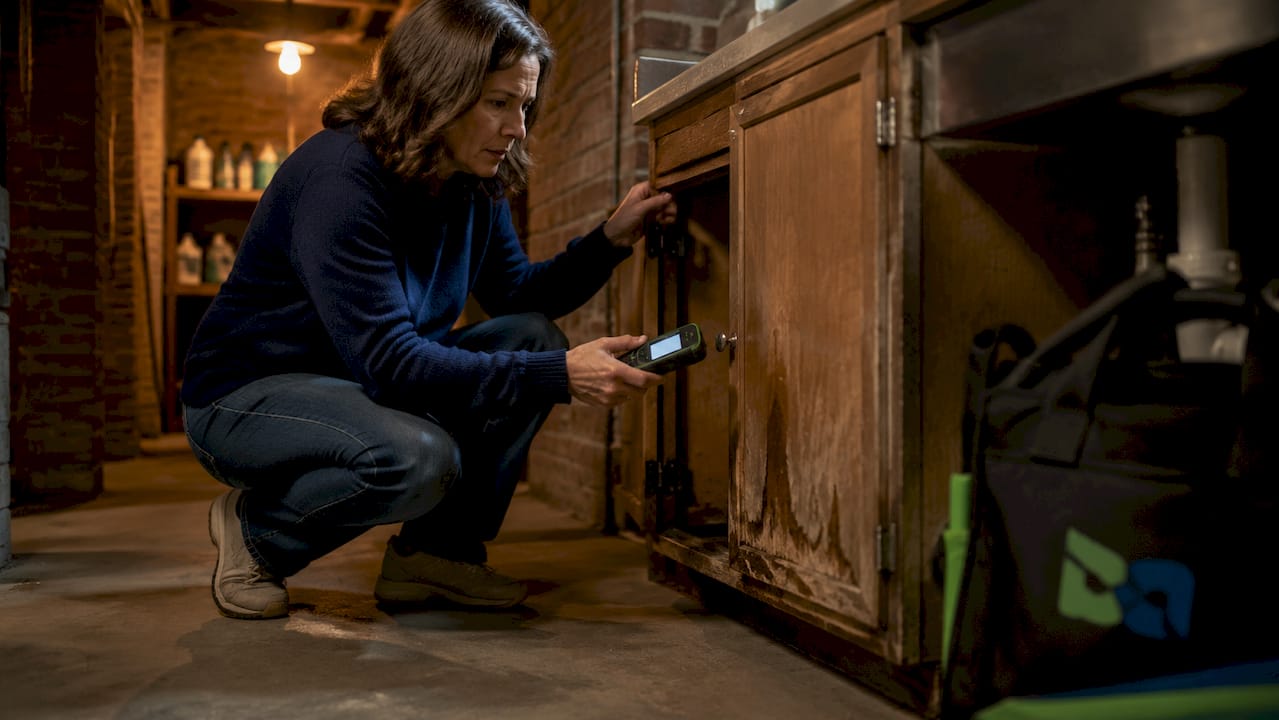
Water damage cabinet evaluation is the process of systematically assessing moisture levels, structural integrity, and mold presence to determine whether cabinets can be restored or must be replaced. Knowing how water damaged cabinets are evaluated gives you a clear picture of what you’re dealing with before any repair work begins. A thorough assessment protects your home, guides your contractor, and builds the documentation your insurance adjuster needs. Early evaluation determines structural safety, salvageability, and prepares accurate insurance documentation before repairs start. Getting this step right saves money and prevents bigger problems down the road.
How water damaged cabinets are evaluated: the full process
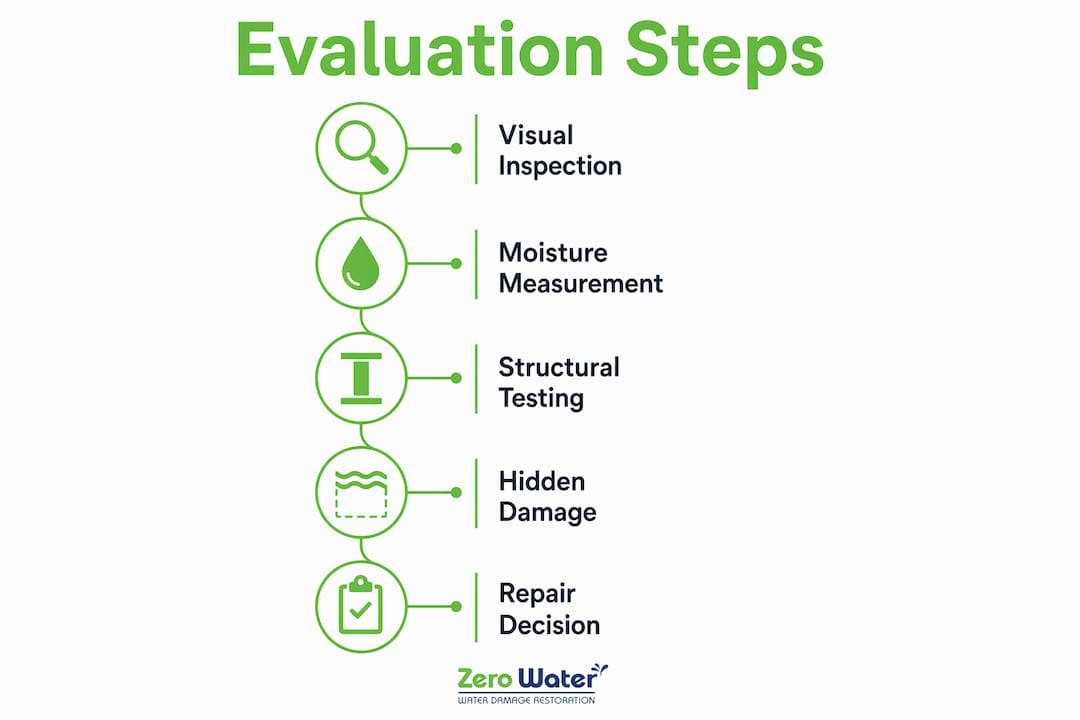
Cabinet damage assessment follows a structured sequence. Professionals start with a visual walkthrough, move to moisture measurement, then check for hidden damage behind walls and under floors. Each step builds on the last. Skipping any stage risks underestimating the true scope of damage, which leads to incomplete repairs and recurring problems.
The industry term for this process is moisture damage assessment, and it covers far more than what you can see with your eyes. Restoration professionals use tools like pin-type and pinless moisture meters, thermal imaging cameras, and physical probing to build a complete picture of the damage. Zerowaterrestoration follows this same structured approach on every job in the Chicagoland area.
What are the visible and sensory signs of water damage in cabinets?
Visible signs are your first alert that something is wrong. Catching them early limits the damage and lowers repair costs. Spotting early warning signs in cabinetry gives you a head start before moisture spreads to surrounding walls and flooring.
The most common visible signs of water damage in cabinets include:
- Warping or swelling on cabinet doors, drawer fronts, or side panels
- Peeling veneer or paint, especially along the bottom edges and seams
- Discoloration or staining, including dark water rings or white mineral deposits
- Rust on hinges, screws, or drawer slides, which signals prolonged moisture contact
- Soft or spongy surfaces when you press on the cabinet base or toe kick
- Visible mold growth, which appears as black, green, or gray spots on interior surfaces
Sensory signs matter just as much as visual ones. A musty odor after water exposure signals hidden mold, which can develop within 24–48 hours of initial water contact. That timeline means mold can be growing inside your cabinets before you even notice the smell.
Pay special attention to the cabinet base beneath the sink, the toe kick area, and any seams where two cabinet sections meet. These spots collect standing water and stay wet long after the surface appears dry.
Pro Tip: Run your hand along the inside bottom of base cabinets. Soft or crumbling material under the sink is a reliable sign of serious water intrusion, even if the outside looks fine.
How to measure moisture levels and test cabinet integrity
Visual inspection tells you where to look. Moisture measurement tells you how bad it actually is. Professionals use moisture meters to get objective readings that guide repair decisions.
Using a moisture meter
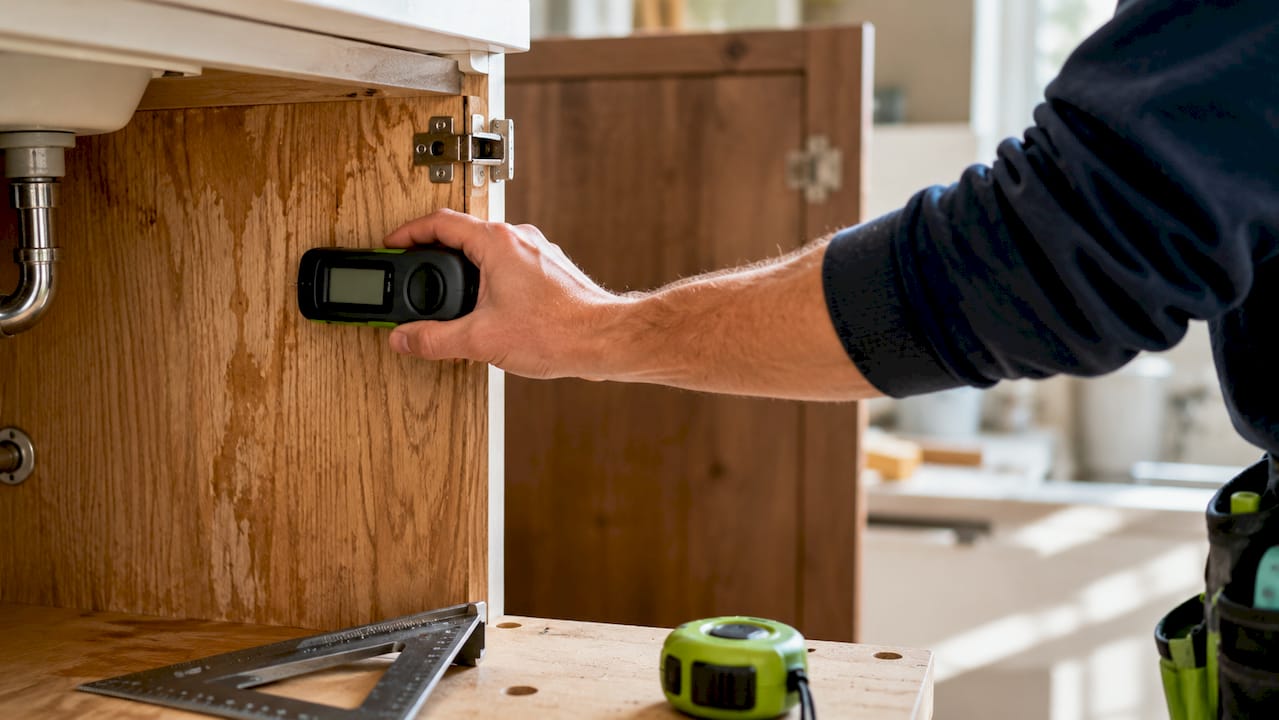
A pin-type moisture meter works by inserting two small probes into the wood surface. The reading reflects the percentage of moisture content in the material. A reading above 15% in wood indicates active moisture absorption and elevated risk for mold and structural damage. That threshold is the standard benchmark used by restoration contractors to flag material that needs drying or replacement.
Testing structural integrity step by step
- Press firmly on the cabinet base and side panels. Solid wood that feels spongy or gives under pressure has lost structural integrity.
- Check all fastener points. Screws that spin freely or pull out easily mean the surrounding material has degraded.
- Probe particleboard and MDF sections. Use a screwdriver tip to gently press into the material. Soft, crumbling, or flaking material confirms water saturation.
- Inspect all joints and seams. Separation at glued joints or swollen seams signals that the adhesive bond has failed.
- Examine hardware for corrosion. Rust on hinges and drawer slides indicates prolonged moisture exposure, not just a recent spill.
Pro Tip: Pinless moisture meters are useful for scanning large surface areas quickly without leaving probe marks. Use them to map wet zones, then confirm readings with a pin meter for accuracy.
The table below summarizes what different moisture readings mean for cabinet materials:
| Moisture reading | Material condition | Recommended action |
|---|---|---|
| Below 15% | Acceptable, within normal range | Monitor and dry if recently wet |
| 15%–19% | Elevated, active absorption | Dry immediately, retest in 48 hours |
| 20%–25% | High risk for mold and structural damage | Professional drying required |
| Above 25% | Severe saturation | Likely replacement needed |
Visible staining is often the least reliable indicator. Moisture meters and thermal imaging cameras reveal hidden saturation that staining alone never shows. This is why professional assessment consistently uncovers more damage than a homeowner’s initial walkthrough.
How do professionals detect hidden water damage beyond visible areas?
Hidden moisture is the most dangerous part of any water damage event. What you see on the surface of your cabinets is rarely the full story. Visible damage represents approximately 30% of total water damage, with moisture frequently traveling behind cabinets and under floors. That statistic means the damage you can see is likely the smaller portion of what actually exists.
Professionals use several methods to find concealed moisture:
- Thermal imaging cameras detect temperature differences in walls and floors caused by hidden wet areas. Cold spots behind cabinetry often indicate active moisture migration.
- Moisture mapping involves taking systematic readings across a grid of points to identify the full wet zone, not just the obvious damage area.
- Water source tracing follows the path of the original leak. Moisture moves with gravity and through framing cavities, so the wet area can be far from the leak source.
- Wall cavity inspection requires removing a small section of drywall or baseboard to check for saturation behind the cabinet run.
- Subfloor probing checks whether water has wicked down through the cabinet base into the subfloor below.
Moisture migrates non-linearly due to gravity and framing cavities, which means a leak under the kitchen sink can saturate wall studs three feet away. Homeowners who skip this step often discover new mold problems weeks after what seemed like a complete repair. Zerowaterrestoration uses professional moisture mapping on every evaluation to prevent exactly that outcome.
When should you repair vs. replace water damaged cabinets?
The repair versus replacement decision depends on material type, damage extent, and mold presence. Getting this call right protects both your budget and your home’s structural safety.
Repair is viable when:
- The cabinet is solid wood with localized swelling or surface staining
- Moisture readings have returned to below 15% after drying
- Joints are intact and fasteners still hold securely
- No mold is present inside the cabinet box or on adjacent walls
Replacement is necessary when:
- Particleboard or MDF has swollen, since these materials are structurally compromised and cannot reliably hold fasteners or support countertops after water exposure
- Mold has penetrated the cabinet box or backing panel
- The cabinet base has collapsed or delaminated
- Moisture readings remain elevated after professional drying attempts
The material type is the single biggest factor. Solid wood can often be dried, sanded, and refinished. Refinishing damaged cabinets is a realistic option for solid wood with surface-level damage, but it is not appropriate for engineered wood that has swollen. Particleboard and MDF absorb water rapidly and swell permanently. That swelling destroys the mechanical attachment points for hinges, drawer slides, and countertop brackets.
Insurance considerations for cabinet replacement
Insurance coverage for cabinet replacement follows specific rules that most homeowners do not know about. Insurance adjusters expect replacement of a damaged continuous cabinet run to match like-kind and quality, avoiding patchwork replacements with mismatched cabinetry. This is called the Line of Sight Rule. It means that if one section of a continuous cabinet run is damaged beyond repair, the insurer may be required to cover the entire run for consistency.
An ITEL Report provides independent verification of cabinet style, manufacturer, and materials to support insurance claims matching original quality. ITEL Reports prevent lowball settlements by documenting exactly what was installed before the damage occurred. Requesting one before your adjuster visit puts you in a much stronger position during the claims process. Zerowaterrestoration works directly with insurance providers and helps homeowners prepare this documentation as part of the restoration process.
Key Takeaways
Accurate cabinet damage assessment requires moisture measurement, hidden damage detection, and material-specific repair criteria to produce reliable repair or replacement decisions.
| Point | Details |
|---|---|
| Start with moisture measurement | A reading above 15% in wood signals active damage and mold risk requiring immediate action. |
| Hidden damage exceeds visible damage | Visible damage is often just a fraction of total moisture intrusion; professional mapping finds the rest. |
| Material type drives the repair decision | Particleboard and MDF that have swollen must be replaced; solid wood can often be restored. |
| Document everything for insurance | ITEL Reports and moisture mapping records support accurate insurance settlements and prevent underpayment. |
| Act within 24–48 hours | Mold can develop within 24–48 hours of water exposure, making early assessment critical to limiting damage. |
What I’ve learned after evaluating hundreds of water damaged cabinets
Most homeowners walk into a water damage situation focused on what they can see. They find the wet cabinet under the sink, wipe it down, and assume the problem is contained. That assumption costs people thousands of dollars every year.
The cases that turn into expensive repairs almost always share one thing in common: the homeowner waited. They waited to call a professional, waited to document the damage, or waited to check whether the moisture had spread. By the time a contractor arrived, the subfloor was saturated, the wall cavity had active mold, and what started as a cabinet repair became a full kitchen restoration.
The other mistake I see constantly is skipping the moisture meter. A cabinet can look completely dry and still read 22% moisture content inside the panel. That trapped moisture feeds mold for weeks. You cannot make a sound repair or replacement decision without objective readings.
My advice to every homeowner and property manager: photograph everything before you touch anything, call a professional within the first 24 hours, and do not accept a visual-only assessment. If a contractor is not using a moisture meter and checking behind the cabinet run, they are not giving you a complete picture. The insurance claim process also depends on thorough documentation from the start. A well-documented evaluation report is worth more than any verbal estimate when you are sitting across from an adjuster.
— Jim
Zerowaterrestoration’s approach to cabinet evaluation and restoration
When water damage hits your kitchen or bathroom cabinets, the evaluation you get on day one shapes every decision that follows.
Zerowaterrestoration provides full moisture assessments for homeowners and property managers throughout the northwest suburbs of Chicago, including Barrington, Lake Zurich, Streamwood, and surrounding communities. The team uses moisture meters, thermal imaging, and moisture mapping to identify both visible and hidden damage before any repair work begins. When mold is present, professional mold remediation is handled as part of the same restoration process. Zerowaterrestoration also works directly with insurance adjusters to prepare documentation, including ITEL Reports, that supports accurate settlements. For a free inspection and estimate, call (847) 515-7000 or visit zerowaterrestoration.com/water-damage-restoration-in-barrington.
FAQ
What does a water damage cabinet evaluation involve?
A cabinet evaluation covers visual inspection, moisture meter readings, structural integrity testing, and hidden moisture detection using thermal imaging. The goal is to determine whether the cabinet can be dried and repaired or must be replaced.
How do I know if my cabinets have hidden water damage?
A musty odor, soft cabinet bases, or elevated moisture readings on adjacent walls are reliable indicators of hidden damage. Professional moisture mapping identifies wet zones that visual inspection misses.
Can water damaged particleboard cabinets be repaired?
Particleboard and MDF that have swollen from water exposure cannot be reliably repaired. These materials lose their ability to hold fasteners and support countertops once saturated, making replacement the only safe option.
How does water damage evaluation affect my insurance claim?
Thorough documentation, including moisture meter readings and an ITEL Report, supports accurate insurance settlements and prevents underpayment. Insurance adjusters use this evidence to apply the Line of Sight Rule for matching cabinet replacements.
How quickly should I evaluate water damaged cabinets?
Evaluation should begin within 24 hours of discovering the damage. Mold can begin developing within 24–48 hours of water exposure, and early assessment limits both the spread of damage and the cost of repairs.