
A water damage scope of work is a detailed, itemized restoration plan that specifies every task, material, piece of equipment, and timeline required to return a property to its pre-loss condition. Understanding this document is not optional for homeowners and property managers. It determines what your contractor does, what your insurer pays for, and whether hidden damage gets addressed before it becomes a mold problem. The water damage scope of work explained in this guide covers professional assessment methods, the full restoration task list, common mistakes that delay claims, and exactly how to read and manage the document yourself.
What does a water damage scope of work include?
A scope of work for water damage is a formal document that lists every restoration task, the materials needed, equipment placement plans, and project milestones. It is not an estimate. An estimate gives you a price range. A scope of work tells you exactly what will happen, in what order, and by when. Insurers use it to verify that the proposed work is reasonable and necessary before approving payment.
The document covers the full water damage restoration process from start to finish. That includes water extraction, structural drying, demolition of unsalvageable materials, antimicrobial treatment, and reconstruction. A complete scope also addresses contents restoration, meaning your furniture and belongings, not just the building itself. Missing any of these components creates gaps that cause disputes with adjusters and incomplete repairs.
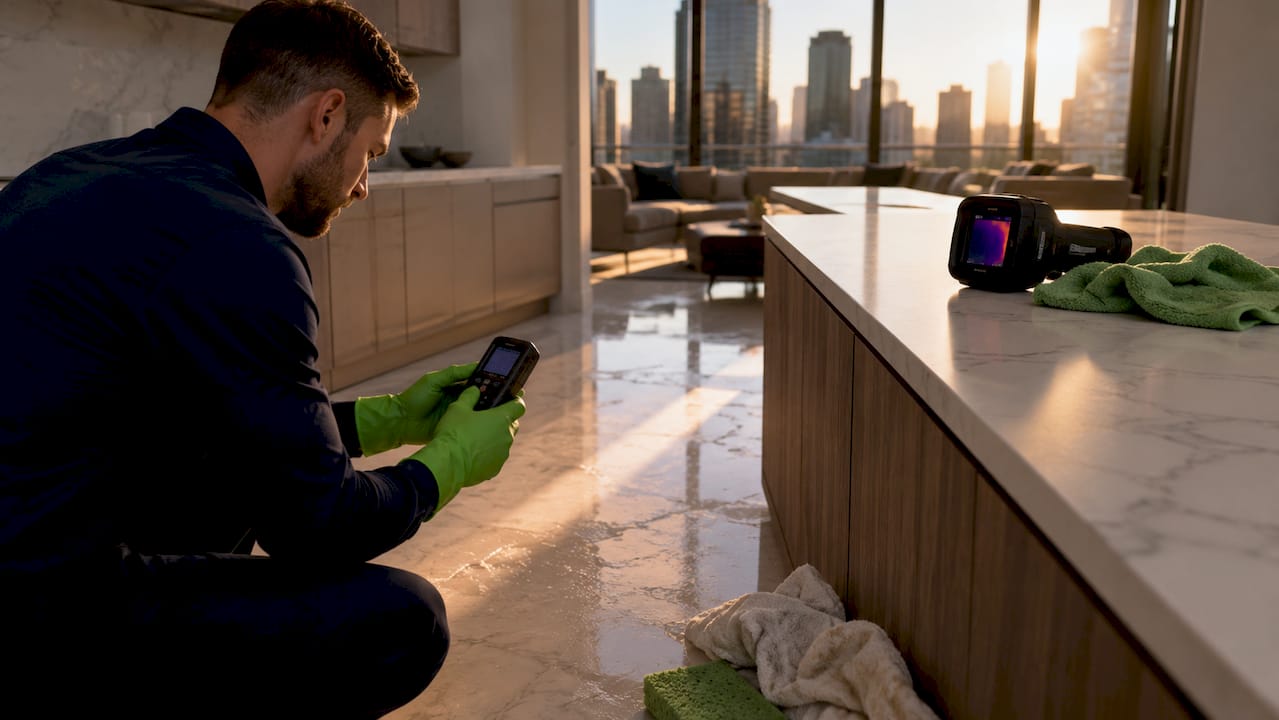
Industry professionals build scopes around the IICRC S500 standard, the recognized technical guide for water damage remediation published by the Institute of Inspection, Cleaning and Restoration Certification. Insurance adjusters reference the IICRC S500 to verify scope reasonableness and confirm that the proposed equipment and methods match the actual damage class. A scope that does not align with IICRC S500 protocols risks rejection.
How professionals assess and categorize water damage
Accurate assessment is the foundation of any reliable restoration scope. Professionals classify water damage using two systems: categories and classes. Getting both right determines which protocols apply and how much work the scope will require.
Water damage categories define contamination level:
- Category 1 is clean water from a supply line, appliance overflow, or rainwater. It poses no immediate health risk.
- Category 2 is gray water containing contaminants, such as water from a dishwasher, washing machine, or toilet overflow without solid waste.
- Category 3 is black water, which is grossly contaminated. Sewage backups, floodwater, and standing water that has been sitting for days all qualify.
Water affecting more than 10 square feet or originating from a Category 2 or 3 source requires specialized restoration and antimicrobial treatment. That threshold matters because it triggers specific equipment requirements and safety protocols that must appear in the scope.
Water damage classes describe how far water has spread and how deeply materials have absorbed it, ranging from Class 1 (minimal absorption, small area) to Class 4 (deeply saturated materials like hardwood, concrete, or plaster that require specialty drying). The class directly determines how many air movers and dehumidifiers the scope must specify.
Category classification is time-sensitive. Category 1 water can degrade to Category 3 within 48–96 hours if left untreated. A contractor who misclassifies on day one may write a scope that under-addresses contamination, creating health risks and triggering scope rejection by the adjuster later.
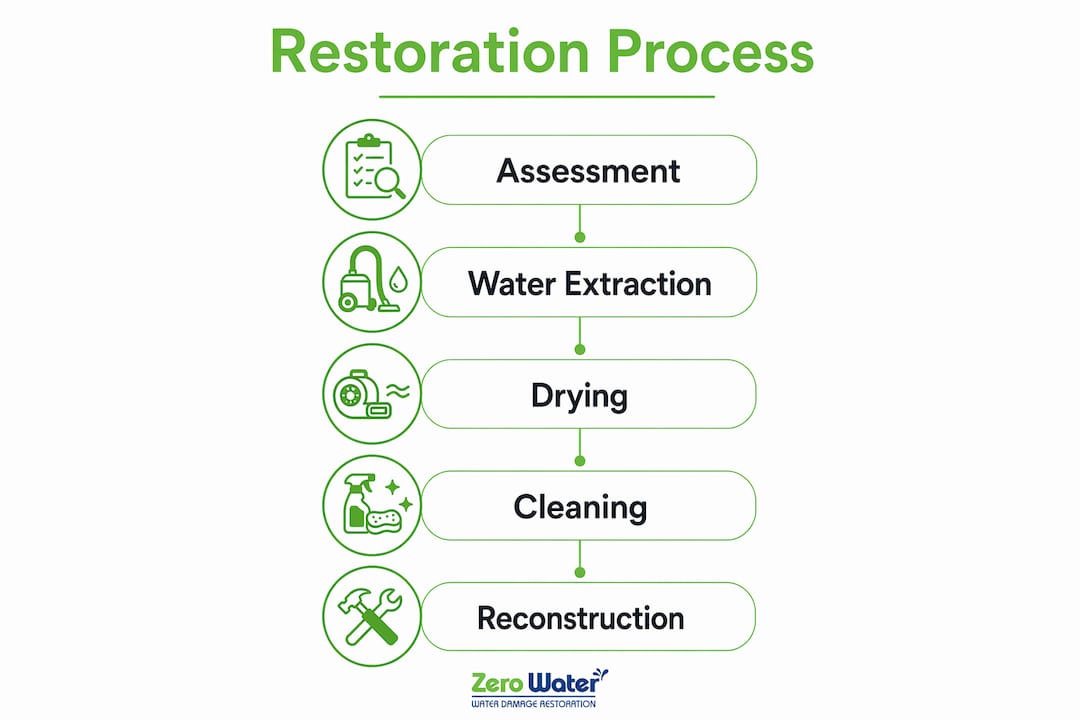
Pro Tip: Ask your restoration contractor to show you the moisture map before work begins. This document, generated using moisture meters, hygrometers, and thermal imaging cameras, identifies exactly where water has traveled inside walls, under floors, and above ceilings. If the scope does not reference a moisture map, the contractor may be guessing at the damage extent.
For a deeper look at how damage classes affect your restoration plan, the water damage class rating guide from Zerowaterrestoration breaks down each level with homeowner-specific context.
What tasks appear in a professional restoration scope?
A complete water damage remediation scope follows a logical sequence. Each phase builds on the last, and skipping steps creates problems that show up months later as mold, structural weakness, or failed inspections.
- Water extraction. Professionals use truck-mounted extractors, portable units, and submersible pumps to remove standing water. The type of equipment specified in the scope should match the volume and location of water.
- Structural drying. Air movers and commercial dehumidifiers run continuously after extraction. Structural drying typically takes 2–5 days, though Class 3 and 4 damage can extend that timeline. The scope should specify the number of units, placement locations, and daily monitoring schedule.
- Demolition of unsalvageable materials. Wet drywall, saturated insulation, buckled flooring, and soaked cabinetry often cannot be dried in place. The scope lists exactly which materials will be removed and from which areas, measured in square feet.
- Antimicrobial treatment. After demolition, exposed framing and subfloor surfaces receive antimicrobial application to prevent mold colonization. This step is non-negotiable for Category 2 and 3 losses.
- Reconstruction. Once the structure is dry and cleared, the scope covers reinstalling drywall, insulation, flooring, paint, and trim. This phase is where many scopes fall short because not all restoration companies handle both mitigation and reconstruction.
- Contents restoration. Professional contents assessment can restore many items through cleaning and sanitization rather than replacement. This maximizes your insurance benefits and reduces total losses.
| Phase | Key equipment or materials | Typical duration |
|---|---|---|
| Water extraction | Truck-mount extractors, pumps | Hours |
| Structural drying | Air movers, dehumidifiers | 2–5 days |
| Demolition | Hand tools, dumpster | 1–2 days |
| Antimicrobial treatment | EPA-registered antimicrobials | Same day as demo |
| Reconstruction | Drywall, insulation, flooring | Varies by scope size |
| Contents restoration | Cleaning agents, ozone equipment | Concurrent with drying |
Pro Tip: The scope should include a clear difference between what is being mitigated and what is being reconstructed. If your contractor only handles mitigation, you will need a separate contractor for reconstruction. That gap causes delays and coordination problems. Ask upfront whether the scope covers both phases.
The water damage restoration timeline guide from Zerowaterrestoration explains each phase in detail for Illinois homeowners managing the full process.
Common mistakes in water damage scopes and how to spot them
Vague scopes are the single biggest cause of delayed insurance approvals. Adjusters require specific, measurable tasks. A scope that says “dry affected area” without specifying equipment count, placement, and monitoring frequency gives an adjuster grounds to reduce or deny payment.
Watch for these red flags in any scope document:
- No moisture map reference. A scope without moisture mapping data means the contractor has not confirmed where water actually traveled. Incomplete scopes missing moisture maps lead to hidden moisture and mold growth after restoration is complete.
- Incorrect water category. Misclassifying Category 2 or 3 water as Category 1 results in a scope that skips antimicrobial treatment and uses insufficient equipment. That is both a health risk and a protocol violation under IICRC S500.
- Missing reconstruction tasks. A scope that ends at drying and demolition leaves you responsible for finding and coordinating a separate contractor. Not all restoration companies handle both mitigation and reconstruction, and that gap causes real delays.
- No contents restoration component. If your belongings were affected and the scope does not address them, you may lose items that could have been salvaged.
- No change order process. Restoration work often uncovers additional damage behind walls or under floors. A scope without a defined change order process leaves you with no clear path to authorize and document additional work.
“Effective communication among the homeowner, contractor, and insurer during scope drafting reduces project stress and prevents disputes that delay restoration.” — Stanley Restoration
If you receive a scope that lacks any of these elements, request a written amendment before work begins. Do not accept verbal assurances. Every change to the scope should be documented and signed by both parties.
How to read and manage your scope of work document
Reading a scope of work does not require a contractor’s license. You need to know what to look for and what questions to ask. A well-written scope protects you as much as it guides the contractor.
- Confirm all phases are listed. The document should cover extraction, drying, demolition, antimicrobial treatment, reconstruction, and contents. If any phase is absent, ask why in writing.
- Check for specific measurements. Tasks should reference square footage, linear footage, or unit counts. “Replace flooring in kitchen” is vague. “Remove and replace 210 square feet of vinyl plank flooring in kitchen” is a scope item.
- Review the equipment plan. The scope should name the type and quantity of drying equipment and specify where each unit will be placed. This detail is what adjusters use to verify that the drying approach matches the damage class.
- Look for a timeline with milestones. You should know when each phase starts, when moisture readings will be taken, and when the contractor expects to reach dry standard before reconstruction begins.
- Understand the exclusions. Every scope has limits. Know what is not included so you are not surprised by out-of-pocket costs later.
Pro Tip: Before signing, ask your contractor: “What happens if you find additional damage behind the walls?” The answer should describe a clear change order process with written documentation and adjuster notification. If the contractor cannot answer that question clearly, that is a warning sign.
Your scope also connects directly to your insurance claim. Adjusters compare the scope line by line against their own estimate. Understanding how to navigate your insurance claim alongside the scope document gives you the best chance of full coverage and minimal out-of-pocket expense.
Key Takeaways
A complete, IICRC S500-aligned scope of work is the single most important document in any water damage restoration project, because it determines what gets repaired, what gets paid, and whether hidden damage is addressed before it becomes a long-term problem.
| Point | Details |
|---|---|
| Scope defines the full project | Every task, material, timeline, and equipment item must be listed in writing before work starts. |
| Categories and classes drive protocols | Correct IICRC S500 classification determines which equipment, treatments, and safety steps the scope must include. |
| Moisture mapping is non-negotiable | A scope without moisture map data risks missing hidden water and allowing mold growth after restoration. |
| Full-service providers reduce gaps | Contractors who handle both mitigation and reconstruction eliminate coordination delays and scope conflicts. |
| Change orders protect you | Any new damage discovered during work must be documented in a signed change order, not handled verbally. |
Why I think most homeowners underestimate the scope document
After years of seeing water damage projects go sideways, the pattern is almost always the same. The homeowner focused on getting the water out fast, which is the right instinct. But they signed a scope they did not read, and three weeks later they were dealing with mold behind a wall that the contractor never mapped.
The scope of work is not paperwork. It is your protection. A vague scope is not just an administrative problem. It is a signal that the contractor has not done a thorough assessment. Moisture mapping with thermal cameras takes time and costs money. Contractors who skip it write shorter scopes and finish faster, but they leave problems behind.
The other mistake I see constantly is homeowners accepting a scope that stops at drying. They think reconstruction is a separate project to handle later. By the time they find a second contractor, the adjuster has closed the claim, and they are paying out of pocket for drywall and flooring. Choose a company that writes one scope covering the entire job from water extraction through final paint.
Transparent communication between you, your contractor, and your insurer is what keeps a restoration project on track. Ask questions. Request written answers. If a contractor cannot explain every line of the scope in plain language, find one who can.
— Jim
Get a detailed scope from Zerowaterrestoration
Zerowaterrestoration provides full-service water damage restoration in Barrington and throughout the northwest suburbs of Chicago, including Schaumburg, Arlington Heights, Palatine, and Hoffman Estates. Every project starts with a thorough assessment, moisture mapping, and a written scope aligned with IICRC S500 standards. The team handles extraction, drying, demolition, antimicrobial treatment, and complete reconstruction under one scope, so you never deal with coordination gaps or coverage disputes. Zerowaterrestoration also works directly with insurance adjusters to document damage, support your claim, and keep your out-of-pocket costs as low as possible. Call (847) 515-7000 or visit zerowaterrestoration.com for a free inspection and written scope.
FAQ
What is a water damage scope of work?
A water damage scope of work is a written document listing every task, material, piece of equipment, and timeline required to restore a property after water intrusion. It guides the contractor and serves as the basis for insurance claim approval.
How does the IICRC S500 standard affect my restoration scope?
The IICRC S500 is the industry standard that defines water damage categories and classes. Insurance adjusters use it to verify that the scope’s equipment and methods match the actual damage, and a scope that does not align with it risks rejection.
How long does structural drying take?
Structural drying typically takes 2–5 days depending on the damage class and severity. Class 3 and 4 losses involving deeply saturated materials can extend that timeline.
What happens if new damage is found during restoration?
New damage discovered during work should be captured in a signed change order that documents the additional tasks and notifies the insurance adjuster. A scope without a change order process leaves you with no formal way to authorize or cover that additional work.
Can my belongings be restored instead of replaced?
Professional contents assessment can restore many items through cleaning and sanitization. This approach maximizes your insurance benefits compared to full replacement costs and reduces your total loss.