
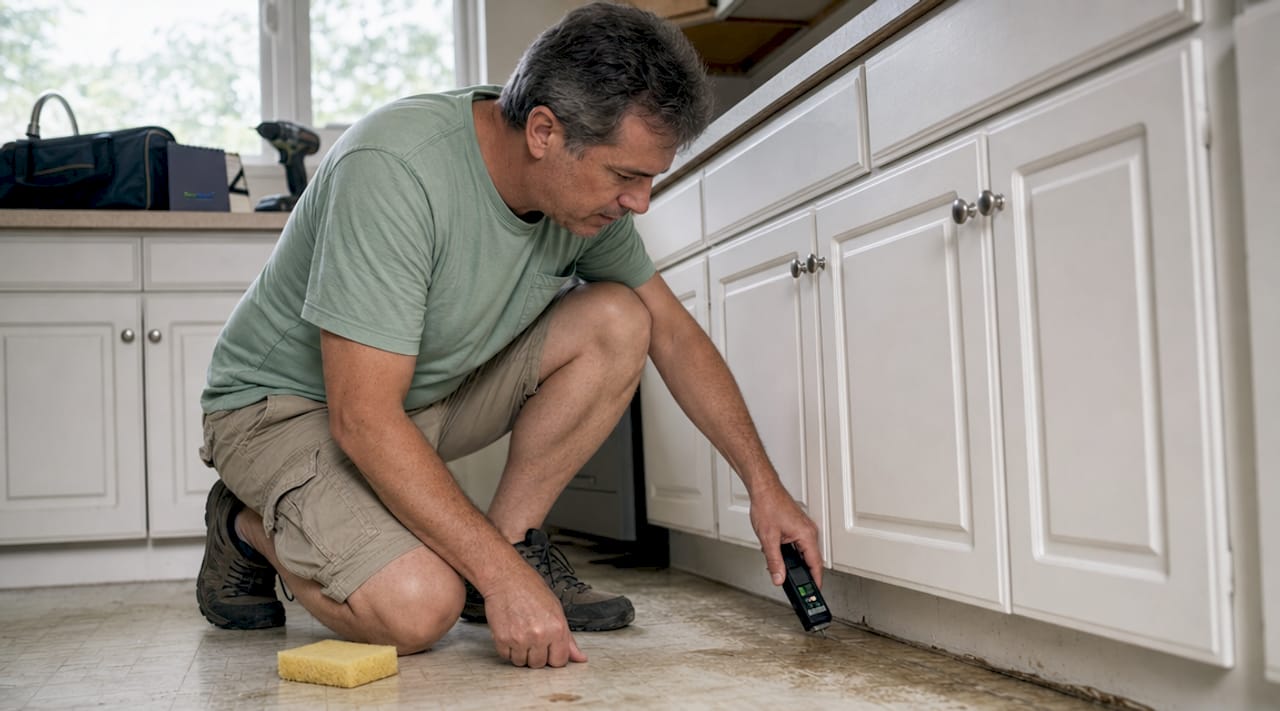
Musty odor after water damage is defined as the smell produced by microbial volatile organic compounds (mVOCs) released when mold and mildew colonize damp building materials. According to Consumer Reports, this musty smell signals hidden moisture even when the water appears to be gone. That smell is not stale air or a minor inconvenience. It is your home telling you that microbes are actively growing inside walls, under floors, or within insulation. Tools like dehumidifiers, digital humidity monitors, and moisture meters are the first line of defense, but understanding what is actually causing the odor is what determines whether your fix lasts.
What causes musty odor after water damage
The science behind that smell is more specific than most homeowners realize. Mold and mildew are fungi that metabolize organic material in building products like drywall, wood framing, carpet backing, and fiberglass insulation. As they feed, they release mVOCs including compounds such as 1-octen-3-ol and 2-heptanone. These compounds are detectable by the human nose at extremely low concentrations, which is why you can smell a problem long before you see black spots on a wall.
This is the critical point most homeowners miss. Musty odors often appear before any visible mold growth, making smell a more reliable early warning than a visual inspection alone. A burst pipe in Schaumburg in January, a roof leak in Barrington after a spring storm, or a flooded basement in Hoffman Estates after heavy rain all create the same condition: trapped moisture in porous materials that microbes treat as a food source.
Pro Tip: If you detect a musty smell within 24 to 48 hours of a water event, do not wait for visible mold to confirm the problem. Mold can begin colonizing damp materials in as little as 24 hours under the right temperature and humidity conditions.
| Mold type | Common location after water damage | Odor characteristic |
|---|---|---|
| Cladosporium | Carpet, wood, HVAC ducts | Earthy, musty |
| Penicillium | Insulation, wallboard, fabric | Sweet, musty |
| Aspergillus | Drywall, ceiling tiles | Damp, stale |
| Stachybotrys | Chronically wet drywall, wood | Strong, pungent |
The health effects of mVOC exposure range from eye and throat irritation to headaches and respiratory discomfort. These are not dramatic symptoms, which is exactly why many homeowners tolerate a musty smell for weeks before acting. That delay consistently makes remediation more expensive and more disruptive.
Why does musty smell persist even after drying?
Surface dryness and structural dryness are two completely different conditions. You can run fans for three days, feel that the carpet is dry to the touch, and still have moisture readings of 20% or higher inside wall cavities and subfloor assemblies. Microbes living in those cavities keep producing mVOCs regardless of what the surface feels like.
Persistent odor after drying is the clearest signal that mold growth has taken hold and that surface-level mitigation was not sufficient. RestoreAdvisor and Belfor both recommend a formal post-drying inspection whenever odor remains after water removal. Skipping that inspection and moving straight to deodorizing sprays or air fresheners is one of the most common and costly mistakes homeowners make.
Here is why deodorizing without remediation fails every time:
- Air fresheners and ozone treatments mask mVOCs temporarily but do not stop microbial production
- Mold colonies inside wall cavities are unaffected by surface cleaning products
- Humidity trapped in insulation continues feeding microbial growth for months
- Persistent moisture in materials can sustain microbial activity and odors for years without full remediation
Pro Tip: Rent or purchase a pin-type moisture meter from a hardware store like Home Depot or Menards. Any reading above 16% in wood or 1% in drywall after apparent drying indicates residual moisture that requires professional attention.
The other hidden risk is HVAC contamination. If your air handler or ductwork ran during or after the water event, mold spores may have distributed through the system. That means the odor source is now spread across every room the system serves, not just the originally affected area.
How to detect and assess musty odors and hidden water damage
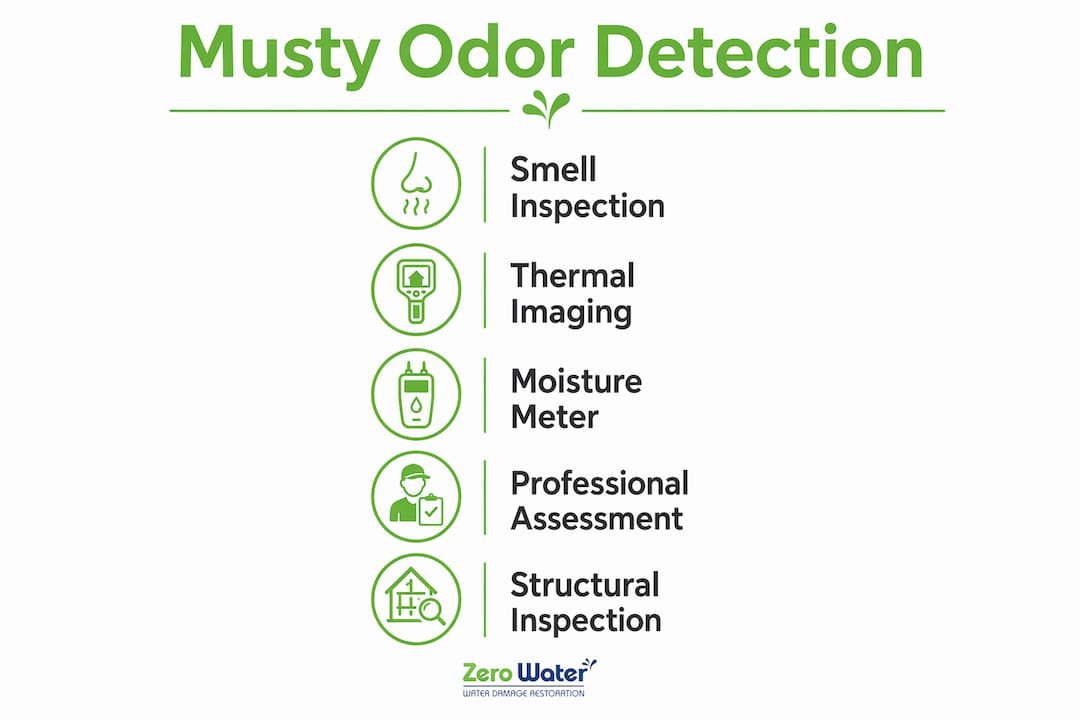
Detection starts with your nose, but it cannot end there. Walk each room slowly and note where the smell intensifies. Closets adjacent to exterior walls, the space under kitchen and bathroom sinks, and the area around the base of water heaters are common concentration points. Smell alone narrows the search zone considerably.
From there, a structured assessment produces reliable results. Follow these steps in order:
- Use a digital humidity monitor (brands like Govee or ThermoPro are widely available) to identify rooms where relative humidity exceeds 50%.
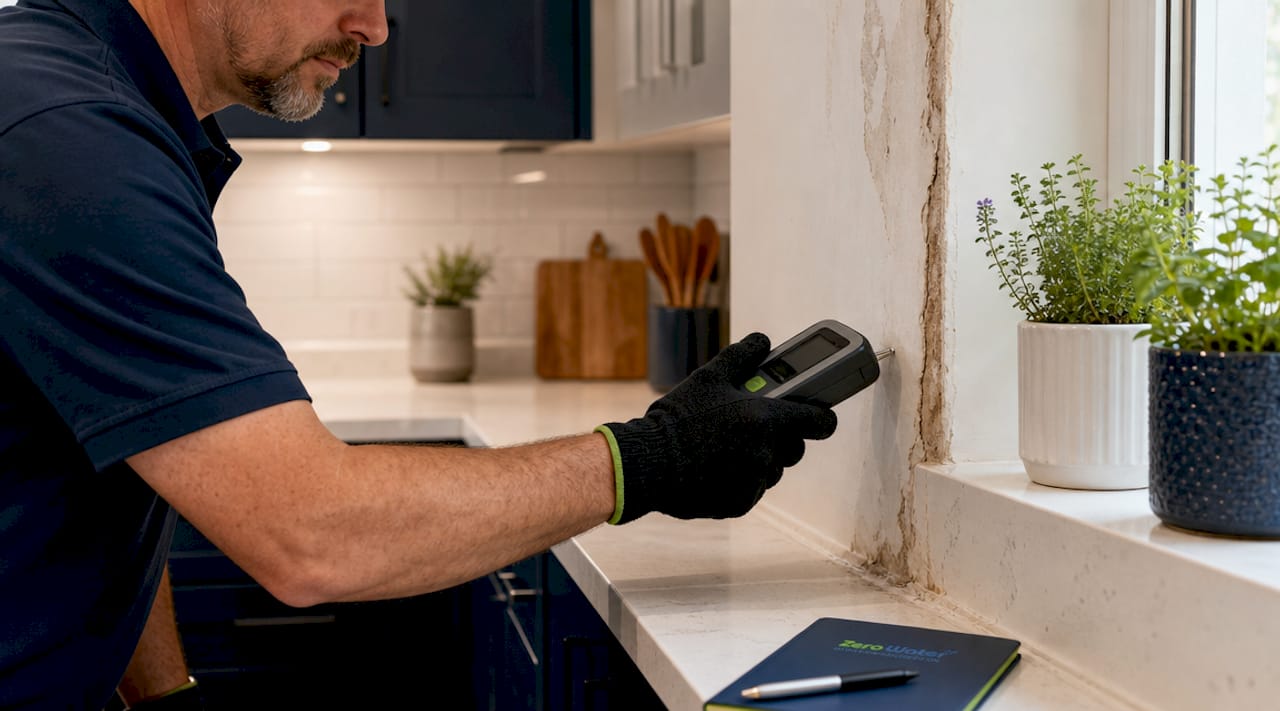
- Use a pin moisture meter on baseboards, drywall near floor level, and wood framing in accessible areas. Flag any reading above normal dry-material thresholds.
- Check for visual signs of water damage including staining, bubbling paint, warped flooring, and efflorescence on concrete or masonry.
- Apply the CDC/NIOSH Dampness and Mold Assessment Tool (DMAT) framework, which treats musty odor as a key diagnostic factor alongside visible mold and staining for evaluating indoor microbial risk.
- Inspect HVAC air handlers and return vents for visible mold growth or musty odor concentration near supply registers.
| Detection method | What it finds | Limitation |
|---|---|---|
| Smell inspection | mVOC concentration zones | Cannot pinpoint exact source |
| Moisture meter | Moisture in accessible materials | Cannot read inside sealed cavities |
| Humidity monitor | Ambient air moisture levels | Does not measure material moisture |
| Professional assessment | Hidden cavities, full scope | Requires scheduling and cost |
Professional assessment by a certified water damage restoration company adds thermal imaging and structural cavity inspection to this list. Learn more about how pros assess damage to understand what a thorough evaluation actually covers. The DMAT tool validates musty odor as a legitimate field diagnostic factor, which means your nose is a credible instrument when used alongside objective measurements.
How to remove musty odor and prevent it from returning
Permanent odor removal requires addressing the source, not the symptom. Deodorization without confirming thorough drying and microbial removal consistently fails. The correct sequence is drying to depth, removing affected materials, remediating microbial growth, and then controlling humidity going forward.
Drying to depth
Industrial air movers and commercial dehumidifiers dry materials far more effectively than household fans. A professional restoration company uses psychrometric calculations to determine how many units are needed per square foot and monitors moisture readings daily until materials reach target levels. This process typically takes three to five days for moderate water events and longer for flooded basements or multi-story intrusions.
Mold remediation principles
Once drying confirms residual moisture in materials, those materials require either antimicrobial treatment or physical removal. Drywall with significant mold growth is almost always removed and replaced. Wood framing can sometimes be treated with EPA-registered antimicrobial agents and HEPA-vacuumed if the growth is surface-level. Carpet and pad are nearly always removed after any Category 2 or Category 3 water event. The step-by-step remediation process for Illinois homeowners covers these decisions in detail.
Pro Tip: Maintain indoor humidity between 30% and 50% year-round. Humidity above 50% creates conditions that foster mold growth and musty odors, especially in basements and crawl spaces. A whole-home dehumidifier integrated with your HVAC system is the most reliable solution for Chicagoland homes where summer humidity regularly spikes.
Deodorization alone vs. full remediation
| Approach | Effectiveness | Duration of results | Cost range |
|---|---|---|---|
| Deodorization only | Low: masks mVOCs temporarily | Days to weeks | Low upfront |
| Surface cleaning only | Moderate: removes surface mold | Weeks to months | Low to moderate |
| Full remediation | High: removes source materials | Permanent if humidity controlled | Higher upfront |
The math on this comparison is straightforward. Homeowners who choose deodorization or surface cleaning alone typically repeat the process multiple times before committing to full remediation. The cumulative cost of repeated partial treatments almost always exceeds the cost of doing it correctly the first time.
Preventive measures that actually hold up include:
- Running a dehumidifier in basements and crawl spaces year-round
- Sealing foundation cracks before the next rain event
- Cleaning HVAC coils and drain pans annually to prevent condensation buildup
- Inspecting attic ventilation to prevent moisture accumulation from temperature differentials
- Reviewing indoor air quality strategies with your HVAC contractor after any water event
Key takeaways
Musty odor after water damage is caused by mVOCs from mold and mildew growing in damp materials, and eliminating it permanently requires full drying, material removal, and humidity control, not deodorization alone.
| Point | Details |
|---|---|
| mVOCs are the odor source | Mold and mildew release chemical compounds that produce musty smells before visible growth appears. |
| Surface dryness is not enough | Moisture trapped inside walls and insulation sustains microbial growth even when surfaces feel dry. |
| Odor is a diagnostic tool | The CDC/NIOSH DMAT framework treats musty smell as a key field indicator of hidden microbial activity. |
| Deodorization alone fails | Masking mVOCs without removing the microbial source produces temporary results and higher long-term costs. |
| Humidity control prevents recurrence | Keeping indoor humidity between 30% and 50% stops the conditions that allow mold to return. |
What I’ve learned after a decade of water damage calls
After more than ten years responding to water damage across Schaumburg, Arlington Heights, and the northwest suburbs, the pattern I see most often is this: a homeowner smells something off a week after a water event, assumes the drying is done, and buys a case of air freshener. Three months later, they call us because the smell is worse and now there is visible mold behind the drywall.
The musty smell is not a nuisance. It is a measurement. It tells you that microbial activity is ongoing and that the drying process did not reach the materials that matter. I have walked into homes where fans ran for five days and moisture readings in the wall cavity were still at 25%. The surface was bone dry. The inside was still feeding mold.
What I tell every homeowner is this: trust the smell more than you trust the surface. If it still smells after drying, something is still wet. Get a moisture meter reading on your baseboards and drywall before you conclude the job is done. And if you are not comfortable doing that assessment yourself, call a professional before you start repainting or replacing flooring. Covering a moisture problem with new materials does not solve it. It just hides it until the next inspection or the next sale.
The homeowners who act on the smell within the first week consistently have smaller remediation scopes and lower total costs. The ones who wait until they see mold almost always face full wall cavity work. That difference is not about luck. It is about taking the odor seriously as the early warning it actually is.
— Jim
How Zerowaterrestoration eliminates musty odors for good

If your home still smells musty after a water event, Zero Water Restoration has the equipment and the process to find out exactly why. The team serves Schaumburg, Barrington, Palatine, and communities throughout the northwest suburbs with 24/7 emergency response, industrial drying systems, and certified mold remediation services that go well beyond surface treatment. Every job includes moisture monitoring throughout the drying process and a post-remediation verification to confirm the source is gone, not just covered. For homeowners dealing with water damage restoration and the odors that follow, call (847) 515-7000 or visit zerowaterrestoration.com for a free inspection and estimate.
FAQ
What is the musty smell after water damage?
The musty smell after water damage is produced by microbial volatile organic compounds (mVOCs) released by mold and mildew as they grow in damp building materials like drywall, wood, and carpet. It is a chemical signal, not just stale air, and it indicates active microbial growth.
Is musty odor after water damage dangerous?
mVOCs associated with musty odors can cause eye and throat irritation, headaches, and respiratory discomfort, particularly in people with allergies or asthma. The odor itself is a sign of mold presence, which carries its own health risks with prolonged exposure.
How long does musty smell last after water damage?
Without full remediation, musty odors can persist for months or years because the microbial source continues producing mVOCs as long as moisture and organic material are available. Proper drying, material removal, and humidity control are required to eliminate it permanently.
Can I remove musty odor myself after a flood?
You can address minor surface odors with thorough cleaning and dehumidification, but drying to correct depths and removing microbiologically affected materials typically requires professional equipment and expertise. DIY deodorization without confirming full dryness almost always results in odor returning within weeks.
What humidity level prevents musty smells from returning?
Keeping indoor humidity between 30% and 50% prevents the conditions mold needs to grow and produce musty odors. A whole-home dehumidifier or portable units in high-risk areas like basements are the most reliable tools for maintaining that range year-round.