
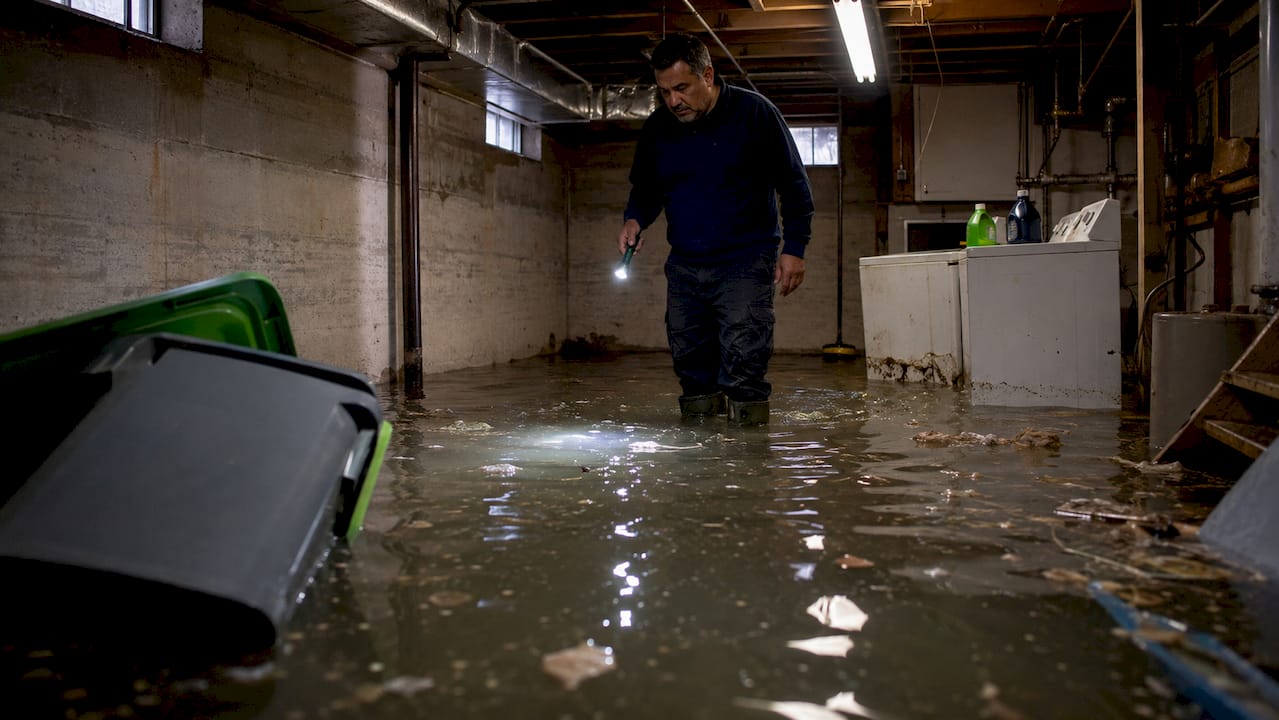
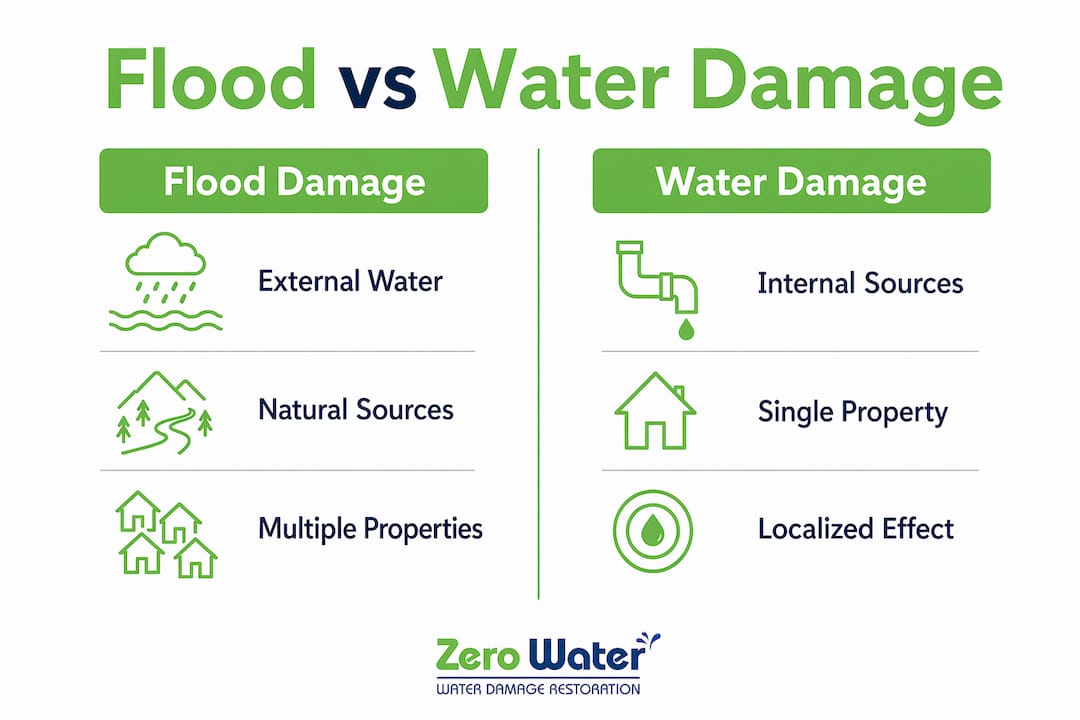
Flood damage is defined as water intrusion from external natural sources affecting at least two properties or two acres of land, while water damage originates from internal sources like burst pipes or appliance failures within a single property. Understanding what is flood damage vs water damage is not just a technical distinction. It determines which insurance policy pays, how quickly you can file a claim, and what kind of restoration your property needs. Getting this wrong costs homeowners thousands of dollars in denied claims and delayed repairs.
What causes flood damage vs water damage?
Water damage occurs suddenly, typically within minutes to hours, while flood damage develops over hours or days as water accumulates from external sources. That timing difference matters because it shapes how you respond and what you document.
Common external sources that cause flood damage:
- Heavy rainfall overwhelming drainage systems
- River or lake overflow reaching nearby properties
- Storm surges from hurricanes or severe weather events
- Groundwater seepage pushing through foundation walls after prolonged rain
- Snowmelt flooding low-lying areas in spring
Common internal sources that cause water damage:
- Burst or frozen pipes
- Leaking dishwashers, washing machines, or water heaters
- Roof leaks allowing rainwater inside
- Condensation buildup from poor ventilation
- Overflowing toilets or sinks
The origin of the water is the defining factor. Flood water travels across land, picks up soil, debris, and contaminants, and enters your home from the outside. Internal water damage stays contained to your property and comes from a system that failed inside the building.
Groundwater seepage is one of the most misunderstood scenarios. When heavy rain forces water through foundation cracks, insurance adjusters classify this as flood damage, not water damage. That single classification can shift your claim from a covered loss to an excluded one under a standard homeowners policy.
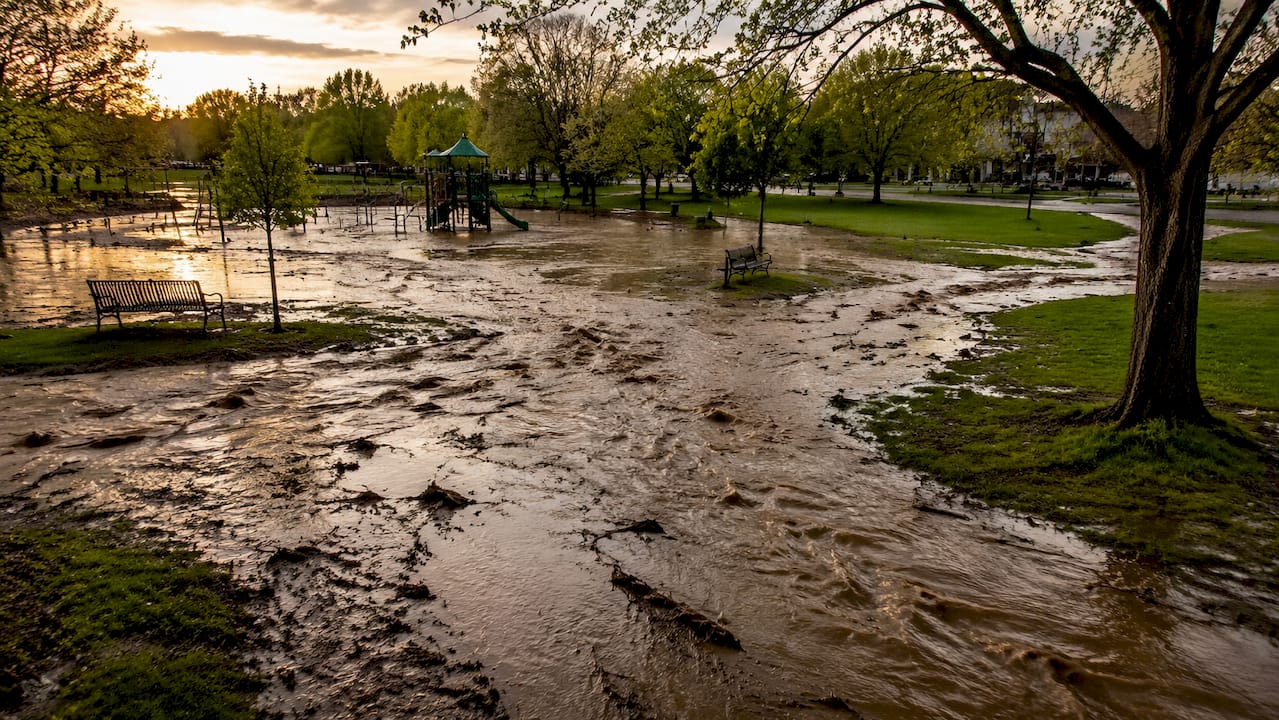
Pro Tip: Take a short video of where water is entering your property within the first hour of discovering damage. That footage establishes the point of origin and can be the difference between a paid claim and a denied one.
How to identify water damage signs in your property
Visible signs are the most obvious starting point, but the subtler clues are what most property owners miss until the damage is severe.
Signs that point to flood damage:
- Waterlines or tide marks on exterior walls or foundation
- Debris, mud, or sediment deposited on floors or in crawl spaces
- Soil erosion around the foundation perimeter
- Cracks in the foundation or basement walls following a storm
- Damage consistent across multiple neighboring properties
Signs that point to internal water damage:
- Musty odors appearing within 24–48 hours of a leak
- Warped, buckled, or discolored wood floors
- Stains on ceilings or walls, often yellow or brown
- Paint bubbling or peeling on interior surfaces
- Mold growth in corners, under sinks, or behind appliances
Musty odors signal microbial volatile organic compounds (mVOCs), which develop as mold begins growing. This can happen before any visible mold appears. If you smell something musty after a plumbing event, treat it as a mold warning, not just a cosmetic issue.
Sloping floors and sticking doors are structural clues that many property owners attribute to an aging house. Wood absorbs moisture, swells, and shifts. When that happens at the foundation level, doors no longer align with their frames and floors begin to slope. These symptoms often indicate hidden water damage that has been present for weeks or months.
Basements, attics, and exterior walls are the highest-risk areas. Inspect them after every major storm and at least twice a year as part of routine maintenance. Check under sinks, around water heaters, and behind washing machines monthly. You can find a detailed checklist of early warning signs to guide your inspections.
Pro Tip: Press your hand flat against drywall near the base of exterior walls after heavy rain. Soft or spongy drywall means moisture is present, even if no stain is visible yet.
What insurance covers flood damage and water damage?
The coverage gap between flood damage and water damage is the most expensive surprise a property owner can face. Standard HO-3 homeowners policies cover accidental internal water damage but exclude damage from natural flooding. That exclusion is not buried in fine print. It is a fundamental feature of how homeowners insurance is structured.
Here is how coverage typically breaks down:
- HO-3 homeowners policy: Covers burst pipes, appliance leaks, and roof leaks that allow rain inside. Does not cover flooding from external natural sources.
- NFIP flood insurance: Issued through the National Flood Insurance Program, this policy covers structural damage and contents from natural flooding events. Purchased separately from your homeowners policy.
- Private flood insurance: Offered by private carriers, often with higher coverage limits and faster claims processing than NFIP policies.
- Water backup coverage: An endorsement added to some HO-3 policies that covers damage from sewer or drain backups. This is separate from both standard water damage and flood coverage.
| Damage type | Covered by HO-3? | Requires separate policy? |
|---|---|---|
| Burst pipe | Yes | No |
| Appliance leak | Yes | No |
| Natural flooding | No | Yes (NFIP or private) |
| Groundwater seepage | No | Yes (flood policy) |
| Sewer backup | Sometimes | Often (endorsement needed) |
Documenting the point of origin is the single most critical step in any water-related claim. Insurers deny claims when they cannot confirm whether water entered from inside or outside the property. Photographs, videos, and a written timeline all support your case.
Homeowners frequently fail to provide sufficient evidence of damage origin, which leads directly to claim denials. Filing a claim without that documentation is one of the most common and costly mistakes property owners make.
Pro Tip: Review your declarations page today. If you do not see a separate flood policy listed, you have no flood coverage. Call your agent and ask specifically about NFIP enrollment and water backup endorsements before the next storm season.
For a step-by-step breakdown of the claims process, Zerowaterrestoration has published a guide on filing water damage claims tailored to Illinois homeowners.
How are flood damage and water damage repaired?
The restoration process for both damage types follows a similar framework, but flood damage adds layers of complexity that extend timelines and costs significantly.
Standard water damage restoration steps:
- Water extraction using industrial pumps and wet vacuums
- Structural drying with air movers and commercial dehumidifiers
- Moisture mapping to locate hidden saturation in walls and subfloors
- Mold remediation if growth is detected or conditions favor it
- Repairs to drywall, flooring, insulation, and affected systems
Flood restoration requires all of those steps plus additional work to address structural damage, soil erosion around the foundation, and contamination from external water sources. Floodwater carries bacteria, sewage, and debris that require specialized cleaning protocols before any drying begins.
Even one inch of floodwater can cause up to $25,000 in damage. That figure reflects not just material replacement but the labor-intensive process of decontaminating and drying a structure that has absorbed contaminated water at the foundation level.
Timing is the most critical variable in both scenarios. Mold begins developing within 24–48 hours of moisture exposure. Structural materials like wood framing and drywall deteriorate rapidly when wet. Every hour of delay increases both the scope of damage and the cost of repair.
For flood damage specifically, protecting your home before the next event matters as much as repairing the current one. Grading soil away from the foundation, installing sump pumps, and sealing foundation cracks all reduce future risk.
Pro Tip: Do not run HVAC systems in a water-damaged property before professional assessment. Forced air spreads mold spores through ductwork and can contaminate rooms that were previously unaffected.
Restoration timelines vary. Minor internal water damage from a single pipe failure may resolve in 3–5 days. Flood damage affecting multiple rooms and the foundation can take several weeks. A professional assessment within the first few hours gives you an accurate timeline and prevents costly missteps.
Key takeaways
The difference between flood damage and water damage determines your insurance coverage, your restoration process, and your total cost of recovery.
| Point | Details |
|---|---|
| Source defines the damage type | Flood damage comes from external natural sources; water damage comes from internal failures like pipes or appliances. |
| Standard policies exclude flooding | HO-3 homeowners insurance does not cover natural flood events. A separate NFIP or private flood policy is required. |
| Document the point of origin immediately | Insurers deny claims without clear proof of where water entered. Photos and video taken within the first hour are critical. |
| Subtle signs matter | Sticking doors, sloping floors, and musty odors are early structural warnings that most property owners overlook. |
| Speed determines restoration cost | Mold begins within 24–48 hours. Faster professional response reduces both damage scope and total repair costs. |
Why getting this distinction right matters more than most people realize
After more than a decade working with property owners across the northwest suburbs of Chicago, I can tell you that the flood vs water damage distinction is where most homeowners get hurt financially. Not because the damage is worse, but because they filed the wrong claim with the wrong policy and got nothing.
The most common mistake I see is a homeowner calling their regular homeowners insurance after a basement flood from heavy rain. Their adjuster comes out, identifies external water intrusion, and denies the claim. The homeowner had no flood policy. They are now facing a five-figure repair bill out of pocket. That scenario is entirely preventable.
What I have also learned is that the subtle signs are the ones that cost the most in the long run. A musty smell in the basement that gets ignored for six months becomes a full mold remediation project. A sticking door that gets attributed to humidity becomes a structural repair when the subfloor finally gives way. Early detection is not just convenient. It is the difference between a $500 fix and a $15,000 restoration.
My honest advice: do not wait for visible damage to take this seriously. Review your insurance policies now, before any event occurs. Know exactly what each policy covers and where the gaps are. And if you ever have any doubt about what type of damage you are dealing with, get a professional assessment before you file anything. Misclassifying your own claim is a fast path to a denial.
— Jim
Zerowaterrestoration is ready when water damage strikes
Property owners in the Chicagoland area face both flood risk and internal water damage year-round, from spring storms to winter pipe failures. Zerowaterrestoration handles the full restoration process for both damage types, from initial water extraction through mold remediation and complete structural repairs.
The team at Zerowaterrestoration responds 24/7 and works directly with insurance providers to document damage correctly from the start. That documentation support is what keeps claims moving and out-of-pocket costs low. Whether you are dealing with a burst pipe in Schaumburg or storm flooding in Barrington, the water damage restoration process starts with a free inspection. Call (847) 515-7000 or visit zerowaterrestoration.com to schedule your assessment today.
FAQ
What is the main difference between flood and water damage?
Flood damage originates from external natural sources like rising rivers or heavy rain affecting multiple properties, while water damage comes from internal failures like burst pipes or leaking appliances within a single property.
Does homeowners insurance cover flood damage?
Standard HO-3 homeowners policies do not cover natural flood damage. A separate flood insurance policy through the NFIP or a private carrier is required for that coverage.
How do I identify water damage in my home?
Look for musty odors, stained ceilings, warped floors, bubbling paint, and sticking doors. These signs often appear before visible mold and indicate active or recent moisture intrusion.
Is groundwater seepage covered by homeowners insurance?
Groundwater seepage through foundation cracks after heavy rain is typically classified as flood damage by insurance adjusters and excluded from standard HO-3 policies. A separate flood policy is needed.
How quickly does mold develop after water damage?
Mold begins growing within 24–48 hours of moisture exposure. Professional water extraction and drying within the first few hours significantly reduces the risk of mold taking hold.