
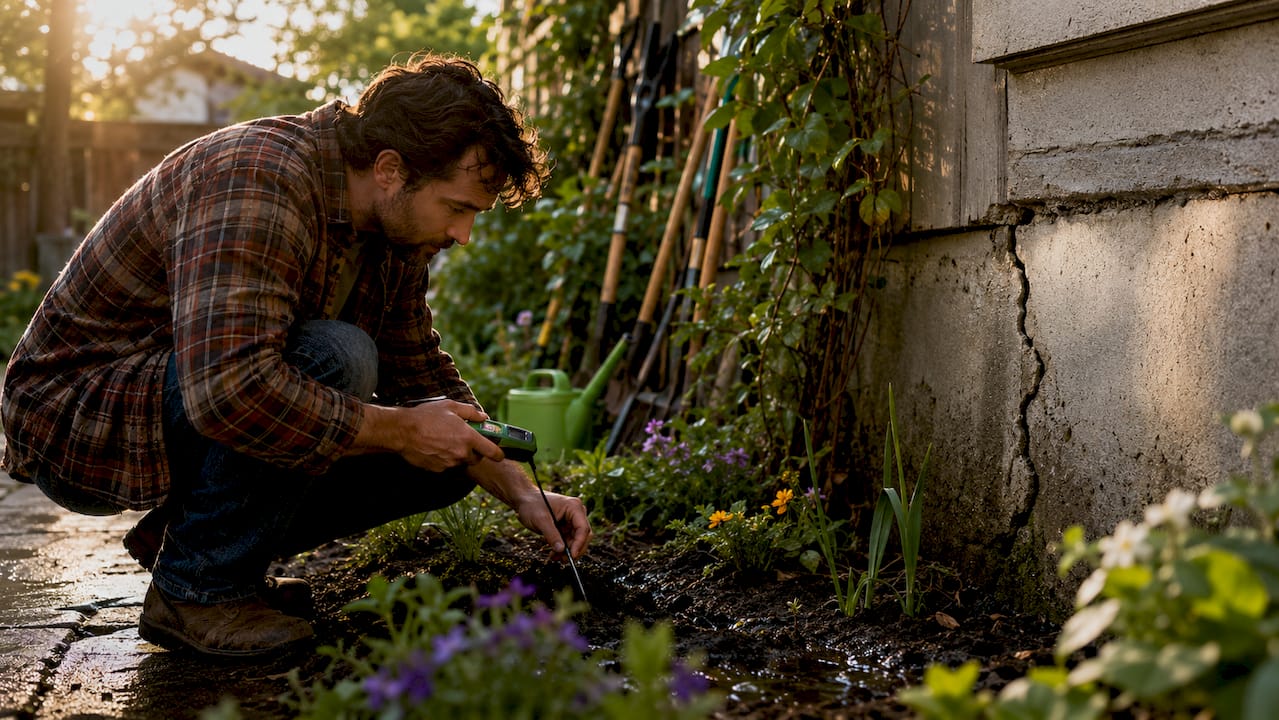
Water damage causes foundation issues by saturating the soil around your home, reducing its load-bearing strength, and pushing damaging pressure against foundation walls. These are not isolated events. Groundwater levels shift with every rain cycle, and each fluctuation compounds the stress on your foundation. Understanding how water damage causes foundation issues is the first step toward protecting your home before cracks appear, doors stick, or walls begin to bow. Hydrostatic pressure, expansive clay soils, and collapsible soil types each attack foundations differently. Knowing which threat applies to your property determines how you respond.
What physical signs indicate water damage in your foundation?
Early detection saves money and prevents structural collapse. Common physical signs include stair-step cracks in brick or block walls, horizontal cracks along poured concrete, sticking doors and windows, musty odors in the basement, and white chalky deposits on walls called efflorescence.
Efflorescence forms when water wicks through concrete, dissolves minerals inside, and leaves them on the surface as it evaporates. It looks harmless but signals active moisture migration through your foundation wall. Damp spots at the cove joint, where the floor meets the wall, often appear before any visible crack forms. That location is where hydrostatic pressure first pushes water through.
These signs tend to worsen in a predictable sequence:
- Efflorescence and damp odors appear first, signaling moisture movement through the wall
- Hairline cracks follow as water pressure cycles through wet and dry seasons
- Stair-step or horizontal cracks indicate structural movement, not just surface moisture
- Bowing walls signal advanced hydrostatic pressure that requires immediate professional attention
- Sticking doors and windows mean the foundation has shifted enough to distort the frame above it
Visible moisture and cracks after rainfall are key indicators that require professional inspection. Waiting for the problem to “dry out” on its own allows pressure to keep building between rain events.
Pro Tip: Walk your basement perimeter after every heavy rain. Look for new damp patches, salt deposits, or any crack that has grown wider since your last check. A crack that was a hairline in spring and is now a quarter-inch wide by fall is a structural warning, not a cosmetic issue.
How does water physically damage your foundation?
Water attacks foundations through four distinct physical processes. Each one operates on a different timeline and targets a different part of your home’s structural system.
Soil saturation and bearing capacity loss
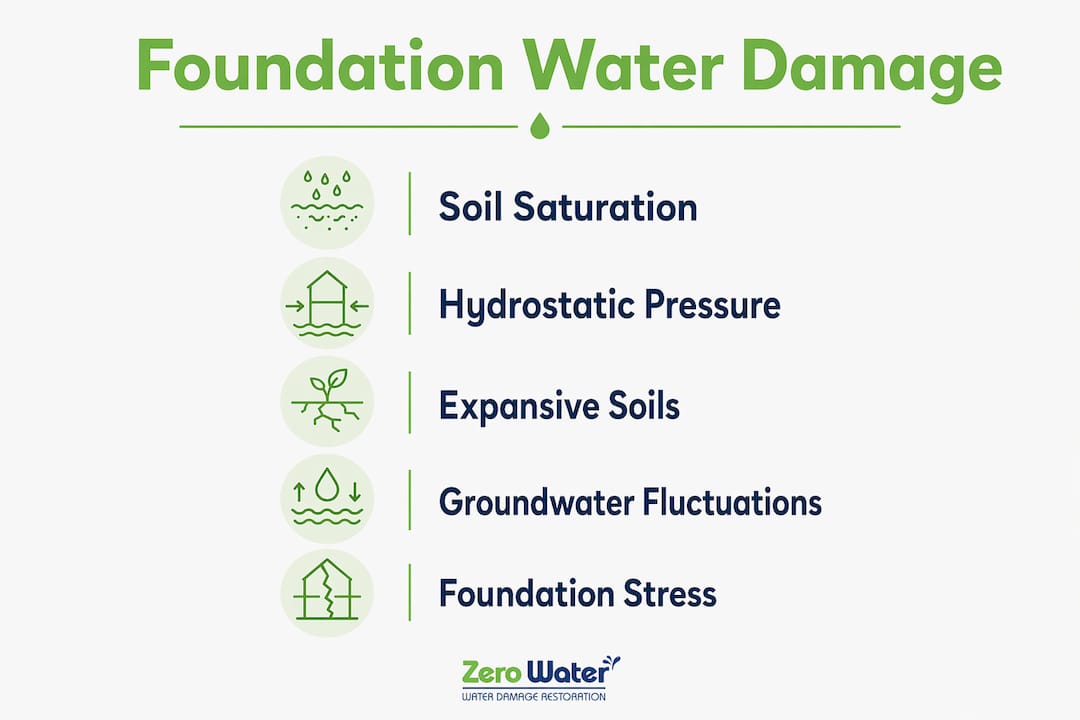
The ground beneath your foundation carries the weight of your entire home. When the water table rises to the level of your foundation footing, soil bearing capacity drops by around 40%. That means the soil is doing less than two-thirds of the job it was designed to do. Settlement, cracking, and uneven floors follow directly from that loss of support.
Hydrostatic pressure on walls
Water-saturated soil is heavy. It presses outward and inward against your foundation walls with a force proportional to its depth. Water weighs approximately 62.4 pounds per cubic foot, and that weight translates into uplift pressure on slab foundations and lateral pressure on basement walls. Geotechnical engineers use a 5-foot depth threshold from the foundation bottom to the water table to assess serious uplift risk. When water gets closer than that, slab heave and wall bowing become likely outcomes.
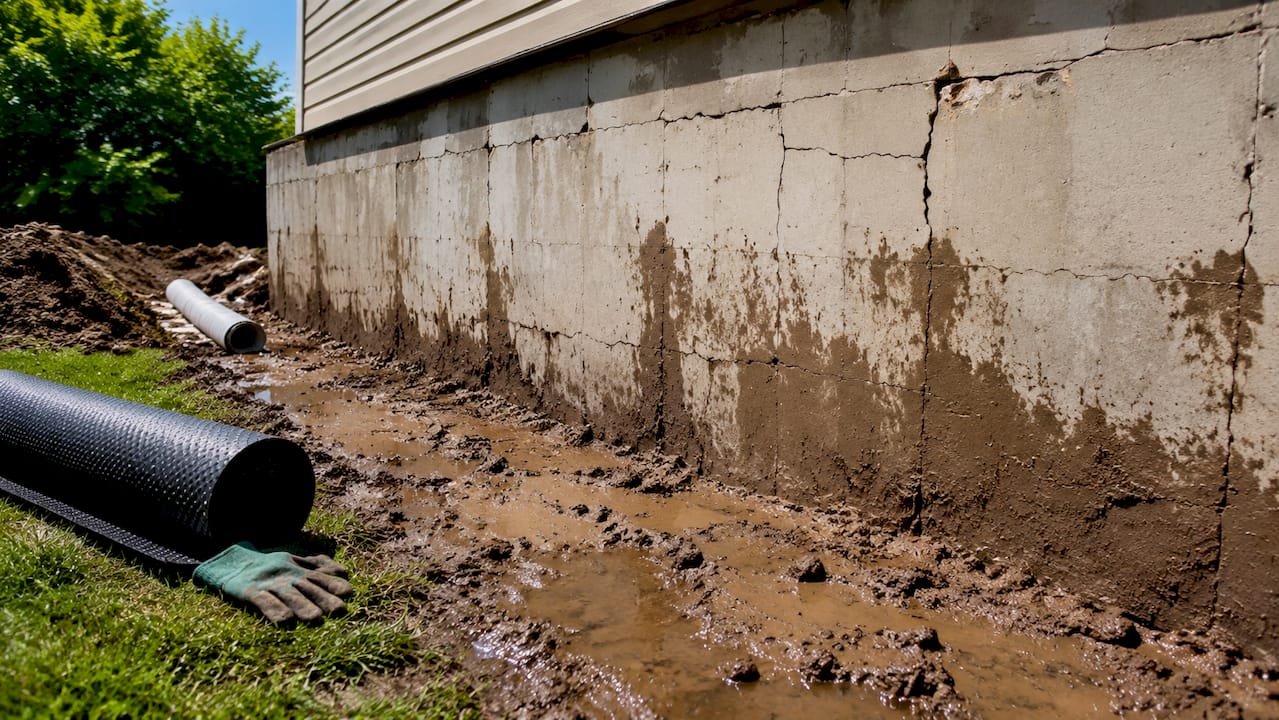
Hydrostatic pressure is the most significant long-term threat to foundation integrity. Positive grading that directs water 6–10 feet away from the house is the single most effective defense against it.
Expansive and collapsible soils
Not all soil responds to water the same way. Clay soils swell when wet and shrink when dry, a process called soil pumping. Each cycle lifts and drops the foundation slightly. Over years, that repeated mechanical stress cracks footings and separates walls from floors. Collapsible soils behave in the opposite direction. They hold their structure when dry but lose strength suddenly when saturated. Research shows that sudden inundation causes immediate settlement in these soil types, with collapse volume exceeding 5% when moisture content crosses critical thresholds.
| Soil type | Behavior when wet | Foundation risk |
|---|---|---|
| Clay (expansive) | Swells, then shrinks when dry | Repeated lift and drop, cracking |
| Sandy/granular | Loses particles through erosion | Voids form beneath footings |
| Collapsible (loess) | Sudden strength loss when saturated | Rapid settlement and sinking |
| Mixed/fill | Variable, unpredictable | Differential settlement |
Dynamic groundwater fluctuations
Current foundation designs often assume static soil conditions, but groundwater levels change with every season and every storm. That mismatch between design assumption and real-world conditions means cumulative damage builds over time even when no single event seems severe. A foundation that handled last year’s rainfall fine may crack this year because the soil has been weakening through repeated wet and dry cycles.
Pro Tip: If your home sits on clay-heavy soil, install a moisture barrier beneath your flooring and consider a perimeter drainage system. Clay soil damage is slow but relentless, and the cost of a drainage system is a fraction of the cost of foundation repair.
What steps can homeowners take to prevent foundation water damage?
Prevention is far cheaper than repair. The causes of foundation problems almost always trace back to water management failures that could have been corrected years earlier.
-
Grade your yard away from the house. The ground should slope downward at least 6 inches over the first 10 feet from your foundation. Flat or inward-sloping ground channels every rainstorm directly against your walls.
-
Clean and extend your gutters and downspouts. Clogged gutters overflow and dump water at the base of your foundation. Downspouts should discharge at least 6–10 feet from the house, not directly against the wall.
-
Avoid deep-root plants near the foundation. Tree roots seek moisture and can crack foundation walls or disrupt drainage systems. Keep large trees at least 20 feet from the house.
-
Waterproof basement walls from the outside. Exterior waterproofing membranes stop water before it reaches the wall. Interior sealants only manage water that has already penetrated, which does not address the underlying pressure.
-
Install a sump pump with a battery backup. A sump pump removes water that collects in the lowest point of your basement. A battery backup keeps it running during power outages, which often coincide with the worst storms.
-
Monitor soil moisture regularly. A basic soil moisture meter costs under $30 and tells you whether the ground near your foundation is staying saturated between rain events. Persistent saturation signals a drainage problem that needs correction before it reaches the footing.
Reviewing water damage prevention best practices gives homeowners a structured checklist to work through each season. Prevention is not a one-time task. Soil conditions, landscaping, and drainage systems all change over time and need regular attention.
How do professionals assess and repair water-damaged foundations?
Professional assessment goes well beyond a visual check. Restoration specialists and structural engineers use moisture meters to measure water content inside concrete and soil, perform soil testing to identify the soil type and its saturation behavior, and conduct visual inspections that map crack patterns to specific pressure sources.
The repair approach depends entirely on what caused the damage:
- Crack injection: Polyurethane or epoxy injections seal active cracks in poured concrete walls. This stops water entry but does not address external pressure.
- Interior drainage systems: French drains installed inside the basement perimeter collect water that enters through the wall and route it to a sump pump. This manages water intrusion without excavation.
- Exterior waterproofing: Excavating around the foundation and applying a waterproof membrane stops water before it contacts the wall. This is the most thorough solution for severe hydrostatic pressure.
- Wall reinforcement: Carbon fiber straps or steel I-beams anchor bowing walls and prevent further inward movement.
- Soil stabilization: In cases of collapsible or eroded soil, engineers inject grout or use helical piers to transfer the foundation load to deeper, stable soil layers.
Sealing interior cracks alone does not resolve hydrostatic pressure. It often shifts the water ingress point to a new location. Professionals address the water source and soil conditions first, then seal the structure. Skipping that sequence is the most common and costly mistake homeowners make when attempting DIY repairs.
The water damage restoration process for foundation issues typically involves diagnosis, water extraction, drying, structural repair, and waterproofing in that order. Compressing or skipping steps leads to recurring damage.
Key takeaways
Water damage destroys foundation integrity through soil saturation, hydrostatic pressure, and soil movement, and only addressing the external water source stops the cycle permanently.
| Point | Details |
|---|---|
| Soil bearing capacity | A rising water table reduces load-bearing strength by around 40%, causing settlement and cracking. |
| Hydrostatic pressure | Water-saturated soil pushes against walls with force that causes bowing, cracking, and slab heave. |
| Soil type matters | Clay soils expand and contract repeatedly; collapsible soils fail suddenly when saturated. |
| Early warning signs | Efflorescence, musty odors, and stair-step cracks signal active moisture migration before major damage occurs. |
| Interior sealing fails | Patching cracks from inside shifts water entry points and leaves external pressure unresolved. |
What I’ve learned after watching homeowners get this wrong
The most expensive foundation repairs I’ve seen share one thing in common. The homeowner noticed the early signs, bought a tube of hydraulic cement, filled the crack, and felt relieved. Six months later the crack was back, wider, and now accompanied by a bowing wall.
Interior crack sealing is not a repair. It is a delay. The water pressure outside the wall does not care what you put on the inside surface. It keeps pushing until it finds a new path, and the new path is usually worse than the original one.
The other mistake I see constantly is treating foundation water damage as a one-time event rather than an ongoing condition. Groundwater levels change with every season. A foundation that survived 20 years of normal rainfall can start failing when a neighbor’s landscaping changes, when a nearby development alters drainage patterns, or simply when a wet decade follows a dry one. Soil-structure interaction is dynamic, and your maintenance approach needs to match that reality.
The homeowners who protect their foundations long-term do two things differently. They fix the drainage before they fix the crack. And they check their basement after every significant rain, not just when something looks wrong. That habit costs nothing and catches problems when they are still cheap to fix.
If your home sits on clay-heavy soil in the Chicago suburbs, the wet-dry cycles here are genuinely punishing. The freeze-thaw cycle adds another layer of stress that accelerates crack formation every winter. Getting a professional assessment of your soil type and drainage conditions is not an overreaction. It is the only way to know what you are actually dealing with.
— Jim
Foundation water damage help for Barrington and nearby homeowners
Zerowaterrestoration has spent over 10 years helping homeowners across the northwest Chicago suburbs deal with water damage before it becomes a structural crisis.
For homeowners in Barrington and surrounding communities, Zerowaterrestoration provides thorough on-site assessments that identify moisture sources, soil conditions, and the full extent of foundation damage. The team handles everything from water extraction and drying to structural repair coordination and insurance documentation. If you are seeing cracks, damp walls, or musty odors, a professional inspection is the right next step. Contact Zerowaterrestoration for foundation water damage restoration in Barrington or call (847) 515-7000 for a free estimate. The team is available 24/7.
FAQ
How does water damage cause foundation issues?
Water saturates the soil around your foundation, reducing its load-bearing strength and pushing hydrostatic pressure against walls. Over time, this causes cracks, settlement, and structural movement.
What are the first signs of foundation water damage?
Efflorescence on basement walls, musty odors, and hairline cracks near corners are the earliest signs. Sticking doors and bowing walls indicate the damage has progressed to a structural level.
Can I seal foundation cracks myself?
Interior crack sealants stop visible water entry but do not address external hydrostatic pressure. The crack typically returns, often in a new location, because the underlying pressure source remains active.
How does soil type affect foundation water damage?
Clay soils expand when wet and shrink when dry, mechanically stressing the foundation through repeated cycles. Collapsible soils lose strength suddenly when saturated, causing rapid settlement.
How far should water drain from my foundation?
Positive grading should direct water at least 6–10 feet away from the foundation. Downspouts and drainage systems should discharge at that distance to prevent water from pooling against the wall.