
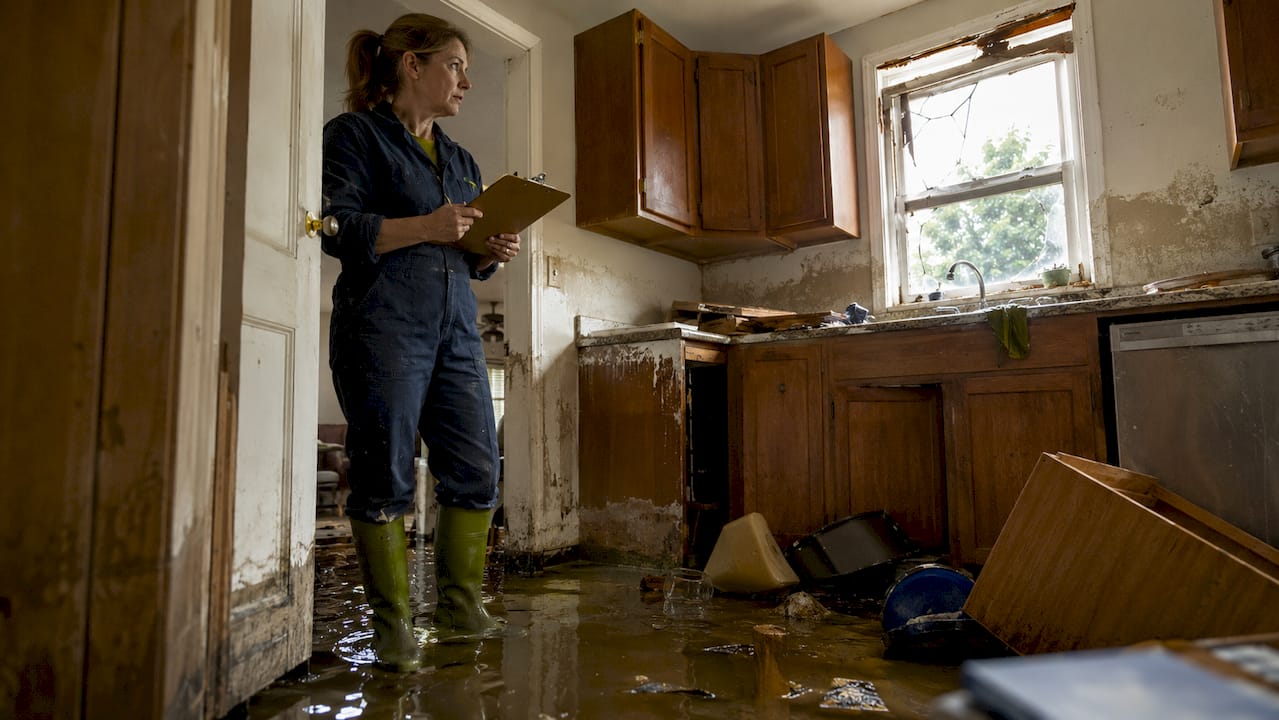
The storm flood cleanup process is defined as a five-stage sequence: air out, move out, tear out, clean out, and dry out. FEMA mandates this sequence to prevent mold growth, structural failure, and serious health hazards after flooding. Water damage restoration professionals use this same framework as the foundation of every post-storm recovery. The clock starts the moment floodwaters recede. Mold can begin growing within 24–48 hours, and every hour of delay increases both the health risk and the repair cost. Documenting damage for your insurance claim must happen before you remove or discard anything.
What safety steps are required before starting flood cleanup?
Flood cleanup safety begins before you touch a single wet item. Cleanup should not start until official authorities confirm the structure is safe to enter. Hidden electrical hazards, compromised load-bearing walls, and gas leaks are common after major storms. Entering too early puts you at serious risk.
Once you have clearance, personal protective equipment (PPE) is non-negotiable. Recommended PPE includes:
- Rubber gloves to protect against contaminated water and sharp debris
- Waterproof boots or waders to prevent cuts and chemical exposure
- N-95 masks to filter airborne mold spores and particulates
- Safety glasses to shield eyes from splashing water and debris
- Long-sleeved clothing and pants to minimize skin contact with contaminants
Floodwater is rarely clean. It often carries sewage, pesticides, and industrial chemicals. The EPA classifies flood-affected indoor air as a health hazard, which means indoor air quality must be actively managed throughout the entire cleanup. Open windows and doors as soon as it is safe to do so.
Document everything before you start moving items. Photograph every room, every damaged surface, and every ruined belonging. This documentation directly supports your insurance claim and determines how much you recover. Zerowaterrestoration recommends reviewing insurance claim steps before the first item leaves your home.
Pro Tip: Never attempt to open swollen doors or cabinets with force. Objects under tension can snap back and cause serious injury. Cut or pry carefully instead.
How to execute the five stages of flood damage recovery
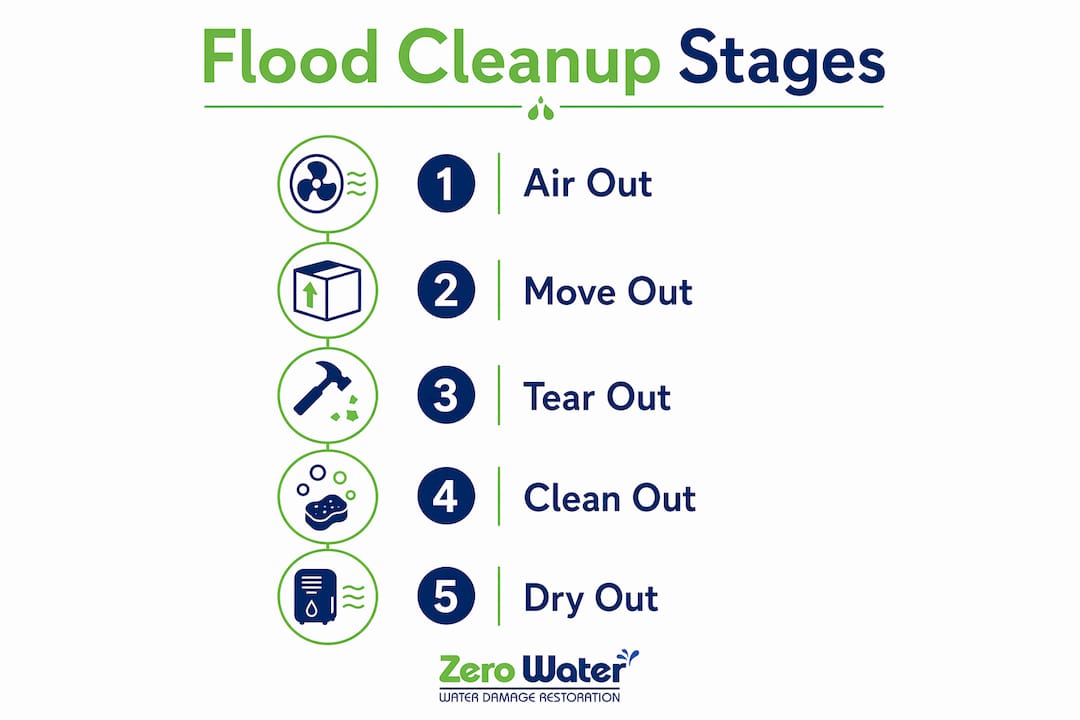
Stage 1: Air out
Ventilation is the first physical action you take. Open every window and exterior door that is structurally safe. Run exhaust fans if power has been confirmed safe. Ventilation reduces airborne contaminants and begins lowering indoor humidity before any equipment arrives. Do not use central HVAC systems until they have been inspected. Contaminated ductwork can spread mold spores throughout the entire building.
Stage 2: Move out
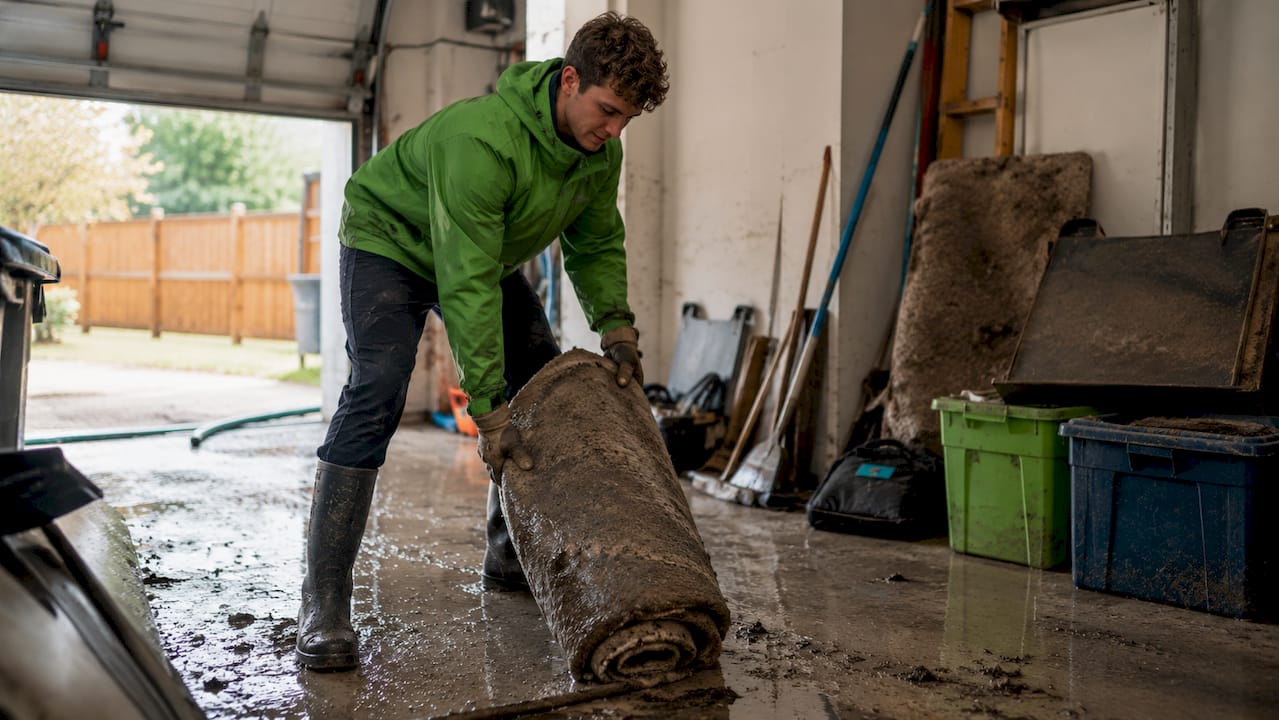
Remove soaked and contaminated belongings from the structure. Prioritize items that pose health risks: saturated carpets, upholstered furniture, mattresses, and cardboard. Porous materials absorb floodwater and become mold sources within hours. Photograph every item before it leaves the property. Thorough photo documentation before disposal is required for insurance claims eligibility. Skipping this step can cost you thousands in denied claims.
Stage 3: Tear out
This stage separates effective cleanup from ineffective cleanup. Drywall, insulation, and flooring that absorbed floodwater cannot simply be dried in place. They must come out. Cut drywall at least 12 inches above the visible waterline because moisture wicks upward through porous materials. Remove flooring down to the subfloor if water penetrated underneath. The restoration project phases for flood damage always include a tear-out phase because leaving wet materials behind guarantees mold.
Stage 4: Clean out
Cleaning surfaces after tear-out requires both detergent and disinfectant. Scrub all hard surfaces with a stiff brush and a cleaning solution, then apply an EPA-registered disinfectant. Painting or caulking over mold is not a solution. It traps active mold colonies behind a surface layer, and the mold continues to spread. Physical removal and disinfection of every affected surface is the only method that works.
Stage 5: Dry out
Drying is where most homeowners underestimate the work required. Consumer box fans move air but do not remove moisture from the air. Professional-grade dehumidifiers and air movers are the correct tools. The goal is to bring structural moisture levels down to pre-flood readings, which requires moisture meters to verify. If the property has not been dried within 48 hours, mold growth is assumed to have already begun. At that point, professional mold remediation is required, not optional.
Pro Tip: Rent a commercial dehumidifier rather than relying on a residential unit. Commercial units remove significantly more moisture per hour and cut drying time in ways that matter when mold is the alternative.
The five stages work as a sequence, not a checklist you can reorder. Skipping ahead to drying before tear-out means you are drying materials that will grow mold regardless.
| Stage | Key action | Common mistake |
|---|---|---|
| Air out | Open all safe ventilation points | Running contaminated HVAC |
| Move out | Remove and photograph all porous items | Discarding items before photos |
| Tear out | Remove wet drywall, flooring, insulation | Leaving wet materials in place |
| Clean out | Scrub and disinfect all hard surfaces | Painting over visible mold |
| Dry out | Use commercial dehumidifiers and air movers | Relying on box fans alone |
What are the most common flood cleanup mistakes?
Most flood cleanup errors fall into a few predictable categories. Recognizing them before you start saves time, money, and health risk.
- Skipping PPE. Floodwater contains bacteria, sewage, and chemical runoff. Skin contact and inhalation without protection leads to infections and respiratory problems.
- Painting over mold. This is the single most common mistake homeowners make. Mold painted over continues to grow and eventually breaks through the surface, often with a much larger colony underneath.
- Incomplete drying. Homeowners often declare a space dry because it looks dry. Moisture meters tell a different story. Wet structural wood behind walls causes rot and mold for months after cleanup appears complete.
- Delaying professional help. DIY cleanup is appropriate for minor, contained flooding. When water has penetrated walls, subfloors, or HVAC systems, professional water extraction and mold remediation are the correct response.
- Poor insurance documentation. Disposing of damaged items before photographing them is a claim-killing mistake. Adjusters need visual evidence of every loss.
“If your home stayed wet for more than 48 hours, do not assume you can handle remediation yourself. Mold that has had time to establish requires professional removal, proper containment, and air quality testing to confirm it is gone. Cutting corners at this stage creates a health problem that outlasts the flood damage itself.”
Storm-damaged trees and exterior debris also require careful handling. Improper removal of storm-damaged trees can cause additional structural damage to your property. Coordinate exterior cleanup alongside interior restoration to avoid compounding the problem.
How to handle debris removal and coordinate with local authorities
Debris removal after flooding is not as simple as piling everything at the curb. Local debris disposal guidelines require separating materials by category. Mixing categories can result in your debris being skipped during collection.
- Separate debris by type. Keep electronics, household garbage, construction materials, and vegetative debris in distinct piles. Do not mix categories.
- Place debris safely. Keep piles away from roads, fire hydrants, utility boxes, and power lines. Blocking access points delays collection and creates hazards for emergency vehicles.
- Contact local officials. Call your municipality or county emergency management office to confirm collection schedules. Many areas activate special post-disaster pickup programs after major storms.
- Photograph debris piles before pickup. This creates a record of the volume and type of materials removed, which supports your insurance claim.
- File your insurance claim promptly. Contact your insurer as soon as possible. Provide photos, a written inventory of damaged items, and any contractor estimates you have received.
| Debris category | Disposal method |
|---|---|
| Electronics | Separate pile, check local e-waste rules |
| Construction materials | Separate pile, confirm local pickup schedule |
| Household garbage | Standard waste collection, bagged |
| Vegetative debris | Separate pile, do not mix with construction waste |
Working with your insurer efficiently requires organized documentation. Zerowaterrestoration works directly with insurance adjusters to manage this process, which keeps out-of-pocket costs as low as possible for homeowners navigating water damage claims.
Key Takeaways
Effective flood damage recovery requires completing all five cleanup stages in sequence within 48 hours to prevent mold growth and structural damage.
| Point | Details |
|---|---|
| Act within 48 hours | Mold growth begins quickly; complete drying within 48 hours or assume remediation is needed. |
| PPE is required | Wear rubber gloves, N-95 masks, waterproof boots, and safety glasses before entering a flooded space. |
| Document before discarding | Photograph all damage and damaged items before disposal to protect your insurance claim. |
| Tear out wet materials | Drywall, flooring, and insulation that absorbed water must be removed, not dried in place. |
| Call professionals for mold | Painting over mold or incomplete drying leads to mold colonies that require professional remediation. |
What I have learned after a decade of flood cleanups
After more than ten years working flood and water damage jobs across the northwest suburbs of Chicago, the pattern I see most often is homeowners who waited too long before calling for help. Not because they were careless. Because the damage looked manageable at first glance.
Floodwater is deceptive. A floor that looks dry to the eye can hold significant moisture in the subfloor. A wall that feels dry to the touch can have saturated insulation behind it. The problems that show up three months later, in the form of mold, rot, and air quality issues, almost always trace back to incomplete drying in the first 48 hours.
The other thing I have seen consistently is how much the documentation step gets skipped. Homeowners are in crisis mode. They want the wet stuff out of the house immediately, which is understandable. But disposing of damaged items before photographing them is one of the most expensive mistakes you can make. Insurers need visual evidence. Without it, claims get reduced or denied.
My honest advice: follow the five-stage sequence without shortcuts, gear up properly before you enter, and call a professional the moment the scope exceeds what you can dry and document yourself. The restoration process is not complicated, but it requires the right equipment and the right sequence. Patience and thoroughness beat speed every time.
— Jim
Zerowaterrestoration is ready when the cleanup gets serious
When a storm hits the northwest suburbs of Chicago, Zerowaterrestoration responds 24/7. The team handles the full scope of post-storm recovery: water extraction, structural drying, mold remediation, and complete reconstruction.
Homeowners in Barrington and surrounding communities trust Zerowaterrestoration because the team manages both the physical restoration and the insurance coordination. If your flood cleanup has moved beyond what DIY can handle, or if you suspect mold has already taken hold, the right call is a professional assessment. Visit the water damage restoration page or call (847) 515-7000 for a free inspection and estimate.
FAQ
What are the five stages of the flood cleanup process?
The five stages are air out, move out, tear out, clean out, and dry out. FEMA defines this sequence as the standard framework for safe and effective flood recovery.
How soon does mold start growing after flooding?
Mold growth begins within 24–48 hours of water exposure. If a home remains wet beyond 48 hours, professional mold remediation is required rather than DIY drying alone.
What PPE do I need for post-storm cleanup?
Rubber gloves, waterproof boots, N-95 masks, safety glasses, and long-sleeved clothing are the minimum recommended protective equipment for cleaning after flooding.
Can I paint over mold to stop it from spreading?
No. Painting or caulking over mold does not stop its growth. The EPA requires physical removal and disinfection of all affected porous materials to eliminate mold effectively.
Do I need to photograph damage before cleanup?
Yes. FEMA guidance requires thorough photo documentation before the tear-out phase. Photos of all damage and damaged items are required to support insurance claims eligibility and accuracy.