Water damage spreading control is the process of halting active water intrusion, removing standing water, and drying affected materials before structural harm and mold take hold. Every hour you wait multiplies the cost and complexity of repairs. Mold can begin growing within 24–48 hours after water exposure, which means your window for low-cost intervention is narrow. The steps below follow IICRC S500 industry standards and current insurance best practices to give you a clear, fast path forward.
How to stop water damage from spreading: shut off the source first
The single most effective action you can take is stopping water from entering the building. Every additional minute of active flow soaks deeper into subfloor, drywall, and insulation.
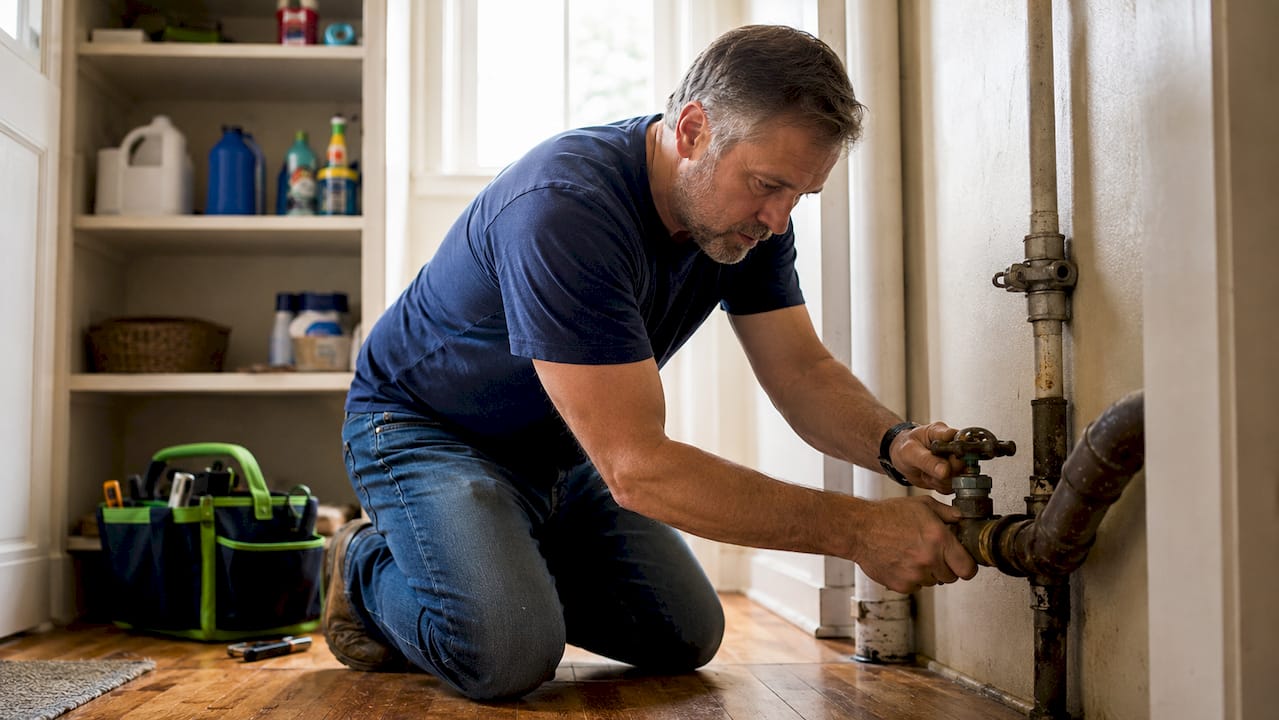
Locate your shutoff valves before you need them. Most homes have a main shutoff near the water meter, typically in the basement, utility room, or crawl space. Individual fixtures also have their own valves under sinks and behind toilets. Knowing both locations saves critical minutes during a burst pipe emergency.
The approach changes depending on the source:
- Plumbing leak: Turn off the fixture valve first. If that fails, shut off the main supply.
- Roof or storm damage: You cannot stop rain, but you can limit intrusion. Place tarps over damaged roof sections and use buckets to catch active drips inside.
- Appliance failure: Disconnect the appliance and close its supply line. Washing machines and dishwashers have dedicated shutoffs behind or beneath the unit.
- Sewer backup: Do not run any water in the home. Call a plumber immediately and avoid contact with the water.
- Electrical safety: Turn off power to any affected rooms at the breaker panel before entering standing water. Never assume a flooded room is electrically safe.
Pro Tip: Take a photo of your main shutoff valve location and save it in your phone. When water is pouring through a ceiling at 2 AM, you will not want to search for it.
Water damage escalates quickly once it reaches porous materials, so stopping the source is not just step one. It is the only step that actually limits total damage.
How do you remove standing water safely?
Standing water is the primary driver of structural damage and mold risk. Removing it fast is the most direct way to mitigate water damage and protect your home.
- Confirm electrical safety first. Before entering any room with standing water, verify the circuit breaker for that area is off. Water and live electricity are a fatal combination.
- Use a wet-dry vacuum for small to moderate volumes. A shop-style wet-dry vacuum handles several gallons per pass and works on hard floors and carpet. Wet-dry vacuums are effective when electricity is confirmed safe; standard household vacuums are not designed for liquids and create shock and fire hazards.
- Use mops and absorbent towels for shallow puddles. Wring into buckets and dispose outside. This is slow but effective for small areas.
- Move furniture and rugs out of the wet zone. Upholstered furniture absorbs water rapidly and becomes a mold source within hours. Rugs trap moisture against flooring and accelerate subfloor damage.
- Call professionals for large volumes. If water covers more than one room, exceeds an inch in depth, or involves sewage, professional extraction equipment removes water far faster than any consumer tool. Truck-mounted extractors used by restoration crews can remove hundreds of gallons per hour.
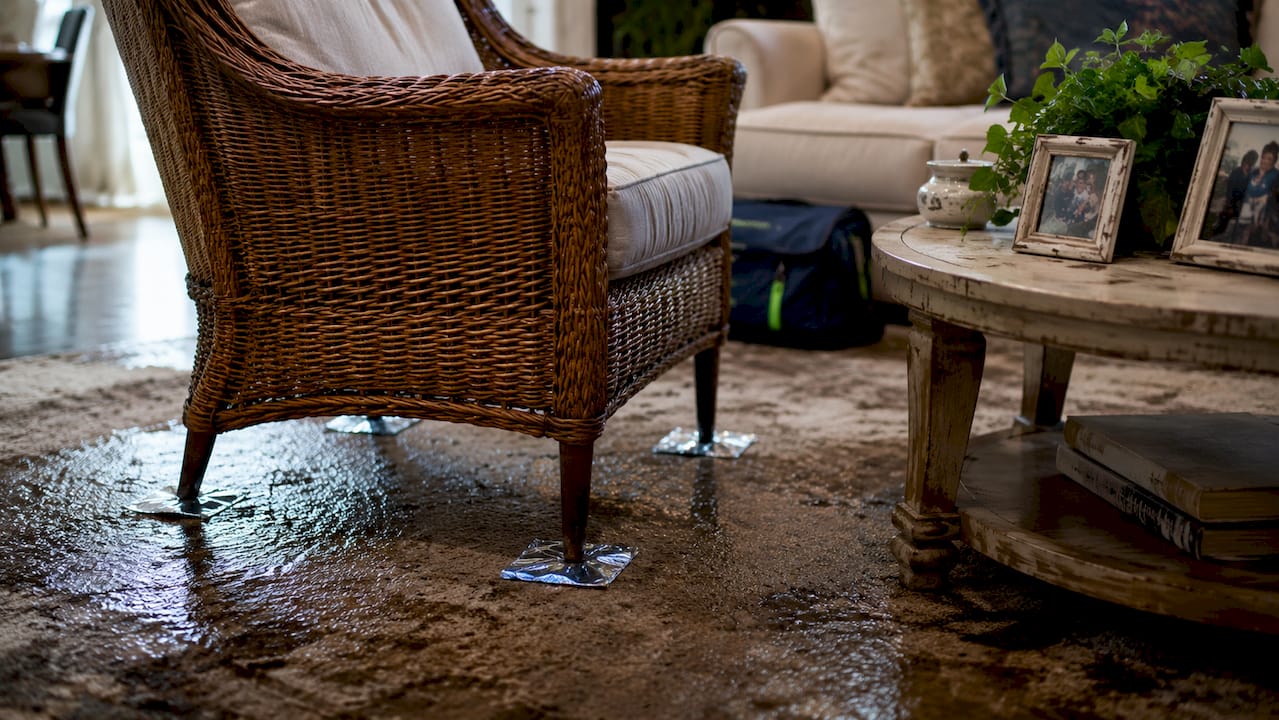
Pro Tip: Lift furniture legs off wet carpet using aluminum foil squares or plastic cups. This one step prevents rust stains and reduces moisture transfer into upholstery while you work.
Homeowners often wait for an insurance adjuster before acting. That delay is costly. Immediate water extraction reduces total damage and lowers the final claim amount, which benefits everyone involved.
How do you dry out water-damaged areas and prevent mold?
Drying is where most homeowners underestimate the job. A surface that feels dry to the touch can still hold dangerous moisture levels inside walls, under floors, and within insulation.
Set up airflow and dehumidification immediately
The EPA and CDC recommend keeping indoor humidity below 50% during the drying process to prevent mold growth. Open windows and doors to create cross ventilation when outdoor humidity is lower than indoor levels. Place box fans to push moist air outward, not just circulate it. Add a commercial dehumidifier to pull moisture from the air continuously.
Do not run your HVAC system without inspection
Running HVAC after water exposure spreads mold spores through every duct in the building. Have the system inspected and cleared by a professional before turning it back on. This is one of the most common and expensive mistakes homeowners make.
Measure moisture, do not guess
| Tool | What it measures | Why it matters |
|---|---|---|
| Moisture meter | Moisture content in wood, drywall, and concrete | Confirms materials are dry below safe thresholds |
| Hygrometer | Relative humidity in the air | Tracks whether dehumidification is working |
| Infrared camera | Temperature differences indicating hidden moisture | Finds wet areas behind walls without demolition |
Professional moisture mapping uses infrared cameras and calibrated meters to detect hidden water behind walls that surface dryness cannot reveal. Trapped moisture fuels mold weeks after the visible water is gone.
Drying must happen within the 24–48 hour window governed by IICRC S500 standards. After that threshold, mold colonies become visible under conditions above 60% humidity and temperatures between 65–85°F. Once mold appears, the job shifts from mitigation to remediation, which is a more involved and costly process governed by IICRC S520.
Pro Tip: Rent a commercial dehumidifier from a local equipment supplier rather than relying on a residential unit. Commercial models remove two to three times more moisture per hour and make a measurable difference in drying time.
For detailed guidance on preventing mold after a leak, the drying window and humidity targets are the two variables that matter most.
What are your insurance obligations during water damage mitigation?
Homeowners carry a legal “Duty to Mitigate,” which requires taking reasonable immediate steps to prevent further damage after water intrusion. Failure to act can result in partial or full insurance claim denial. The good news is that emergency mitigation expenses are typically covered when properly documented.
Here is what that obligation looks like in practice:
- Document everything before you touch it. Take photos and video of all affected areas, including ceilings, walls, floors, and personal property. Adjusters rely on original evidence. Improper documentation delays or reduces claim payments.
- Perform emergency repairs, not permanent ones. Tarping a roof, boarding a broken window, and extracting water all qualify as mitigation. Replacing drywall or flooring before an adjuster inspects does not.
- Keep all broken materials. Save damaged pipes, tiles, and fixtures in a bag or box. Keeping broken parts for adjuster inspection prevents claim denials based on missing evidence.
- Log every expense. Save receipts for tarps, wet-dry vacuum rentals, dehumidifiers, and any labor you hire. These costs are typically reimbursable.
- Know your right to choose your vendor. Most policies allow you to select your own restoration contractor. You are not required to use a company the insurer recommends.
For a full walkthrough of the claims process, navigating insurance claims after water damage requires the same documentation discipline as the mitigation itself. A roof inspection report also strengthens storm-related claims, and understanding how roof inspections support claims can prevent disputes with adjusters over the origin of water intrusion.
When should you call a professional restoration company?
Some water damage situations exceed what any homeowner can safely manage. Calling a professional is not an admission of defeat. It is the correct decision when the scope, safety risk, or hidden damage potential crosses a clear threshold.
Call a professional when you see any of the following:
- Water covers more than one room or exceeds one inch in depth
- The water source is sewage, floodwater, or any other contaminated supply
- Mold is already visible on walls, ceilings, or flooring
- Water has reached electrical panels, outlets, or wiring
- Drywall, insulation, or subfloor feels soft or shows visible warping
- You cannot confirm the moisture level in walls with a meter
Professional restoration crews bring industrial extractors, desiccant dehumidifiers, and calibrated moisture meters that consumer equipment cannot match. They also produce the moisture mapping documentation that insurance adjusters require for large claims. Mitigation (drying) and remediation (mold removal) are distinct processes under IICRC S500 and S520 respectively. Attempting DIY drying after mold appears can disturb colonies and increase health risks rather than reduce them.
Zerowaterrestoration coordinates directly with insurance providers, manages adjuster communication, and handles documentation from extraction through final reconstruction. That full-scope approach removes the burden from homeowners at the worst possible time.
Key Takeaways
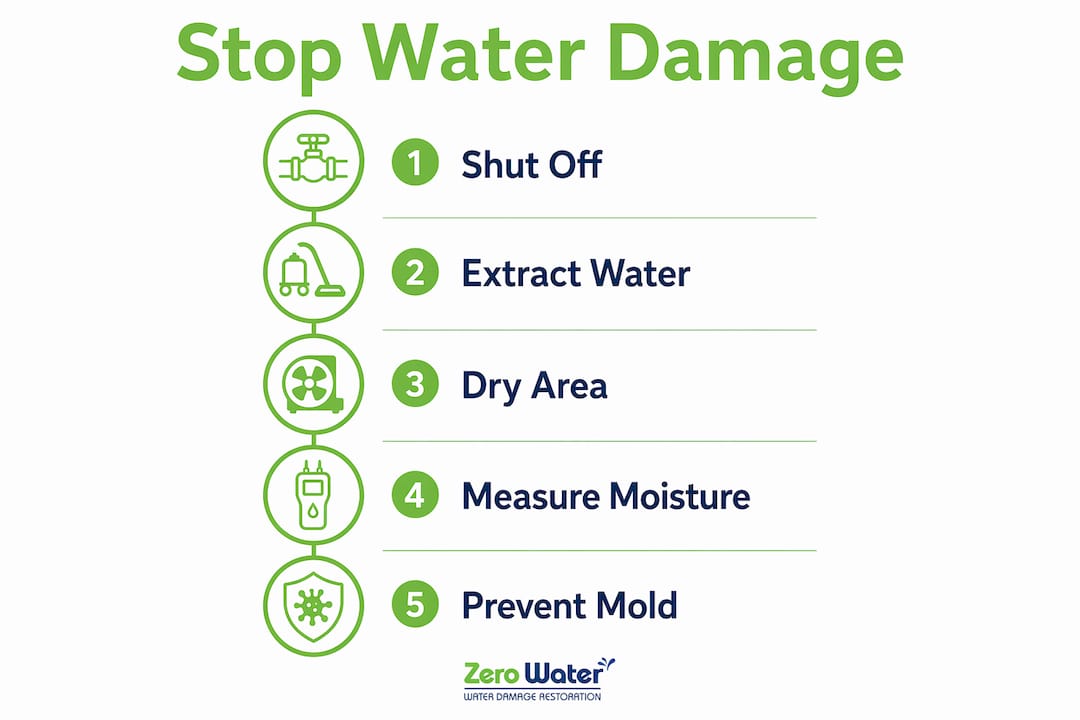
Stopping water damage from spreading requires shutting off the source, extracting standing water, drying to IICRC S500 standards, and documenting everything before permanent repairs begin.
| Point | Details |
|---|---|
| Shut off the source immediately | Locate main and fixture shutoffs before an emergency to save critical response time. |
| Extract water before mold starts | Remove standing water within hours; mold growth begins within 24–48 hours of exposure. |
| Dry below 50% humidity | Use commercial dehumidifiers and fans to keep indoor humidity below the EPA’s 50% threshold. |
| Document before you repair | Photograph all damage before moving anything; adjusters need original evidence for claim approval. |
| Know when to call professionals | Sewage, mold, electrical contact, or multi-room flooding requires professional extraction and moisture mapping. |
What I have learned after years of water damage calls
The homeowners who fare best are not the ones who panic the least. They are the ones who act first and document everything. I have seen claims denied because a homeowner waited three days for an adjuster before pulling up soaked carpet. The insurer argued the mold that followed was preventable. Technically, it was.
The biggest myth I keep running into is that doing nothing protects your claim. The opposite is true. Your policy requires reasonable mitigation. Extracting water, placing fans, and tarping a roof are not just smart. They are legally required steps that protect your right to full reimbursement.
The second mistake I see constantly is homeowners running their HVAC to “dry things out faster.” That spreads mold spores through every room in the house and turns a contained problem into a whole-home remediation job. Turn the system off and leave it off until a professional clears it.
One more thing worth saying plainly: a moisture meter reading of zero on the surface means nothing. I have pulled drywall that felt bone dry and found soaking wet insulation and framing behind it. If you are not measuring inside the wall cavity, you are guessing. And guessing leads to mold bills six weeks later that dwarf the original damage.
— Jim
Zerowaterrestoration: fast response for Barrington area homeowners
When water damage hits, response time determines how much of your home you save. Zerowaterrestoration provides 24/7 emergency response throughout the northwest suburbs of Chicago, including Barrington, Schaumburg, Arlington Heights, and surrounding communities.
The team handles the full scope from extraction through reconstruction, using industrial drying equipment and calibrated moisture mapping to confirm every affected area is truly dry. For homeowners dealing with insurance, Zerowaterrestoration works directly with adjusters, manages documentation, and keeps out-of-pocket costs as low as possible. If you are dealing with active water damage right now, water damage restoration in Barrington is available around the clock. Call (847) 515-7000 for a free inspection and immediate response.
FAQ
How fast does water damage spread through a home?
Water moves into porous materials within minutes and can saturate drywall, insulation, and subfloor within hours. Mold growth begins within 24–48 hours under warm, humid conditions.
Can I stop water damage from spreading without professional help?
Small leaks with limited affected area can be managed with wet-dry vacuums, fans, and dehumidifiers. Sewage backups, multi-room flooding, or any visible mold require professional extraction and remediation.
Will my insurance cover emergency water damage mitigation?
Most homeowner policies cover emergency mitigation expenses when properly documented. Your Duty to Mitigate requires you to act immediately; waiting for an adjuster before taking action can result in partial claim denial.
What is the difference between water mitigation and water remediation?
Mitigation is the drying process governed by IICRC S500, focused on stopping damage from spreading. Remediation is mold removal governed by IICRC S520, required when mold colonies are already present.
How do I know if hidden moisture is still in my walls?
Surface dryness is not reliable evidence of complete drying. A calibrated moisture meter or infrared camera is the only way to confirm moisture levels inside wall cavities, under floors, and within insulation.