Water doesn’t negotiate. When a pipe bursts, a storm drain backs up, or a sprinkler system fails in your facility, every minute without action translates to deeper structural damage, ruined inventory, and mounting liability. The emergency water removal steps commercial property managers need are not the same as what works in a single-family home. The scale is different, the materials are different, and the stakes are higher. This guide walks you through exactly what to do, in order, using the same protocols professional restoration crews follow when they walk through your doors.
Table of Contents
- Key Takeaways
- 1. Emergency water removal steps commercial managers must take first
- 2. Bulk water extraction: the fastest path to stopping damage
- 3. Drying, dehumidification, and contamination control
- 4. Documentation, insurance coordination, and restoration planning
- 5. What I’ve learned managing commercial water emergencies
- Get professional help when water hits your commercial facility
- FAQ
Key Takeaways
| Point | Details |
|---|---|
| Safety before everything else | Cut power and stop the water source before any cleanup begins to protect life and property. |
| Speed of extraction matters | Fast bulk water removal cuts drying time and total restoration cost significantly. |
| Moisture mapping prevents mold | Hidden water behind walls and under floors causes mold; infrared detection finds what eyes miss. |
| Documentation drives claims | Photos, moisture logs, and written records are what turn insurance claims into payouts. |
| Drying is not just fans | Industrial dehumidifiers and air movers, monitored with psychrometric readings, are required for verified drying. |
1. Emergency water removal steps commercial managers must take first
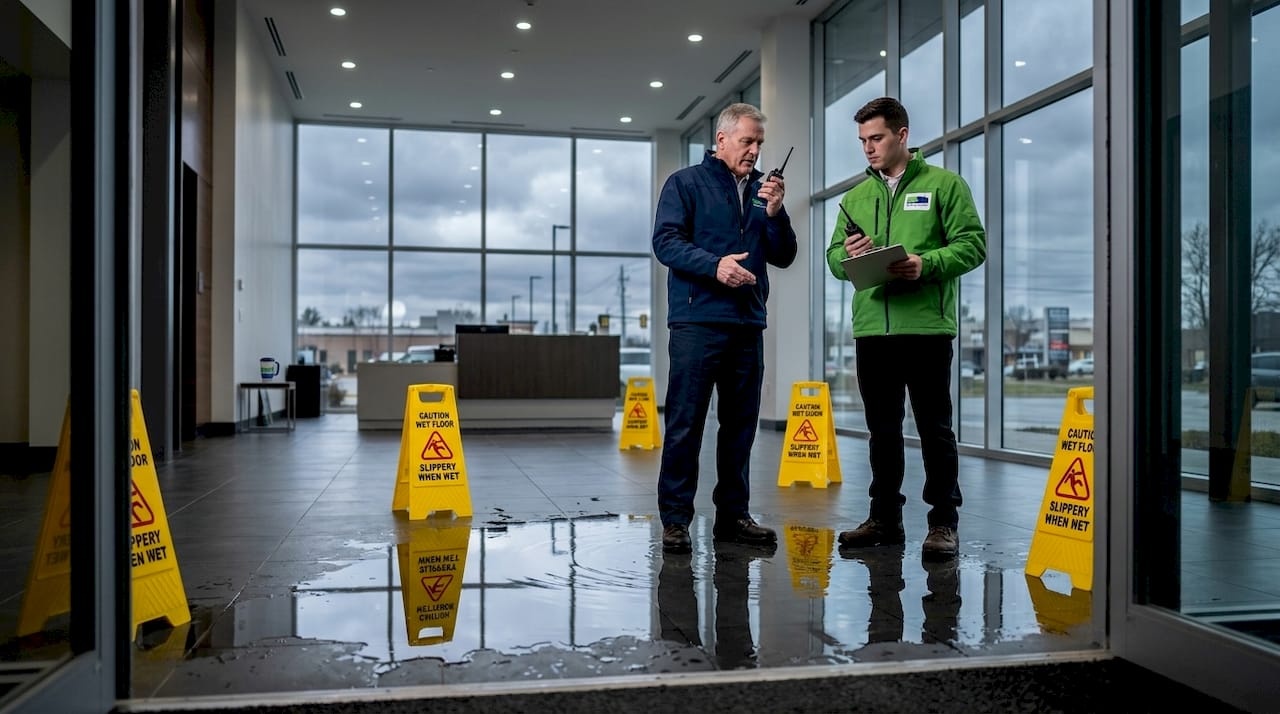
Before anyone touches a mop or picks up a wet vac, two things must happen. Industry professionals call this the “life safety” phase, and it exists because the combination of standing water and live electricity is one of the most dangerous situations a building can create. Cutting power to flooded areas should be done by a qualified electrician or your building’s facilities team, never by an untrained employee pulling breakers in the dark.
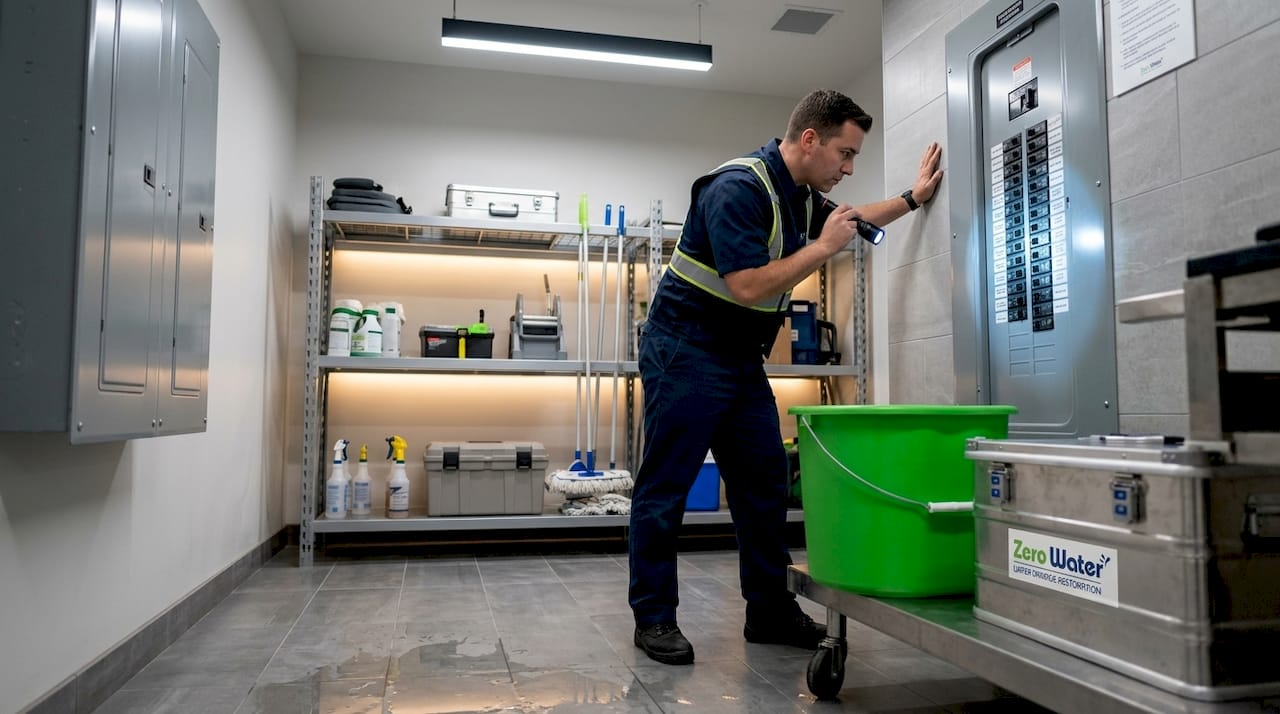
At the same time, locate and shut off the water source. For a broken supply line, that means the main shutoff. For a roof failure or storm drain backup, you may need to focus on diverting incoming water with sandbags or temporary barriers until the weather changes. Stopping the water source and cutting power immediately are the two actions that determine how bad everything gets from that point forward.
Once those two priorities are handled, assess the scope. Walk the affected zones and note:
- Which rooms or floors have standing water and at what depth
- Whether the water appears clean (supply line), gray (sinks, appliances), or black (sewage, stormwater)
- What materials are affected: carpet, concrete, drywall, drop ceilings, wood subfloor
- Whether HVAC systems, server rooms, or electrical panels are in the path of water migration
Communicate your findings immediately to your building ownership, your insurance carrier, and any tenants. Do not wait until cleanup begins to make those calls.
Pro Tip: Take a short video walkthrough of every affected area before anything moves. A three-minute video captures spatial context that twenty photographs cannot, and insurers increasingly expect it.
2. Bulk water extraction: the fastest path to stopping damage
Commercial water mitigation strategies start with one core truth: every gallon extracted reduces the time and cost of everything that follows. Extraction is faster and more effective than evaporation by a significant margin. A wet floor that looks manageable on day one can have saturated the subfloor, the wall cavities, and the ceiling of the floor below by day two.
Professional water extraction procedures rely on truck-mounted extraction units for large-scale commercial jobs. These units pull significantly more water per hour than portable alternatives and do not require a nearby power outlet. Portable extractors still play a role in areas where trucks cannot reach, such as upper floors, server closets, or tightly partitioned office spaces.
Here is how the two main options compare:
| Feature | Truck-mounted extractor | Portable extractor |
|---|---|---|
| Water removal rate | Very high | Moderate |
| Best use case | Open commercial floors, parking levels | Upper floors, confined spaces |
| Power requirement | Self-powered | Requires building power |
| Mobility | Limited to truck access | Highly mobile |
| Setup time | Faster for large areas | Faster for small areas |
After bulk extraction, the job shifts to moisture mapping. Moisture mapping identifies water migration behind walls, beneath flooring, and inside HVAC ductwork that visual inspection will never catch. Infrared cameras reveal temperature differentials that indicate wet materials, while pin and pinless moisture meters confirm the actual moisture content in specific materials. Skipping this step is one of the most expensive mistakes a commercial property manager can make, because hidden moisture becomes mold within 24 to 72 hours.
Pro Tip: Ask your restoration contractor to provide a moisture map diagram before drying equipment is placed. This document becomes a baseline that proves drying progress and helps confirm when the job is actually done.
3. Drying, dehumidification, and contamination control
Extraction removes liquid water. Drying removes the moisture that has absorbed into materials. These are two separate phases, and treating them as one is why so many commercial properties end up with mold problems weeks after the water is gone.
The drying phase of commercial water damage restoration follows a structured sequence:
- Place commercial air movers at low angles across wet flooring and walls to accelerate surface evaporation. Commercial properties typically need one air mover per 50 to 100 square feet of affected area.
- Deploy refrigerant or desiccant dehumidifiers to pull moisture out of the air as it evaporates off surfaces. Desiccant units work better in colder temperatures and are often preferred for large commercial spaces.
- Monitor psychrometric readings daily. Certified crews track temperature, relative humidity, and grains per pound (GPP) of moisture to confirm drying is progressing toward closure criteria. Psychrometric measurements guide equipment adjustments and confirm when materials have reached acceptable dry standards.
- Establish containment for contaminated areas. If the water source was sewage, stormwater, or any black water category, airborne contaminants require HEPA filtration and negative air pressure containment to prevent cross-contamination to unaffected areas of the building.
- Remove and dispose of non-salvageable materials. Contaminated materials that cannot be saved must be bagged, labeled, and disposed of per EPA and OSHA guidelines. This commonly includes wet drywall below the flood line, saturated insulation, and carpet padding that touched black water.
Understanding how restoration prevents mold after flooding requires accepting that the drying phase is where most of the real work happens. It is slower and less visible than extraction, but it is what determines whether your facility stays mold-free.
Pro Tip: Do not turn off drying equipment at night to save on electricity. Continuous operation is required for effective drying. Interrupted drying cycles extend the total job length and allow moisture to redistribute into dry areas.
4. Documentation, insurance coordination, and restoration planning
The best emergency flood cleanup guide is incomplete without addressing the paperwork side of things, because documentation is what transforms a water loss event into a covered insurance claim. Start documenting before cleanup begins, not after.
Effective documentation for commercial water damage includes:
- Photographs and video of every affected room, material, and piece of equipment before anything is moved or removed
- Written damage logs listing affected square footage, material types, and visible damage observations by zone
- Moisture readings and maps taken at baseline and at each monitoring interval throughout drying
- Equipment logs showing what drying equipment was placed, where, and for how long
- Receipts and invoices for any emergency services, board-up, or temporary protective measures taken in the first 24 hours
Thorough photo documentation of damage and receipts are specifically recommended by FEMA to support claims and assistance applications. Comprehensive logs and photo documentation also streamline communication with adjusters and demonstrate that you met your obligation to mitigate further damage.
Coordinate with your insurance carrier as soon as life safety is addressed. Many commercial policies require prompt notification of a loss, and delays can complicate coverage. If you are working with a restoration company that manages insurance claims for water damage, they can communicate directly with adjusters on your behalf. That single factor reduces your stress level considerably during an already difficult situation.
Plan your restoration timeline in phases: emergency response, structural drying, material removal, reconstruction, and final inspection. Trying to rush into reconstruction before drying is confirmed is one of the most common and costly mistakes commercial managers make.
5. What I’ve learned managing commercial water emergencies
I have walked into a lot of flooded commercial buildings over the years, and the pattern I see most often is not what people expect. The biggest mistakes do not happen during cleanup. They happen in the first 15 minutes, before any professional is on site.
The power is still on. Someone grabbed a shop vac and started working in standing water next to a live electrical panel. Or the operations manager spent 45 minutes trying to diagnose the water source before shutting off the main. Those early decisions are where injuries happen and where damage compounds fastest.
The second thing I consistently see underestimated is hidden moisture. Mopping a flooded floor and calling it done is not water mitigation. Mopping and fans alone are ineffective in any commercial setting because moisture travels into structural cavities that surface-level tools cannot reach. I have seen beautiful-looking offices develop mold inside wall cavities three weeks after a water event that everyone thought was handled.
My honest take on the documentation side: most commercial managers do a decent job of photographing visible damage, but almost no one captures baseline moisture readings before a contractor starts work. Those baseline readings are what prove the extent of damage to an adjuster when the numbers seem high. Without them, you are negotiating on the adjuster’s terms, not yours. The business water removal tips that actually save money are the ones tied to documentation, not equipment.
— Jim
Get professional help when water hits your commercial facility
When water damage strikes your commercial property, the clock is already running. Zerowaterrestoration responds 24 hours a day, 7 days a week, with industrial-grade extraction equipment and trained crews who understand the full scope of commercial water mitigation strategies. From the first phone call to the final inspection, the team manages extraction, drying, mold prevention, and reconstruction without you having to coordinate multiple contractors.
Zerowaterrestoration also handles the insurance side directly. The team documents the loss, communicates with your adjuster, and works to keep your out-of-pocket costs as low as possible. Whether your facility is in Barrington or Palatine, the response time is fast and the workmanship is backed by over a decade of experience in the northwest suburbs of Chicago. Call (847) 515-7000 for immediate assistance or visit zerowaterrestoration.com for a free inspection and estimate.
FAQ
What are the first steps in a commercial water emergency?
Shut off power to any flooded area using a qualified professional, then stop the water source. These two steps must happen before any cleanup or extraction begins.
How quickly does mold grow after commercial flooding?
Mold can begin developing within 24 to 72 hours of a water event. That window makes fast extraction and continuous drying non-negotiable for any commercial property.
Is mopping and using fans enough for a flooded commercial space?
No. Mopping and fans cannot reach moisture that has absorbed into walls, subfloors, and structural cavities. Industrial extraction and monitored drying equipment are required for a professional water removal service.
What documentation do I need for an insurance claim after water damage?
You need photographs and video of all damage taken before cleanup, written damage logs by zone, moisture reading reports, equipment logs, and receipts for any emergency services performed.
How long does commercial water damage restoration take?
Drying alone typically takes three to five days depending on the materials and moisture levels. Full restoration, including reconstruction, can take several weeks for large commercial losses.