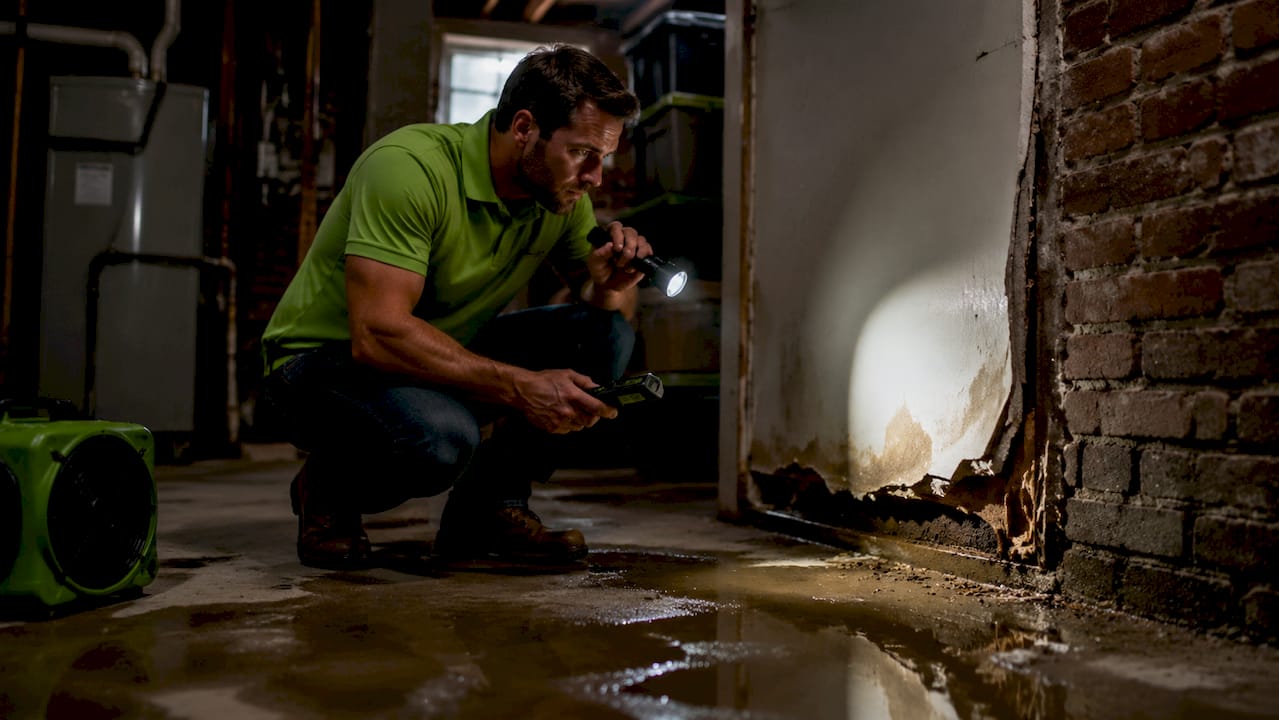
A restoration contractor is defined as a certified specialist who manages emergency mitigation, including water extraction, structural drying, and environmental remediation, before any rebuilding can begin. The role of restoration contractor reconstruction work is not to rebuild your home. It is to make your home safe and dry enough so that reconstruction can happen correctly. Property owners in Schaumburg, Arlington Heights, and across the Chicagoland area frequently confuse these two roles, and that confusion costs them time, money, and insurance coverage. This article explains exactly what restoration contractors do, where their responsibilities end, and how the full recovery process works from the moment water enters your property.
What does a restoration contractor do in reconstruction?
Restoration and reconstruction are sequential phases, not overlapping ones. The restoration contractor owns the first phase: emergency mitigation. That means stopping active water intrusion, extracting standing water, drying structural materials, and remediating any microbial growth. Only after those tasks are complete does a licensed general contractor step in to rebuild walls, replace flooring, and restore the structure to its pre-loss condition.

Restoration contractors follow IICRC protocols, specifically the S500 standard for water damage, the S520 for mold remediation, and the S770 for storm damage. These are trade certifications, not state contractor licenses. Reconstruction is governed by state contractor boards and building codes like the International Building Code and International Residential Code. The distinction matters because a restoration contractor without a general contractor license cannot legally pull permits or rebuild structural components in Illinois.
Core mitigation tasks restoration contractors perform
- Water extraction: Industrial pumps and truck-mounted extractors remove standing water within hours of arrival
- Structural drying: Commercial dehumidifiers and air movers dry wall cavities, subfloors, and framing to IICRC-specified moisture levels
- Controlled demolition: Removing wet drywall, insulation, and flooring that cannot be dried in place
- Microbial remediation: Treating and removing mold growth using Applied Structural Drying and Mold Remediation certified protocols
- Clearance documentation: Producing psychrometric logs, moisture maps, and formal clearance reports that authorize reconstruction to begin
Pro Tip: Always request a written clearance report from your restoration contractor before any reconstruction work starts. Verbal confirmation is not sufficient and will not protect you if an insurance dispute arises later.
Why does the phase sequence matter so much?
The order of operations in water damage recovery is not a preference. It is a legal and technical requirement. IICRC S500 prohibits reconstruction before full drying and clearance documentation is complete. Skipping or overlapping these phases creates two serious problems: mold growth inside newly rebuilt walls, and insurance claim denial.
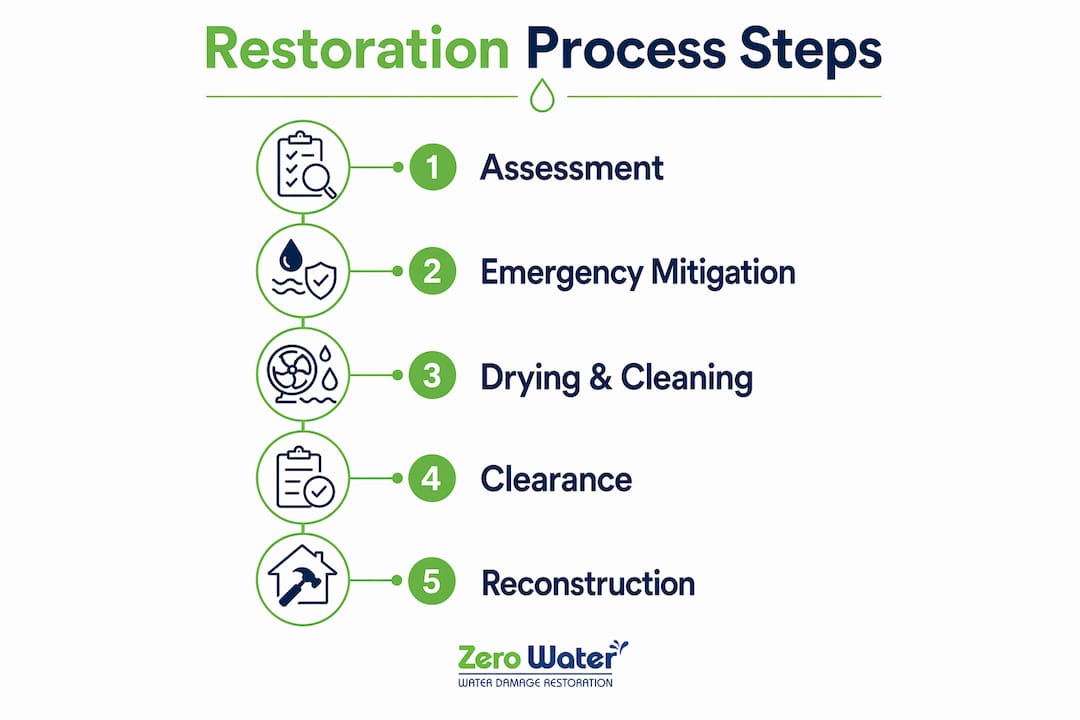
Here is the standard workflow every property owner should understand:
- Emergency mitigation (days 1–5): Water extraction, stabilization, and initial demolition of unsalvageable materials
- Structural drying (days 3–7): Continuous monitoring with moisture meters and psychrometric equipment until materials reach target moisture content
- Clearance verification: Formal documentation confirming the structure is dry and free of active microbial growth
- Reconstruction: Licensed general contractor begins rebuilding once clearance is issued
Reconstruction scope often evolves because hidden structural damage only becomes visible after wet materials are removed. A wall that looks intact from the outside may reveal rotted framing once the drywall comes down. This is why the mitigation phase must be thorough before any rebuilding estimate is finalized.
Waiting for formal clearance documentation from restoration contractors before reconstruction prevents costly mold problems and claim denials. 4D Restoration
The water damage restoration timeline from first call to completed reconstruction typically runs two to eight weeks depending on damage severity, material availability, and permit processing times in your municipality.
Full-service vs. separate contractors: which is better?
Property owners have a genuine choice here, and the right answer depends on the provider’s actual credentials.
| Factor | Full-Service Provider | Separate Contractors |
|---|---|---|
| Single point of contact | Yes, one company manages both phases | No, coordination required between firms |
| Credential verification | Must confirm both IICRC and state GC license | Verify each contractor independently |
| Handoff delays | Reduced when both phases are internal | Higher risk of scheduling gaps |
| Specialization risk | Risk of weaker performance in one phase | Each firm focuses on its core expertise |
| Insurance coordination | Streamlined with one scope document | Multiple scopes can complicate adjuster review |
Full-service restoration companies can reduce handoffs and delays but risk weaker outcomes if they lack separate specialized crews for mitigation and reconstruction. The key question to ask any full-service provider is whether their mitigation team and reconstruction team are distinct crews with separate certifications. A company where the same technician does both is a red flag.
Property owners have the legal right to hire a licensed general contractor of their choice, including a full-service restoration company licensed for both phases. Your insurance company cannot force you to use a specific contractor. That right matters when you are evaluating your options after a loss.
Pro Tip: Before signing any contract, ask for the company’s IICRC certificate number and their state general contractor license number. Both should be verifiable through the IICRC’s online directory and the Illinois Department of Financial and Professional Regulation.
Check the restoration company selection guide for a full checklist of what to verify before hiring.
How do restoration contractors work with insurance adjusters?
Documentation is the currency of every insurance claim. Restoration contractors produce the records that determine whether your reconstruction gets funded, how much it gets funded for, and whether code-driven upgrades are covered.
The core documents restoration contractors generate include:
- Moisture maps: Diagrams showing moisture readings at every affected surface, used to justify the scope of demolition and drying
- Psychrometric logs: Daily records of temperature, humidity, and equipment performance that prove drying was conducted to IICRC standards
- Photo documentation: Time-stamped images of damage before, during, and after mitigation
- Clearance reports: Formal sign-off confirming the structure meets dryness and air quality standards required before reconstruction
Restoration contractors often use Xactimate, the industry-standard insurance estimating software, to document mitigation costs and prepare reconstruction cost supplements. This matters because code-driven supplements often increase reconstruction costs beyond the pre-loss configuration. When a burst pipe in a 1985 home triggers reconstruction, current Illinois building codes may require upgraded electrical panels, insulation values, or plumbing materials. An experienced restoration contractor knows how to document these requirements and present them to adjusters correctly.
Effective coordination between restoration contractors and insurance adjusters prevents out-of-pocket surprises. When the scope changes because hidden damage is discovered mid-mitigation, your contractor should update the adjuster in writing before proceeding. Verbal agreements with adjusters are not binding. Get every scope change confirmed in writing.
Learn more about navigating insurance claims for water damage to understand how documentation flows from mitigation through reconstruction funding.
Key takeaways
Restoration contractors manage the mitigation phase that makes reconstruction possible, and skipping or rushing that phase creates mold, structural failure, and insurance claim denial.
| Point | Details |
|---|---|
| Sequential phases are required | Mitigation must be complete and documented before reconstruction begins. |
| IICRC certification is distinct from GC licensing | Verify both credentials before hiring any contractor for the full scope. |
| Clearance reports are non-negotiable | Never allow reconstruction to start without a written formal clearance document. |
| Full-service providers need dual credentials | Confirm separate crews and licenses for mitigation and reconstruction work. |
| Documentation drives insurance outcomes | Moisture maps, psychrometric logs, and Xactimate scopes determine what gets funded. |
What i’ve learned after years of water damage recovery work
Most property owners come to us after a loss thinking the hard part is the cleanup. The hard part is actually the handoff. The moment between completing mitigation and starting reconstruction is where projects fall apart, claims get denied, and mold problems show up six months later inside newly rebuilt walls.
The biggest mistake I see is property owners accepting verbal clearance from a contractor who is eager to start billing for reconstruction. Formal clearance documentation is not a formality. It is the legal and technical record that protects you if your insurer questions the scope later or if a mold problem surfaces after the walls are closed up.
The second mistake is hiring a full-service company without verifying that they actually have two distinct teams. I have seen companies where the same crew that extracted water on Monday was framing walls on Thursday. That is not specialization. That is a liability.
My honest recommendation: treat the mitigation phase as its own project with its own completion criteria. Do not let anyone rush you into reconstruction before the clearance report is in your hands. The rebuild after water damage process goes faster and smoother when the mitigation phase is done right the first time. Cutting corners at the front end always costs more at the back end.
— Jim
How Zerowaterrestoration handles both phases for you
Water damage recovery should not require you to manage two separate contractors, two separate insurance scopes, and two separate schedules while your home is torn apart.
Zerowaterrestoration provides certified IICRC mitigation and licensed reconstruction services under one roof for property owners throughout Schaumburg, Barrington, Lake Zurich, Streamwood, and the greater Chicagoland area. The team handles water extraction, structural drying, mold remediation, and complete water damage restoration through to finished reconstruction. Zerowaterrestoration works directly with your insurance adjuster to document the full scope, manage code-driven supplements, and keep your out-of-pocket costs as low as possible. Call (847) 515-7000 for a free inspection and estimate, available 24/7.
FAQ
What is the main role of a restoration contractor in reconstruction?
A restoration contractor manages emergency mitigation, including water extraction, drying, and environmental remediation, to prepare a property for safe reconstruction. Their work produces the clearance documentation that authorizes a licensed general contractor to begin rebuilding.
Can a restoration contractor also handle reconstruction?
Yes, if the company holds both IICRC certifications and a state general contractor license. Property owners have the legal right to choose a full-service provider, but should verify both credentials before signing any contract.
What happens if reconstruction starts before mitigation is complete?
Starting reconstruction before full drying and clearance violates IICRC S500 standards, risks mold growth inside new materials, and can result in insurance claim denial. Always obtain a formal written clearance report first.
How long does the mitigation phase take before reconstruction can begin?
Emergency mitigation typically takes 1–5 days and structural drying takes 3–7 days, according to standard restoration timelines. Total time before reconstruction can begin depends on damage severity and moisture readings.
What documents should i request from my restoration contractor?
Request moisture maps, psychrometric logs, photo documentation, and a formal clearance report. These records protect your insurance claim and confirm the property is structurally ready for reconstruction.