
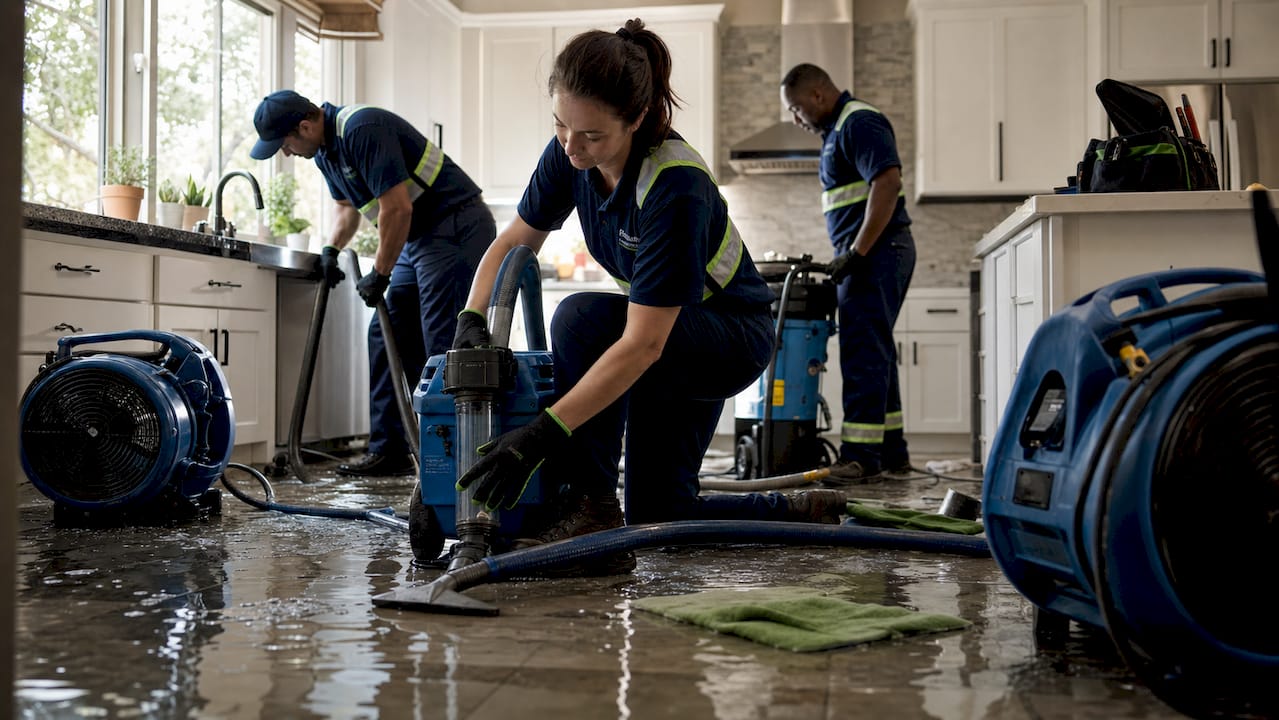
24-hour emergency water response is the immediate professional intervention deployed to stop water migration, extract standing water, and begin structural drying within the first critical hours after a water damage event. The industry term for this service is emergency water mitigation, and it operates under IICRC S500 standards for water damage restoration. The golden hours concept is central to understanding why speed matters: immediate drying averages $1,500 in cost, while mold remediation after delayed response can reach $10,000 to $30,000. Knowing what this service involves and how to act fast can protect your home, your health, and your wallet.
What is 24 hour emergency water response, and how does it work?
24-hour emergency water response is a structured, around-the-clock professional service that dispatches certified technicians to a water-damaged property at any hour. The process begins the moment you call. A live dispatcher, not a voicemail system, takes your information and sends a crew. Professional response targets on-site arrival within 60 to 90 minutes to stop the water source and prevent secondary damage from spreading.
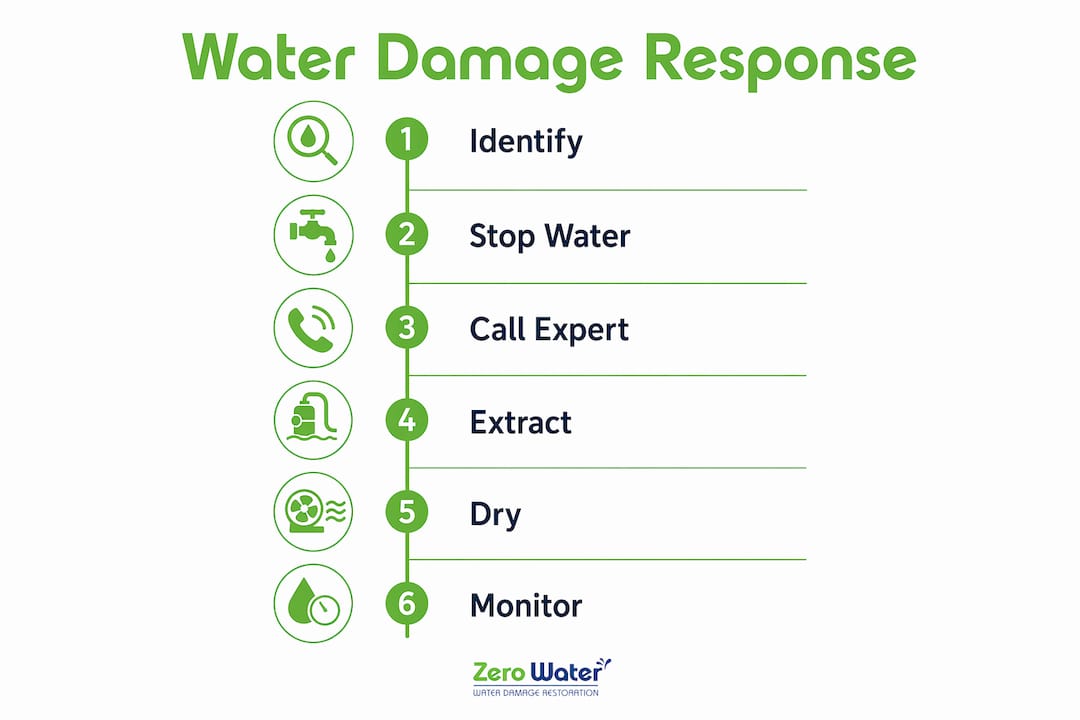
Once technicians arrive, the response follows a defined sequence:
- Source identification. The crew locates the origin of the water intrusion, whether a burst pipe, roof breach, or appliance failure, and coordinates with a plumber if the source requires urgent plumbing solutions.
- Rapid water extraction. Industrial truck-mounted or portable extractors remove standing water from floors, carpets, and subfloor cavities. This is the core of emergency water removal.
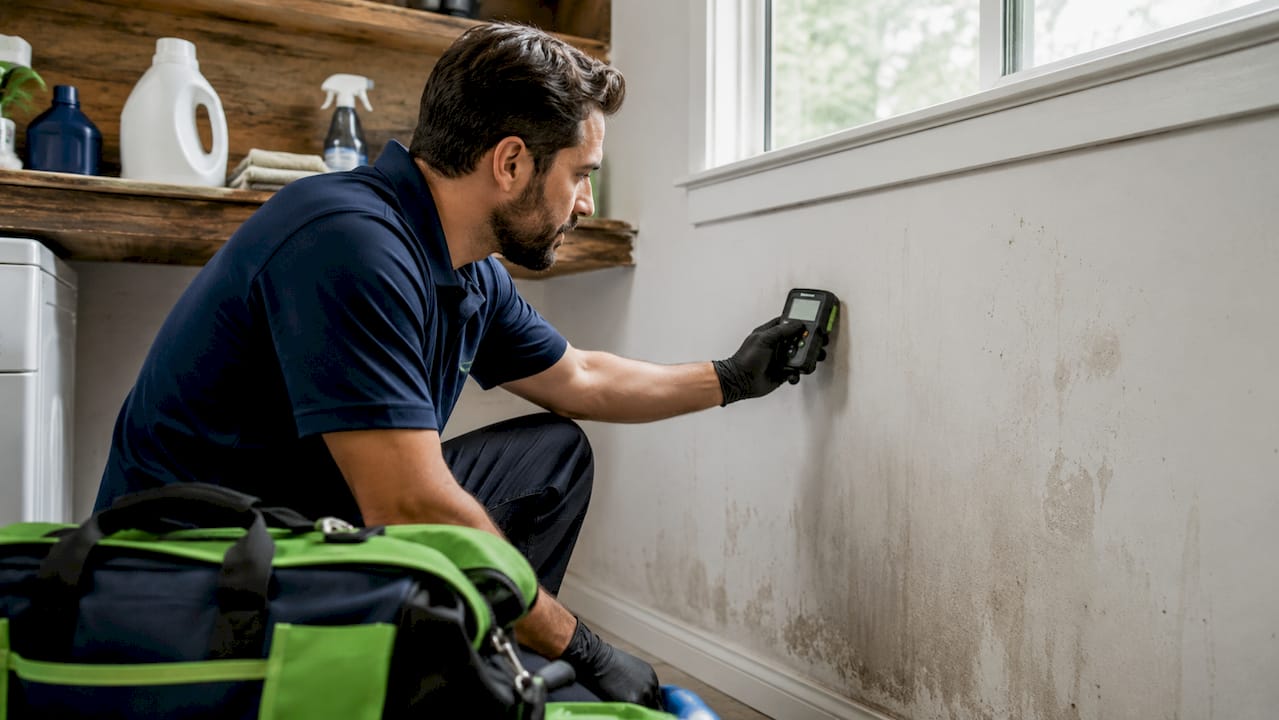
- Moisture mapping. Technicians use thermal imaging cameras and calibrated moisture meters to find water hidden inside walls, under flooring, and in ceiling cavities.
- Drying equipment setup. High-capacity air movers and commercial dehumidifiers are placed according to a drying plan. This step begins the structural drying process under IICRC S500 protocols.
- Initial documentation. Photos, moisture readings, and equipment logs are recorded from the first hour. This documentation directly supports your insurance claim.
Pro Tip: Ask the technician to show you the moisture meter readings at arrival and again at each follow-up visit. Those numbers tell you whether drying is progressing or whether hidden moisture is still spreading.
The entire first visit typically takes two to four hours. Drying equipment stays in place for three to five days, with daily monitoring visits to adjust placement and verify progress.
Why does timing matter so much in water damage?
The science of water damage progression is the strongest argument for calling immediately. Water moves through porous building materials by capillary action, the same physical process that pulls liquid up a paper towel. Drywall, wood framing, insulation, and subfloor panels all absorb water within minutes of contact. By the time you can see damage, water has already traveled far beyond the visible wet area.
The biological threat compounds the physical one. Mold can begin colonizing within 24 to 48 hours on wet organic materials in temperatures above 60°F, which describes the interior of virtually every home year-round. That window is not a guideline. It is the hard boundary between a drying project and a mold remediation project.
The cost difference is dramatic:
- 0–24 hours: Water extraction and drying under IICRC S500. Average cost: $1,500.
- 24–72 hours: Expanding moisture damage, early mold risk, higher material replacement costs.
- 72+ hours: Remediation shifts to IICRC S520 mold remediation standards, increasing total cost by 2 to 10 times.
- 1 week+: Structural compromise, widespread mold colonization, potential health hazards requiring full containment protocols.
“The first 24 to 48 hours after a water incident are the window that determines whether you have a drying project or a mold problem. Once mold colonizes porous materials, the scope of work, the cost, and the disruption to your household multiply significantly. Speed is not a preference. It is the single variable that controls the outcome.”
Primary damage is the direct destruction caused by water contact: ruined flooring, soaked drywall, wet insulation. Secondary damage is what happens when that moisture is left untreated: mold growth, wood rot, structural weakening, and air quality problems. Every hour of delay converts primary damage into secondary damage. Secondary damage is always more expensive and more disruptive to remediate. You can read more about water damage risks that most homeowners underestimate until it is too late.
What should you do immediately after discovering water damage?
The first 30 to 60 minutes after discovering water damage are the most consequential. Your actions in that window directly affect how much damage occurs and how smoothly your insurance claim proceeds.
Follow these steps in order:
- Cut power to affected areas. If water is near electrical outlets, panels, or appliances, turn off the circuit breaker for those zones before entering. Do not step into standing water if electricity may be active.
- Shut off the water source if it is safe to do so. Locate your main shutoff valve before an emergency happens. In most homes it is near the water meter or where the main line enters the house.
- Document everything before touching anything. Take photos and video of all visible damage, including the source, the affected rooms, and any personal property. Capture timestamps. This footage is your evidence.
- Call a certified 24/7 restoration service first. Contacting a restoration team early protects your insurance claim by documenting mitigation efforts and proving you fulfilled your duty to mitigate damages.
- Move valuables out of wet areas. Relocate rugs, furniture, electronics, and documents to dry areas. Do not attempt to dry structural materials yourself.
- Call your insurance company after the restoration team is en route. Your adjuster will want to know that professional mitigation is already underway.
Pro Tip: Do not run household fans over wet drywall or carpet before a professional assessment. Fans can spread airborne mold spores if mold has already begun forming, and they do not have the capacity to dry structural materials. Wait for industrial equipment.
The instinct to call insurance first is understandable, but it often backfires. Best practice is to document and get a professional assessment first for accurate, complete claims. Restoration professionals generate the moisture readings, equipment logs, and photo documentation that adjusters need to approve full payment.
Common misconceptions about emergency water response
Several persistent myths lead homeowners to make costly decisions in the first hours after a water event.
- Myth: Emergency response means fixing the leak. The real emergency is stopping water migration through your structure and beginning drying. Leak repair is a plumbing task. Emergency mitigation is a separate, parallel process focused on the building materials already saturated.
- Myth: Any restoration company offers true 24/7 service. A genuine 24/7 service has a live person answering calls. If you reach voicemail or an automated system, call another provider. Every minute of delay increases the risk of secondary damage and mold.
- Myth: Fast response costs more. Quick arrival actually reduces total cost by keeping the job within IICRC S500 drying protocols. Delayed response triggers IICRC S520 mold remediation, which costs 2 to 10 times more.
- Myth: DIY drying with fans and towels is sufficient. Household fans cannot dry wall cavities, subfloor panels, or insulation. Professional drying uses air movers calibrated to specific cubic feet per minute, paired with dehumidifiers sized to the moisture load of the space.
- Myth: IICRC certification does not matter. IICRC certification means the technician has been trained to the industry standard for water damage restoration. It also matters to your insurance adjuster, who may require certified documentation to approve your claim.
For a detailed look at what emergency water mitigation actually involves step by step, the process is more structured than most homeowners expect.
How does emergency response affect your insurance claim?
Insurance policies for water damage include a duty to mitigate clause. This means you, as the policyholder, are legally required to take reasonable steps to prevent further damage after an incident. Failing to act quickly gives your insurer grounds to reduce or deny your claim.
| Action | Timing | Insurance Impact |
|---|---|---|
| Document damage with photos and video | Within first 30 minutes | Creates evidence record for adjuster |
| Call certified restoration team | Within first hour | Establishes duty to mitigate compliance |
| Begin professional extraction and drying | Within 60–90 minutes of call | Keeps claim within S500 drying protocols |
| Provide moisture logs to adjuster | During and after drying | Supports full payment approval |
| Delay response beyond 72 hours | N/A | Triggers S520 mold protocols, claim disputes likely |
Professional restoration teams generate the documentation adjusters need: timestamped photos, moisture meter readings, equipment placement logs, and drying progress reports. Calling a certified team early protects your claim and demonstrates that you acted responsibly. Zerowaterrestoration works directly with insurance providers to manage this documentation, communicate with adjusters, and keep out-of-pocket costs as low as possible. You can also review the insurance claim steps specific to Illinois homeowners for a clearer picture of what to expect.
For property managers overseeing multiple units, the documentation requirement is even more critical. A delayed response in one unit can trigger mold spread to adjacent units, multiplying both the remediation scope and the liability exposure. Rapid water extraction in the first hour is the single most effective action to contain that risk. Understanding flood damage recovery protocols used by certified teams internationally shows how consistent these best practices are across markets.
Key takeaways
24-hour emergency water response is the most cost-effective intervention available after a water damage event, and the 24 to 48 hour window is the hard boundary between a manageable drying project and a costly mold remediation job.
| Point | Details |
|---|---|
| Act within the golden hours | Drying started within 24 hours keeps costs near $1,500 versus $10,000 or more for mold remediation. |
| Call restoration before insurance | Document damage and get a certified team en route before contacting your adjuster for a stronger claim. |
| Verify live 24/7 answering | A true emergency service answers with a live person. Voicemail means call someone else immediately. |
| IICRC standards control cost | Response within 72 hours keeps the job under S500 protocols. Delay triggers the more expensive S520 mold standard. |
| Professional drying is not DIY | Industrial air movers and dehumidifiers reach wall cavities and subfloors that household fans cannot touch. |
What I have learned after years of watching homeowners face water damage
The most expensive mistake I see is hesitation. Homeowners call me after they have already spent two days running box fans, hoping the wet drywall would dry out on its own. By that point, the moisture has wicked up into the wall cavity, the insulation is saturated, and in warmer months, mold is already forming behind the surface. What started as a $1,500 extraction job is now a $15,000 mold remediation project with full wall tearout.
The second most expensive mistake is calling insurance before calling a restoration company. I understand the instinct. Insurance feels like the authority in the room. But adjusters need documentation that only a certified restoration team can generate: moisture readings, equipment logs, drying progress reports. When homeowners call insurance first and wait for an adjuster to visit before starting mitigation, they lose days. Those days cost them money and, sometimes, their claim.
What I tell every homeowner: treat water damage like a medical emergency. You do not wait to see if a broken arm heals on its own. You do not call your health insurance company before calling an ambulance. You get professional help immediately, document everything, and let the paperwork follow. The same logic applies here. The certified team stops the bleeding. The documentation supports the claim. The insurance conversation happens after mitigation is already underway.
Trust the certifications. IICRC-certified technicians are trained to standards that your insurance adjuster recognizes. That certification is not a marketing label. It is the difference between a claim that gets paid in full and one that gets disputed.
— Jim
Zerowaterrestoration: ready when water damage hits
Water damage in the Chicagoland area does not follow a schedule, and neither does Zerowaterrestoration. The team answers live calls 24 hours a day, 7 days a week, and targets on-site arrival within 60 to 90 minutes of your call.
Zerowaterrestoration deploys IICRC-certified technicians with industrial extraction equipment, thermal imaging cameras, and commercial drying systems. Every job includes full moisture documentation for your insurance adjuster. Whether you are dealing with a burst pipe at 2 AM or storm flooding on a Sunday, the team is dispatched immediately. Homeowners across Barrington, Schaumburg, Arlington Heights, and the northwest suburbs rely on Zerowaterrestoration for rapid water damage restoration that stops damage before it compounds. Call (847) 515-7000 for immediate response.
FAQ
What is the first thing to do in a water emergency?
Shut off power to affected areas, stop the water source if safe, and call a certified 24/7 restoration service immediately. Document all visible damage with photos before moving anything.
How fast should a water damage team arrive?
Professional emergency response targets on-site arrival within 60 to 90 minutes of your call. If a company cannot commit to that window or sends you to voicemail, call another provider.
When does water damage turn into a mold problem?
Mold can begin colonizing wet organic materials within 24 to 48 hours at indoor temperatures. Drying must start within that window to prevent mold growth under EPA and IICRC guidelines.
Does calling a restoration company before insurance hurt my claim?
No. Calling a certified restoration team first actually strengthens your claim. Professional documentation of moisture readings and mitigation efforts proves you fulfilled your duty to mitigate, which insurers require for full payment.
What is the difference between IICRC S500 and S520?
IICRC S500 governs standard water damage drying and applies when mitigation begins within 72 hours. IICRC S520 governs mold remediation and applies after 72 hours, increasing total restoration costs by 2 to 10 times.