
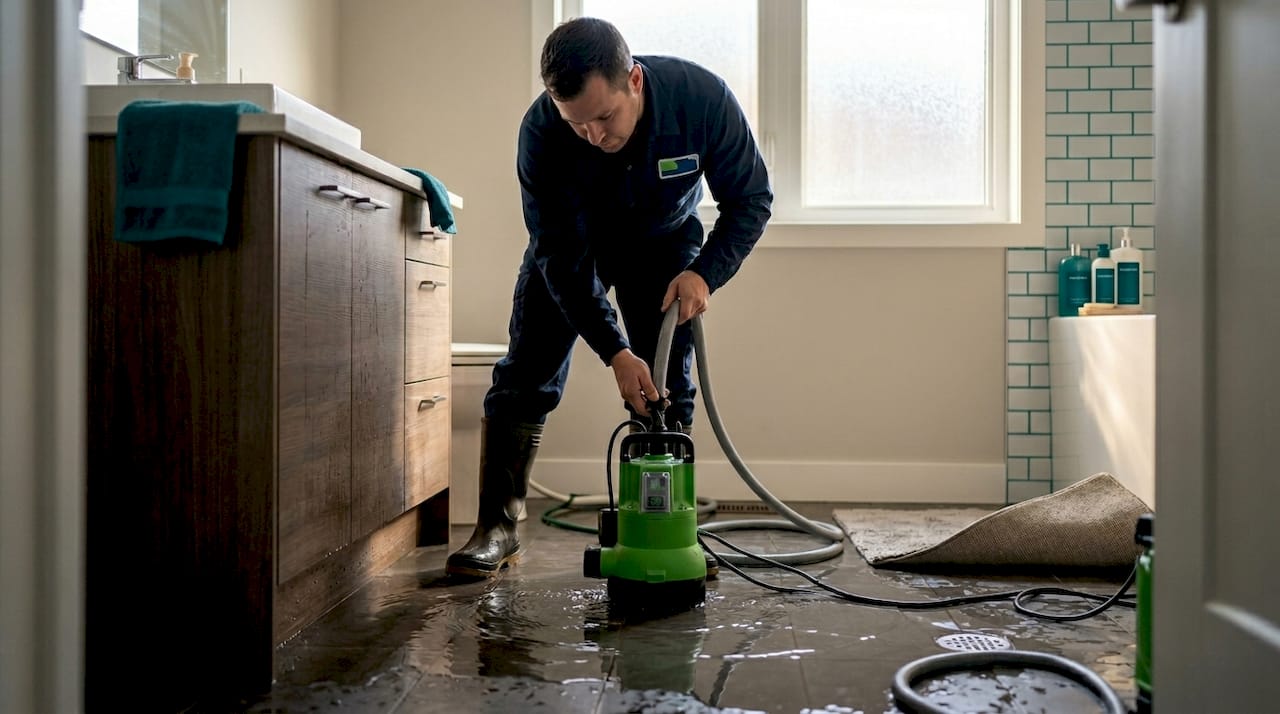
Water extraction is the process of removing standing or excess water from a property using specialized equipment to prevent structural damage and mold growth. After a burst pipe in Schaumburg or a basement flood following a Chicago-area storm, this process is the first and most critical step in any professional restoration response. Industrial submersible pumps, extraction wands, and commercial-grade vacuums pull water from floors, walls, and subfloor materials far faster than any household method. Without it, the clock starts ticking on mold, and mold can begin growing within 24 to 48 hours after initial water exposure.
What is water extraction and how does it work?
Water extraction, also called water mitigation in the restoration industry, is the equipment-driven removal of bulk standing water from a property before the drying phase begins. The process follows a clear sequence, and skipping any step shortens the window for saving materials and increases long-term repair costs.
Here is how a professional extraction job unfolds:
- Assessment and water categorization. Technicians identify the water source and classify it as clean water (Category 1, such as a supply line break), gray water (Category 2, such as appliance overflow), or black water (Category 3, such as sewage or floodwater). The category determines the safety protocols and equipment used throughout the job.
- Bulk water removal with submersible pumps. When standing water is several inches deep, submersible pumps and extraction wands handle the heavy lifting first. These pumps move hundreds of gallons per hour, something no shop vac can replicate.
- Extraction of absorbed water. Once bulk water is gone, technicians use truck-mounted or portable extraction units with wand attachments to pull moisture from carpet, padding, hardwood, and concrete. This step is where professional equipment makes the biggest difference.
- Post-extraction drying setup. High-velocity air movers and commercial dehumidifiers are placed strategically to accelerate evaporation. Fans and dehumidifiers work together to drop ambient humidity and dry structural materials from the inside out.
- Moisture monitoring. Technicians return daily to check moisture readings with calibrated meters. A surface that feels dry to the touch can still hold dangerous moisture levels inside drywall or subfloor material.
Pro Tip: Renting a wet/dry vacuum from a hardware store is not a substitute for professional extraction. Industrial-grade equipment removes significantly more water per pass and reaches moisture that consumer tools simply cannot access, which directly reduces your drying time and mold risk.
What is the difference between water extraction vs water removal?
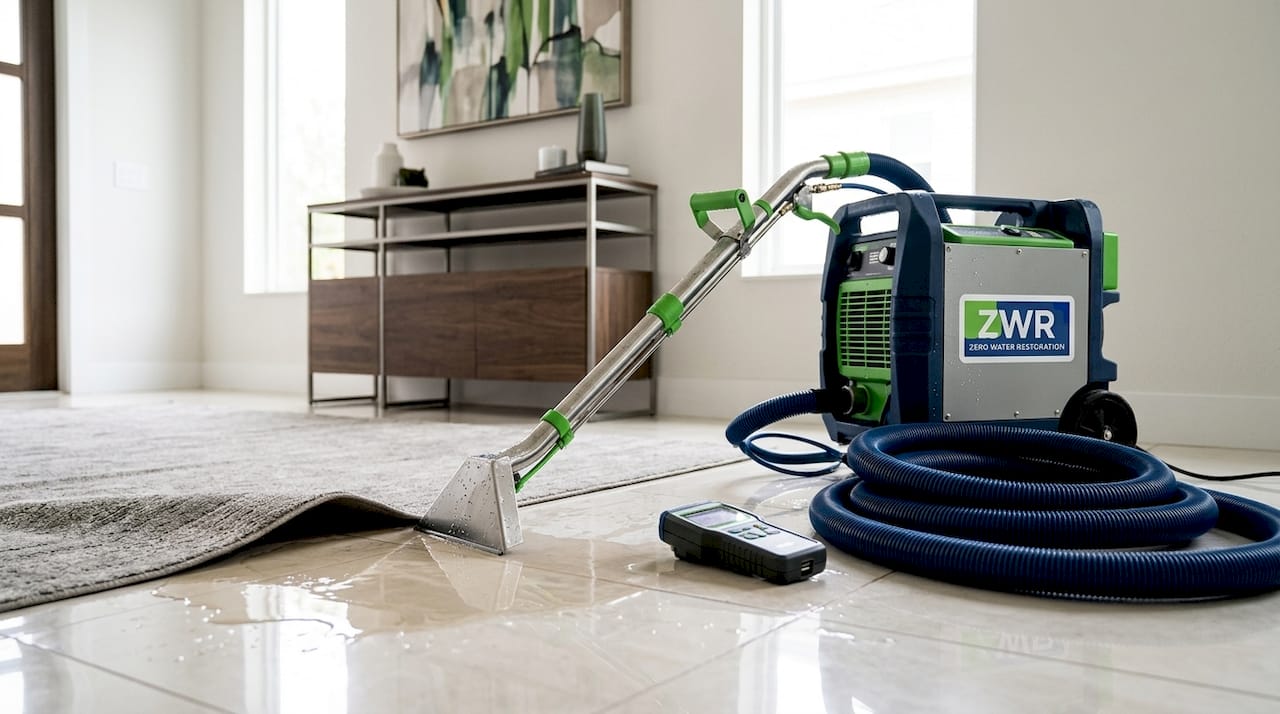
These two terms are often used interchangeably, but they describe different scopes of work. Understanding the distinction helps you ask the right questions when hiring a restoration company.
Water extraction is a targeted, equipment-driven process focused on removing standing and absorbed water from structural materials using pumps, vacuums, and wands. Water removal is a broader term that can include any method of getting water out of a space, from mopping and toweling to running a box fan.
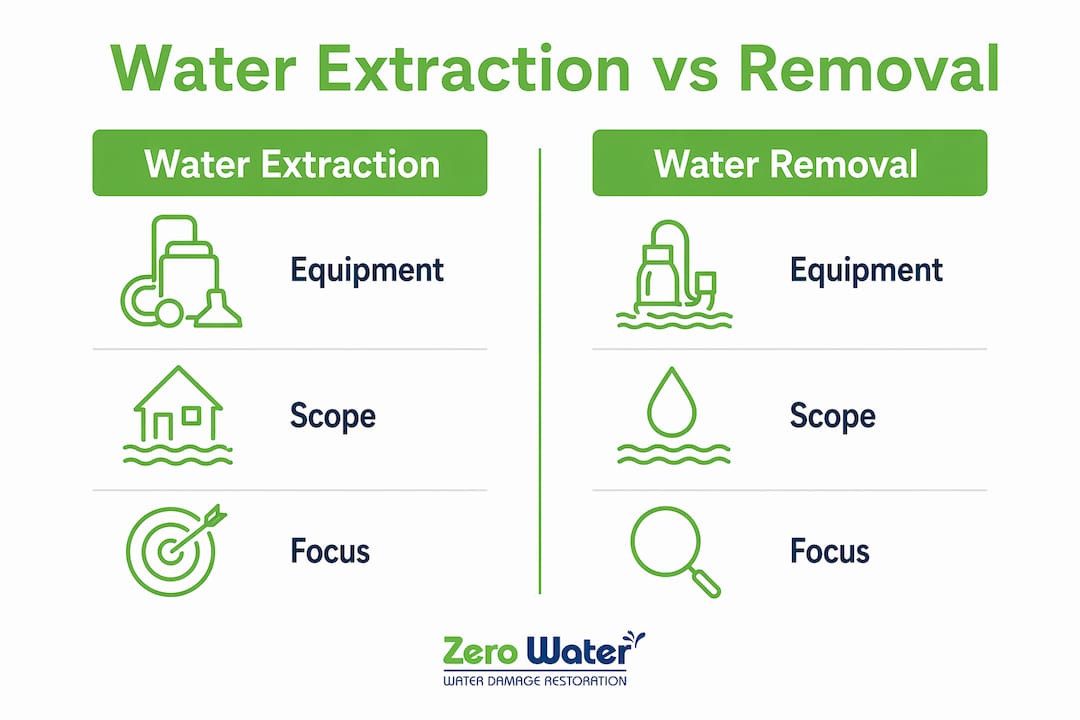
| Aspect | Water extraction | Water removal |
|---|---|---|
| Equipment used | Submersible pumps, truck-mounted extractors, extraction wands | Mops, towels, wet/dry vacuums, box fans |
| Water addressed | Standing water and moisture absorbed into materials | Surface water only |
| Drying speed | Significantly faster, measured in hours | Slow, measured in days |
| Mold risk reduction | High, when completed within 24 to 48 hours | Low, surface cleanup leaves moisture in materials |
| Best for | Flood damage, pipe bursts, appliance failures | Minor spills on non-porous surfaces |
The practical consequence of this difference is significant. Surface cleaning after a flood may look effective, but simply cleaning surfaces without removing moisture from within materials does nothing to stop mold colonization. The EPA does not recommend bleach or biocides as a primary mold control method. Moisture removal is the only reliable strategy. Professional extraction compresses the drying timeline, which is the single most important factor in preventing secondary damage.
Why is water extraction important for mold prevention?
Mold prevention is the primary reason water extraction cannot wait. The EPA confirms that mold growth begins within 24 to 48 hours of water exposure, and the conditions inside a water-damaged home are ideal for rapid spread. Warm temperatures, organic materials like drywall and wood framing, and trapped moisture create exactly the environment mold needs.
The EPA’s guidance on moisture control is direct: dry all wet materials within 24 to 48 hours, and maintain indoor relative humidity below 60 percent, with an ideal range of 30 to 50 percent. Meeting that target after a significant water event is impossible without professional extraction equipment. A box fan and open windows will not move enough moisture fast enough.
“The key to mold control is moisture control.” — EPA Indoor Air Quality guidance
Porous materials present a specific challenge. Carpet, carpet padding, drywall, and ceiling tiles absorb water quickly and release it slowly. The EPA advises that porous materials must be removed if they cannot be cleaned and dried properly within the critical window. A professional restoration team makes that call based on moisture readings, not guesswork.
Pro Tip: Do not rely on a “dry to the touch” test. Moisture meters measure humidity inside walls and under floors where mold actually starts. A surface can feel completely dry while the subfloor beneath it reads at 25 percent moisture content, well above the safe threshold. Monitoring moisture levels within the first 24 to 48 hours is the only reliable way to confirm drying progress.
Skipping extraction or relying on surface cleanup also creates a false sense of security. Homeowners who mop up a flooded basement and run a dehumidifier for a few days often discover mold behind baseboards or under flooring weeks later. By that point, what could have been a straightforward extraction job has become a full mold remediation project, which is far more disruptive and expensive.
What are the common methods of water extraction?
Different water damage scenarios call for different extraction approaches. The volume of water, the type of materials affected, and the location within the property all influence which method a restoration team deploys.
Truck-mounted extraction systems are the most powerful option available. The pump and vacuum unit sits in a service vehicle and connects to the property via long hoses. These systems generate suction levels that portable units cannot match, making them the preferred choice for large-scale flooding in basements or main living areas.
Portable extraction units offer flexibility in spaces where a truck-mounted system cannot reach, such as upper floors, interior rooms, or commercial buildings with restricted access. Modern portable units are significantly more powerful than rental equipment and can handle both standing water and deep carpet extraction.
Extraction wands attach to either truck-mounted or portable systems and allow technicians to work water out of carpet, hardwood gaps, and tight corners. Wand pressure and temperature settings vary based on material type, which is why restoration plans are customized based on water category and material porosity.
Wet/dry vacuums serve a limited but useful role in small-scale situations, such as a contained appliance leak on a hard floor. They are not appropriate for flooded rooms, saturated carpet, or any situation involving absorbed moisture in structural materials.
Here is a quick reference for method selection:
- Basement flooding after a storm: Truck-mounted system for bulk removal, followed by portable extraction for residual moisture in concrete and framing
- Carpet and padding saturation: Extraction wand with a weighted head to force water up through carpet fibers before the pad is assessed for salvageability
- Hardwood floors: Specialized drying mats combined with low-grain refrigerant dehumidifiers to pull moisture from below the surface without warping boards
- Crawl spaces: Submersible pumps for standing water, followed by portable dehumidifiers rated for the square footage of the space
The right method matters because professional extraction equipment removes water at a rate and depth that determines whether materials can be saved or must be replaced. Getting the method right on day one is the difference between a three-day dry-out and a three-week reconstruction.
Key takeaways
Water extraction is the single most time-sensitive step in water damage restoration, and completing it within 24 to 48 hours with professional equipment is the only reliable way to prevent mold and minimize structural loss.
| Point | Details |
|---|---|
| Extraction vs. removal | Professional extraction removes absorbed moisture from materials; surface removal only addresses visible water. |
| Mold timeline | Mold begins growing within 24 to 48 hours, making same-day extraction the highest-priority response. |
| Equipment matters | Truck-mounted and industrial portable systems outperform rental or DIY tools in both speed and depth of moisture removal. |
| Porous materials | Carpet, drywall, and ceiling tiles may require removal if they cannot be dried within the critical window. |
| Moisture monitoring | Surface feel is unreliable. Calibrated moisture meters confirm drying progress inside walls and subfloors. |
What I’ve learned after a decade of water damage calls
After more than ten years responding to water damage across Schaumburg, Arlington Heights, and the northwest suburbs, the pattern I see most often is this: homeowners wait. They mop up what they can see, run a fan, and assume the problem is handled. By the time they call us, the mold is already behind the drywall.
The uncomfortable truth is that water moves faster and farther than most people expect. A pipe burst in a second-floor bathroom can saturate the subfloor, travel down wall cavities, and pool inside a first-floor ceiling before anyone notices a drip. By the time you see the water stain, the moisture has been sitting in structural materials for hours.
I also see a lot of misplaced confidence in consumer-grade equipment. Wet/dry vacuums and box fans are not restoration tools. They address what you can see, not what is actually causing the damage. The flood restoration process requires equipment calibrated for the job, and the gap between professional and consumer tools is not small.
My honest recommendation: treat any water event that covers more than a few square feet as a professional job until proven otherwise. The cost of a professional extraction is a fraction of what mold remediation costs after the fact. And if you are a property manager overseeing multiple units, the commercial water damage response timeline is even tighter because moisture travels between units through shared walls and floors.
— Jim
Get professional water extraction when it matters most
When water gets into your home, every hour counts. Zero Water Restoration provides 24/7 emergency water extraction and drying services across Schaumburg, Barrington, Lake Zurich, and the greater Chicagoland area. The team uses truck-mounted extraction systems, commercial dehumidifiers, and calibrated moisture monitoring to meet EPA drying guidelines and stop mold before it starts. Insurance documentation and adjuster communication are handled directly, so you are not managing a claim on top of managing damage. For homeowners in the northwest suburbs, water damage restoration in Barrington and the surrounding communities is available around the clock. Call (847) 515-7000 or visit zerowaterrestoration.com for a free inspection.
FAQ
What is the water extraction definition in restoration?
Water extraction in restoration refers to the equipment-driven removal of standing and absorbed water from a property using submersible pumps, extraction wands, and industrial vacuums. It is the first active step in the restoration process, completed before drying equipment is deployed.
How quickly does water extraction need to happen?
Water extraction should begin as soon as possible and ideally within the first few hours of a water event. The EPA confirms mold can begin growing within 24 to 48 hours of water exposure, so same-day extraction is the standard for professional restoration work.
Can I do water extraction myself?
Consumer wet/dry vacuums can handle minor spills on hard, non-porous surfaces, but they are not effective for flooded rooms, saturated carpet, or moisture absorbed into walls and subfloors. Professional equipment removes significantly more water per pass and reaches depths that household tools cannot.
What is the difference between water extraction and drying?
Water extraction removes bulk and absorbed water from materials using pumps and vacuums. Drying follows extraction and uses high-velocity air movers and dehumidifiers to evaporate residual moisture from structural materials. Both steps are required for a complete restoration.
Does water extraction prevent mold?
Prompt, thorough water extraction is the most effective mold prevention step available after a water event. By removing moisture before the 24 to 48 hour mold growth window closes, and by keeping indoor humidity below 60 percent relative humidity, professional extraction eliminates the conditions mold needs to establish.