
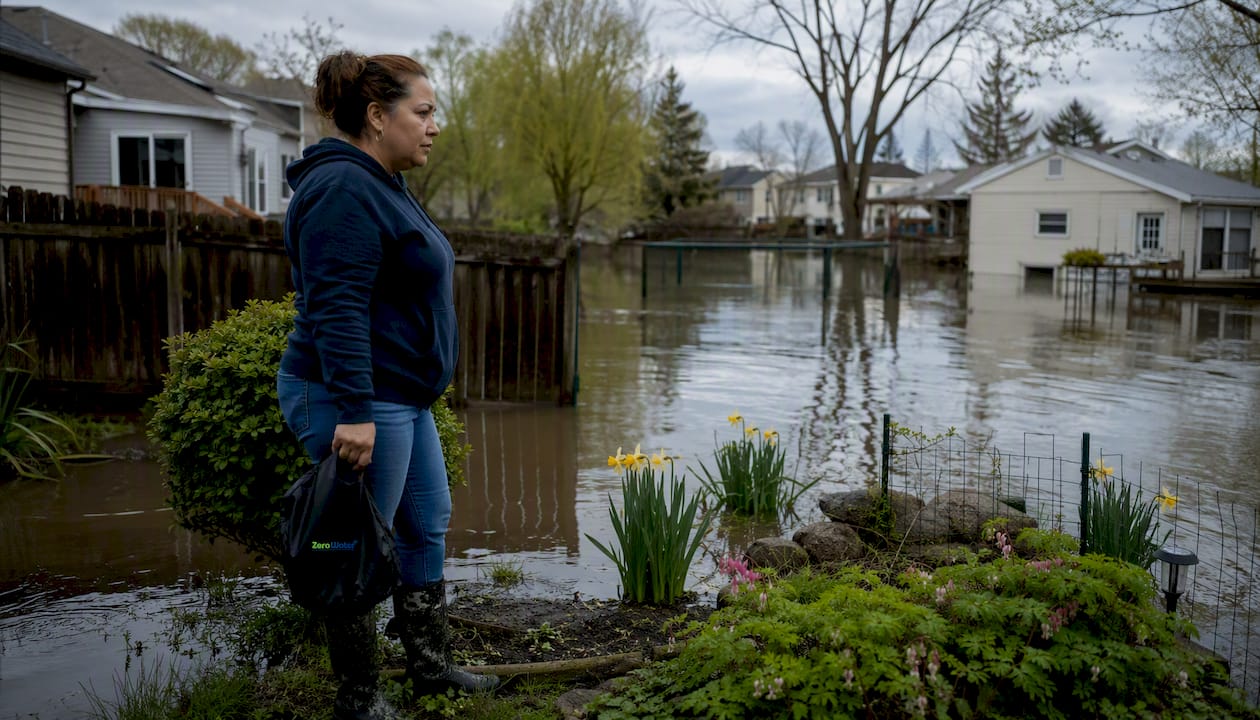
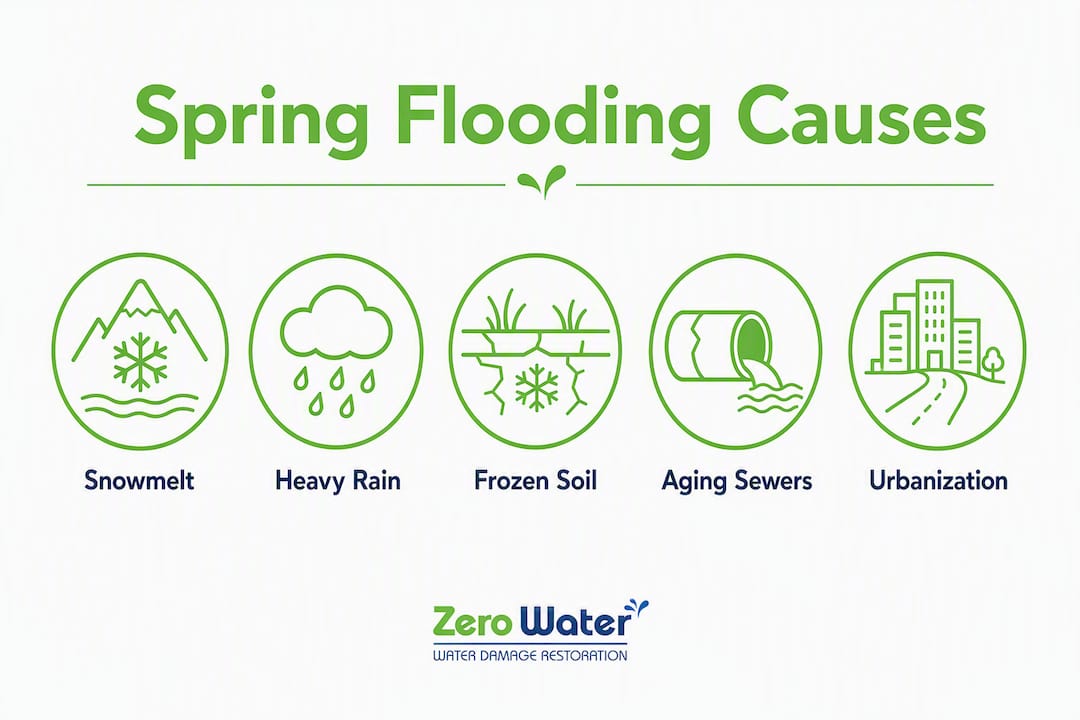
Spring flooding in Chicago’s northwest suburbs happens because rapid snowmelt and heavy spring rain run off impervious surfaces faster than aging storm sewers and local rivers can carry the water away. When the ground is still frozen or already saturated, there is nowhere for that water to go except into streets, yards, and basements.
The main drivers, in plain terms:
- Snowmelt and spring rain arriving together overwhelm drainage systems that were never designed for both at once
- Frozen or saturated soil blocks infiltration, turning every yard into a runoff surface
- Impervious cover (roads, rooftops, parking lots) across decades of suburban development sends water directly into storm sewers instead of the ground
- The Des Plaines River, Fox River, and their tributary creeks back up during high-flow events, raising water tables and flooding low-lying neighborhoods
- Aging combined sewer systems in older communities hit capacity quickly, sending water back up through floor drains and basement walls
The National Weather Service spring flood outlook for northeastern Illinois factors in snow cover, soil moisture, and river levels each season. Even in years with below-average snowpack, the NWS warns that a single heavy rainfall event can trigger significant local flooding. FEMA flood maps identify high-risk zones, but properties well outside those boundaries flood regularly from sewer backups and surface runoff. Immediate risks for homeowners include basement flooding, sump pump failure, and sewage backup.
Table of Contents
- Why does spring flooding affect the northwest suburbs?
- Which local waterways drive flooding in the northwest suburbs?
- How does suburban development make spring flooding worse?
- Why are spring floods becoming more frequent and intense?
- How spring flooding damages homes and what to watch for
- What should you do before, during, and after a spring flood?
- What does flood insurance actually cover for Illinois homeowners?
- Where can you find reliable local flood forecasts?
- When should you call a professional restoration company?
- Key Takeaways
- What northwest-suburban homeowners get wrong about spring flooding
- Spring flooding hit your home? Here’s what to do next
- Useful sources to bookmark before spring storm season
Why does spring flooding affect the northwest suburbs?
The physics are straightforward. Snowpack accumulates through winter, and when temperatures climb in March and April, that stored water releases quickly. Ready.gov’s spring flood guidance explains that frozen or saturated ground sharply limits infiltration, so surface runoff increases dramatically during spring rain and melt events.
Picture the sequence: snowmelt and rain hit the ground simultaneously. The soil, still frozen a few inches down or already waterlogged from weeks of wet weather, rejects most of it. That water moves overland, picks up speed across driveways and parking lots, and pours into storm sewers and tributary creeks. Those tributaries drain into the Des Plaines or Fox River. When the rivers are already running high from upstream melt, they cannot accept more flow quickly. Water backs up into the smaller channels, which backs up into neighborhood storm sewers, which backs up into your basement.
Short, intense spring storms make this worse. A storm that drops two inches of rain in 90 minutes hits the drainage system like a hammer. The ground has no time to absorb anything, and the sewers hit capacity within minutes. CMAP’s regional analysis identifies saturated soils, increased intense storms, impervious cover, and undersized infrastructure as the central causes of combined stormwater flooding across northeastern Illinois.
Winter water damage and thaw-related issues also set the stage. A home that experienced winter water damage from ice dams or frozen pipes may already have compromised seals heading into spring flood season.
Which local waterways drive flooding in the northwest suburbs?
The Des Plaines River is the most consequential waterway for the northwest suburbs. It runs through or near Cook, Lake, and DuPage counties, and its floodplain touches communities from Libertyville south through Des Plaines and beyond. When the river rises above flood stage, it backs water into tributary creeks that run through residential neighborhoods, sometimes miles from the main channel.
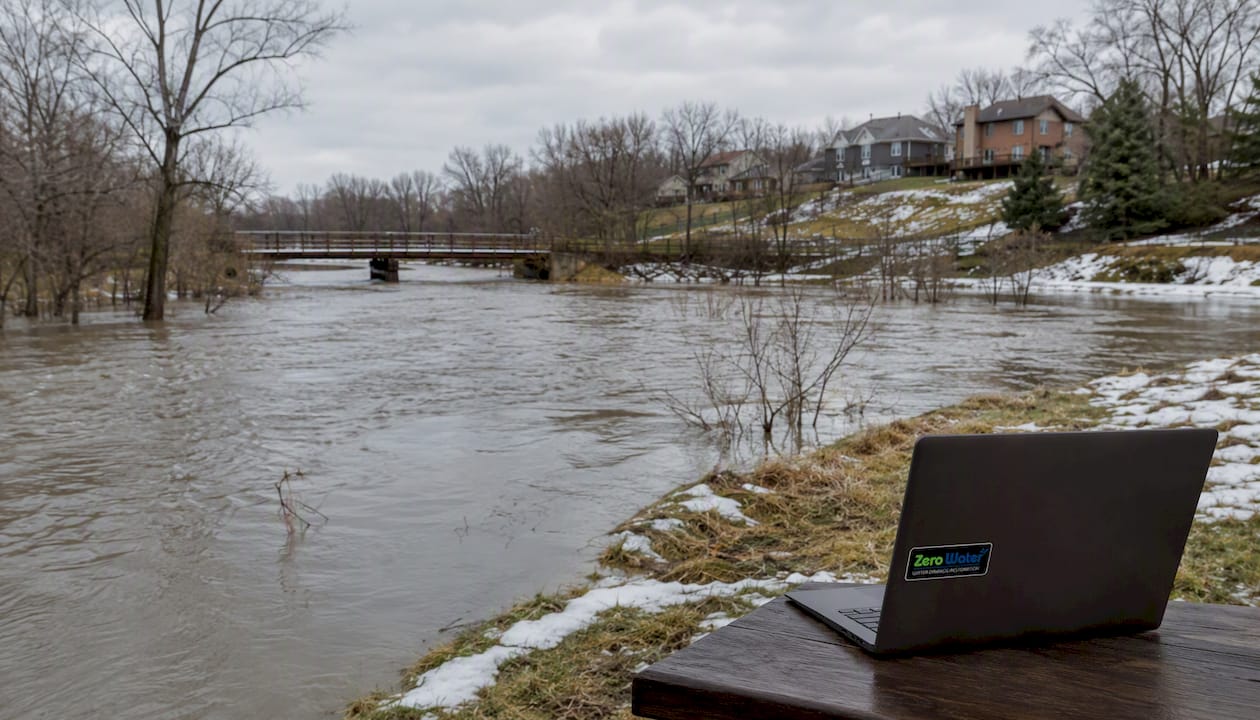
The Fox River matters most for communities in Kane and Lake counties. Fox Waterway Agency notes that the upper Fox watershed has extensive regulatory floodplain area and that floods on the main stem can develop slowly while tributaries flash much faster. The Chain of Lakes region and communities south through Elgin and Algonquin sit in one of the most flood-prone corridors in northeastern Illinois. The Fox River watershed has also faced significant development pressure, which compounds runoff problems.
The Mississippi River is less directly relevant to the northwest suburbs but matters for context: major flood events on the Illinois River system, which the Fox and Des Plaines ultimately feed, can create downstream backpressure that slows drainage across the whole region.
Closer to home, the real culprits are often smaller:
- Tributary creeks (Salt Creek, Poplar Creek, Higgins Creek, and dozens of unnamed drainage channels) respond to heavy rain within hours, not days
- Storm sewers and combined sewers in older communities like parts of Schaumburg, Palatine, and Rolling Meadows were designed for smaller storms and back up quickly
- Detention and retention basins help during moderate events but can fill completely during back-to-back storms, losing their buffering capacity just when it is needed most
- Low-lying areas near underpasses, parks, and creek-adjacent streets flood first and drain last
How does suburban development make spring flooding worse?
Every parking lot, rooftop, and concrete driveway added to the northwest suburbs over the past 60 years reduced the land’s ability to absorb water. Watershed experts at Friends of the Fox River argue that decades of building in natural floodplains and replacing vegetated surfaces with impervious cover have fundamentally reduced the landscape’s capacity to handle spring runoff. What was once a wetland or prairie that slowed and absorbed water is now a subdivision that sheds it.
Replacing vegetation with concrete and asphalt forces water into storm systems that cannot handle peak events. When those systems overflow, the water goes somewhere — and that somewhere is usually the nearest basement or the lowest street in the neighborhood.
The infrastructure problem compounds the land-use problem. Many storm sewer systems across the northwest suburbs were built in the 1960s and 1970s to handle storms that were considered rare at the time. Chicago Sun-Times reporting found that older combined sewer systems in the Chicago area were designed to handle roughly two inches of rain in a short period before flooding becomes likely. Storms that routinely exceed that threshold are no longer rare.
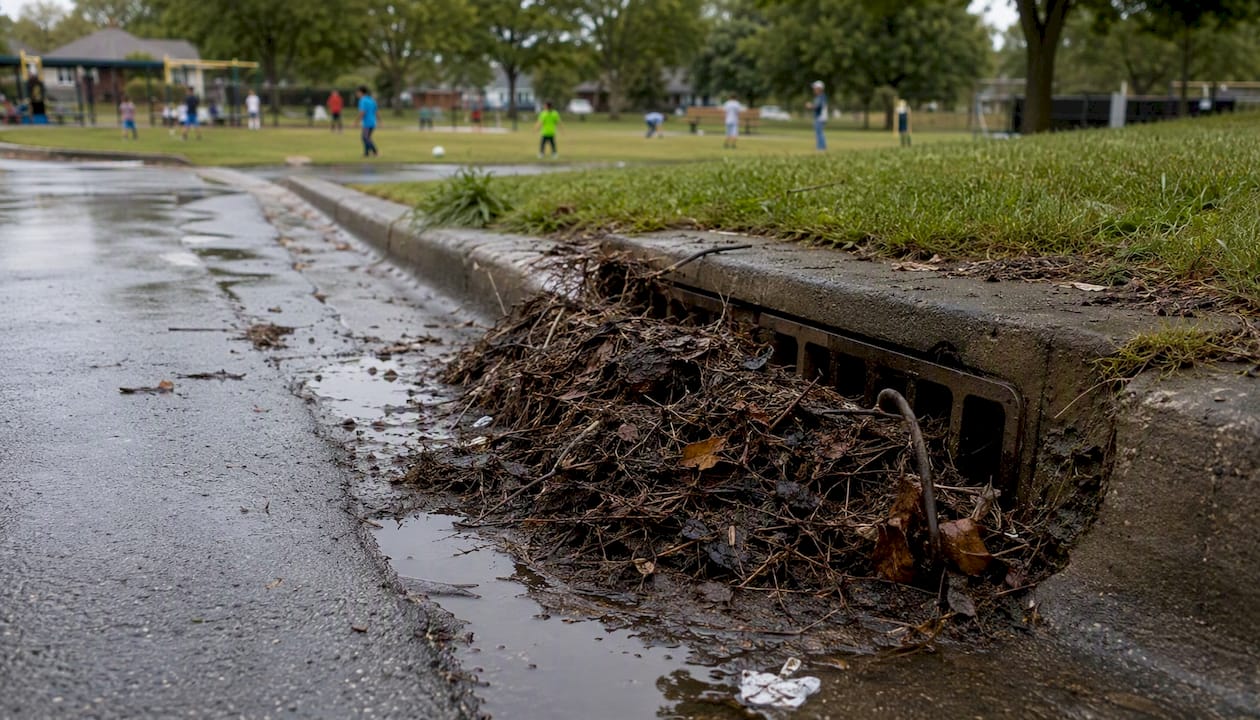
Clogged catch basins make things worse at the neighborhood level. Leaves, debris, and sediment block the inlets that are supposed to accept surface runoff. A single blocked catch basin can flood a street that would otherwise drain fine. This is a maintenance issue, not an engineering one, and it is fixable.
Why are spring floods becoming more frequent and intense?
The storms are getting heavier. Chicago Sun-Times investigative reporting documents that heavy rainfall events in the Chicago area have become more severe, stressing sewer systems that were already undersized for modern conditions. Recent storms in Cook County produced intense rainfall events in some locations, which overwhelmed combined sewer systems and triggered a FEMA mitigation assessment.
The regional trend is toward more frequent high-intensity events: storms that stall over an area and dump rainfall faster than any drainage system can move it. Illinois weather records underscore the point. A recent single-day rainfall event set a new state record for rainfall amount in Aurora, resulting in major flooding along several rivers and record discharges at multiple USGS streamflow gauging stations.
For northwest-suburban homeowners, the practical implication is that “surprise” flood events are becoming less surprising. A storm that would have been a 25-year event a generation ago may now occur every few years. Preparation cannot wait for a forecast.
How spring flooding damages homes and what to watch for
Basement flooding is the most common outcome, but the path water takes to get there varies. Foundation cracks and wall joints allow groundwater to seep in under hydrostatic pressure, even when there is no surface flooding visible outside. Practitioner guidance from FludZone in Hoffman Estates notes that groundwater pressure through foundation joints causes seepage that standard homeowners insurance rarely covers without a specific endorsement.
Sump pump failure is the other major failure point. A pump that runs continuously during a multi-day rain event can burn out. Power outages during storms knock out pumps entirely unless a battery backup is installed. When the pump fails, water rises in the sump pit and eventually spills into the basement.
Sewer backup is a separate and particularly unpleasant problem. When the municipal sewer system hits capacity, wastewater can reverse direction and come up through floor drains and toilets. This is not clean water. Sewage-contaminated flooding requires professional remediation and poses real health risks.
Secondary hazards develop fast. Mold can begin growing within 24–48 hours of a water intrusion event, particularly in finished basements with drywall and carpet. Electrical hazards from submerged outlets and panels are immediate. Older homes with basement living spaces, finished recreation rooms, or mechanical systems at floor level face the highest losses.
Standard homeowners policies typically exclude flood damage from rising groundwater and sewer backup unless you have added endorsements. Knowing your coverage before a storm is far better than discovering the gap after one. Understanding the difference between flood damage and water damage matters for both your insurance claim and your mitigation strategy.
What should you do before, during, and after a spring flood?
Before the storm season:
- Test your sump pump now. Pour water into the pit and confirm it activates. Install a battery backup if you do not have one.
- Clear gutters and downspouts. Extend downspouts at least six feet from the foundation.
- Check your foundation for cracks and seal them with hydraulic cement or epoxy.
- Know where your main water shutoff is and how to use it.
- Elevate valuables, documents, and electronics off basement floors.
- Review your homeowners policy for flood and sewer-backup endorsements. Call your agent if you are unsure what is covered.
- Contact your municipality about sandbag availability and pickup locations before a storm is forecast.
During active flooding:
- If water reaches electrical outlets or your panel, shut off power to the affected area at the breaker.
- Move remaining valuables to upper floors immediately.
- Never walk through floodwater of unknown depth. Six inches of moving water can knock an adult down.
- Do not drive through flooded underpasses or roads. Turn around.
- Call 911 if there is a life-safety risk.
After the water recedes:
- Photograph and video every affected area before moving or discarding anything.
- Contact your insurance company to open a claim. Keep all receipts for emergency expenses.
- Begin water extraction and drying as quickly as possible. Every hour of delay increases mold risk.
- Do not use HVAC systems that may have been submerged until they are inspected.
- Call a professional restoration company if the water was contaminated, if you have more than a few inches of standing water, or if moisture persists after initial drying.
Pro Tip: Protect your mechanical systems first. Your furnace, water heater, and electrical panel are the most expensive items in a basement and the hardest to replace quickly. If you can only move a few things before a storm, start there.
Safety warning: Water from sewer backups is Category 3 contaminated water. Do not handle it without protective equipment, and do not attempt DIY cleanup. Professional extraction and remediation are required.
For a full homeowner checklist on water damage prevention, including grading, gutter, and sump pump guidance, Zerowaterrestoration has a practical resource built specifically for northwest-suburban properties.
What does flood insurance actually cover for Illinois homeowners?
Standard homeowners insurance does not cover flooding from rising groundwater, overland flow, or sewer backup unless you have purchased specific endorsements. This surprises a lot of homeowners after the fact.
The National Flood Insurance Program (NFIP), administered by FEMA, provides flood coverage for both the structure and contents of a home. NFIP policies are available to homeowners in participating communities regardless of whether they are in a mapped Special Flood Hazard Area. If your community participates, you can buy a policy even if FEMA maps show you are at low risk. Given that properties outside mapped floodplains flood regularly from sewer backups and surface runoff, that coverage is worth considering.
For sewer backup specifically, ask your homeowners insurer about a sewer and drain backup endorsement. This is a separate add-on and is not included in a standard policy or an NFIP policy.
After a flood event, the claims process follows a clear sequence. Document everything with photos and video before touching anything. Contact your insurer to open a claim and get a claim number. Keep receipts for all emergency expenses, including hotel stays, temporary repairs, and professional services. Get a written contractor estimate before signing any restoration contracts. Do not discard damaged property until your adjuster has seen it, unless it poses a health hazard.
Professional mitigation matters for your claim. Insurers look more favorably on claims where the homeowner took prompt steps to limit further damage. A documented extraction and drying process, with moisture readings and equipment logs, supports your claim and reduces the risk of a mold dispute later. Zerowaterrestoration’s team handles insurance claim coordination directly, communicating with adjusters and managing documentation so homeowners are not navigating that process alone.
Check the FEMA Flood Map Service Center to see your property’s mapped flood zone and Base Flood Elevation. If your lowest floor is below the Base Flood Elevation, your flood risk is higher than the map zone alone suggests.
Where can you find reliable local flood forecasts?
Knowing where to look before a storm is as important as knowing what to do during one.
- NWS Chicago office spring flood outlook: Updated seasonally, this covers snow cover, soil moisture, and river levels across northeastern Illinois. Check it in February and March before spring melt begins.
- NWS river forecasts and gauge data: The NWS Advanced Hydrologic Prediction Service shows current river stages and forecasts for the Des Plaines, Fox, and other local waterways. When a river gauge shows a stage approaching flood level, check it every few hours.
- Lake County Stormwater Management Commission: Provides local flood alerts, floodplain maps, and stormwater project updates for Lake County communities.
- Cook County Department of Transportation and Highways: Manages stormwater infrastructure and issues road closure alerts during flood events.
- Kane County Stormwater Management: Covers Fox River communities and issues watershed-specific alerts.
- DuPage County Stormwater Management: Relevant for communities in the southern part of the northwest suburbs.
- FEMA Flood Map Service Center: Use this to check your property’s flood zone designation and Base Flood Elevation before buying flood insurance or making elevation improvements.
- Local municipal alerts: Sign up for your municipality’s emergency notification system (most use Nixle or a similar platform) for real-time road closure and flood warning updates.
When an official flood-stage alert is issued for the Des Plaines or Fox River, do not wait to see water in your yard. Begin moving valuables, checking your sump pump, and monitoring your basement. River flooding can take hours to reach neighborhoods, but sewer backup from a surging system can happen within minutes of a heavy downpour.
When should you call a professional restoration company?
The restoration timeline after a flood event is not forgiving. Water extraction needs to happen within hours, not days. After extraction, professional drying equipment (industrial dehumidifiers and air movers) runs continuously for three to five days to bring structural moisture levels down to safe ranges. Mold prevention treatments follow. If structural materials like drywall or subfloor are saturated, they typically need to be removed and replaced.
Call a professional immediately if:
- The water source was a sewer backup or involved any contamination
- You have more than two or three inches of standing water in a basement
- Water has been present for more than 24 hours
- You see visible mold or smell a musty odor after drying
- Structural materials (walls, floors, ceiling) feel soft or show discoloration
- Your DIY drying efforts have not reduced moisture readings after 48 hours
Zerowaterrestoration has served the northwest suburbs for over 10 years, with 24/7 emergency response available across Schaumburg, Arlington Heights, Palatine, Hoffman Estates, Barrington, Lake Zurich, Streamwood, and surrounding communities. The team handles water extraction, drying, mold remediation, and full reconstruction, and works directly with insurance adjusters to manage documentation and keep out-of-pocket costs down. For a water damage assessment or emergency response, call (847) 515-7000.
Key Takeaways
Spring flooding in Chicago’s northwest suburbs is driven by a combination of frozen soil, impervious surfaces, aging sewers, and rising local rivers that together overwhelm drainage capacity faster than any single storm could on its own.
| Point | Details |
|---|---|
| Main physical causes | Snowmelt plus heavy rain on frozen or saturated soil creates runoff that storm sewers and local rivers cannot absorb quickly enough. |
| Floodplain maps understate risk | Properties outside FEMA Special Flood Hazard Areas flood regularly from sewer backups and surface runoff. |
| Insurance gaps are common | Standard homeowners policies exclude groundwater flooding and sewer backup; NFIP and endorsements fill those gaps. |
| Act within hours, not days | Mold can begin within 24–48 hours of water intrusion; professional extraction and drying must start quickly to limit damage. |
| Zerowaterrestoration | Available 24/7 for emergency water extraction, drying, mold remediation, and insurance coordination across the northwest suburbs. |
What northwest-suburban homeowners get wrong about spring flooding
The assumption that kills people’s basements every spring is this: “I’m not in a flood zone, so I’m fine.” The Federal Reserve Bank of Chicago has documented that FEMA flood maps do not account for surface flooding, which is the primary flood risk for most Chicago-area properties. FEMA’s mapping focuses on river overflow and coastal surge. It does not map what happens when two inches of rain falls in an hour and your combined sewer system backs up into your finished basement.
The second mistake is treating sump pump maintenance as optional. A pump that has not been tested since last spring may fail on the first heavy rain of the season. Battery backups are not a luxury in this region. They are the difference between a dry basement and a $30,000 restoration job during a power outage.
What I’d urge every northwest-suburban homeowner to understand is that the infrastructure around you was built for a different climate. The storms are heavier now, the ground is more developed, and the drainage systems are older. That combination means individual property protection matters more than it ever did. Regional flood control projects help at the margins, but they cannot prevent every intense event. Your sump pump, your sealed foundation, and your insurance endorsements are your actual first line of defense.
Spring flooding hit your home? Here’s what to do next
When water gets into your home, the clock starts immediately. Zerowaterrestoration responds 24/7 to water emergencies across the northwest suburbs, from Barrington to Streamwood, and handles the full restoration process from first call to final inspection.
Services that directly address spring flood damage:
- Mold remediation to address the secondary damage that follows water intrusion
- Reconstruction and restoration — for structural materials that cannot be saved
Document your damage with photos and video before repairs begin when it is safe to do so. Then call Zerowaterrestoration at (847) 515-7000 or visit zerowaterrestoration.com/water-damage-restoration-in-barrington to request an emergency inspection. The team knows the northwest suburbs, knows the insurers, and knows how to get your property back to where it was before the water came in.
Useful sources to bookmark before spring storm season
- NWS Spring Flood Outlook for Northeastern Illinois: Seasonal risk assessment updated before spring melt; check in February and March.
- FEMA Flood Map Service Center: Look up your property’s flood zone and Base Flood Elevation before purchasing flood insurance.
- Ready.gov Spring Flooding Fact Sheet: Federal preparedness guidance covering frozen-ground runoff risks and household steps.
- CMAP Stormwater Flooding Memo: Regional planning analysis of flooding causes across northeastern Illinois, useful for understanding local infrastructure limits.
- Fox Waterway Agency flood preparedness resources: Watershed-specific guidance for Fox River communities in Lake and Kane counties.
- Cook County Urban Flooding Guidance: Practical homeowner and renter guidance following major Cook County flood events.
- Zerowaterrestoration.com: Local emergency restoration resource for northwest-suburban homeowners needing professional water damage, mold, or storm damage response.