Category 3 water damage is defined as grossly contaminated water containing pathogenic, toxigenic, or harmful agents capable of causing serious illness or death upon exposure. The industry standard term is “black water,” established by the IICRC S500 standard as the most severe classification in a three-tier system. Understanding what is category 3 water damage matters because the wrong response, including DIY cleanup, puts your health and your property at serious risk. This guide covers the definition, sources, health hazards, remediation protocols, and the steps you need to take right now.
What is category 3 water damage, and how is it defined?
Category 3 water damage is the highest contamination level in the IICRC S500 classification system, which divides water damage into three categories based on biological and chemical risk. Category 1, sometimes called clean water, originates from sanitary sources like a broken supply line. What is category 2 water damage? It is gray water carrying microorganisms and nutrients for microbial growth, such as water from a washing machine overflow or a dishwasher leak. Category 3 sits above both. It contains raw sewage, fecal matter, heavy metals, pesticides, and a range of pathogens that make it a biohazard by definition.
The distinction matters beyond terminology. Category 1 water damage allows for drying in place under the right conditions. Category 3 water damage does not. Every porous material it contacts must be treated as contaminated, and the remediation process follows biohazard disposal protocols, not standard drying procedures. Knowing which category you are dealing with determines every decision that follows.
What are the typical sources of category 3 water damage?
Black water enters a property through several distinct pathways. Recognizing the source helps you assess the scope of contamination before a professional arrives.
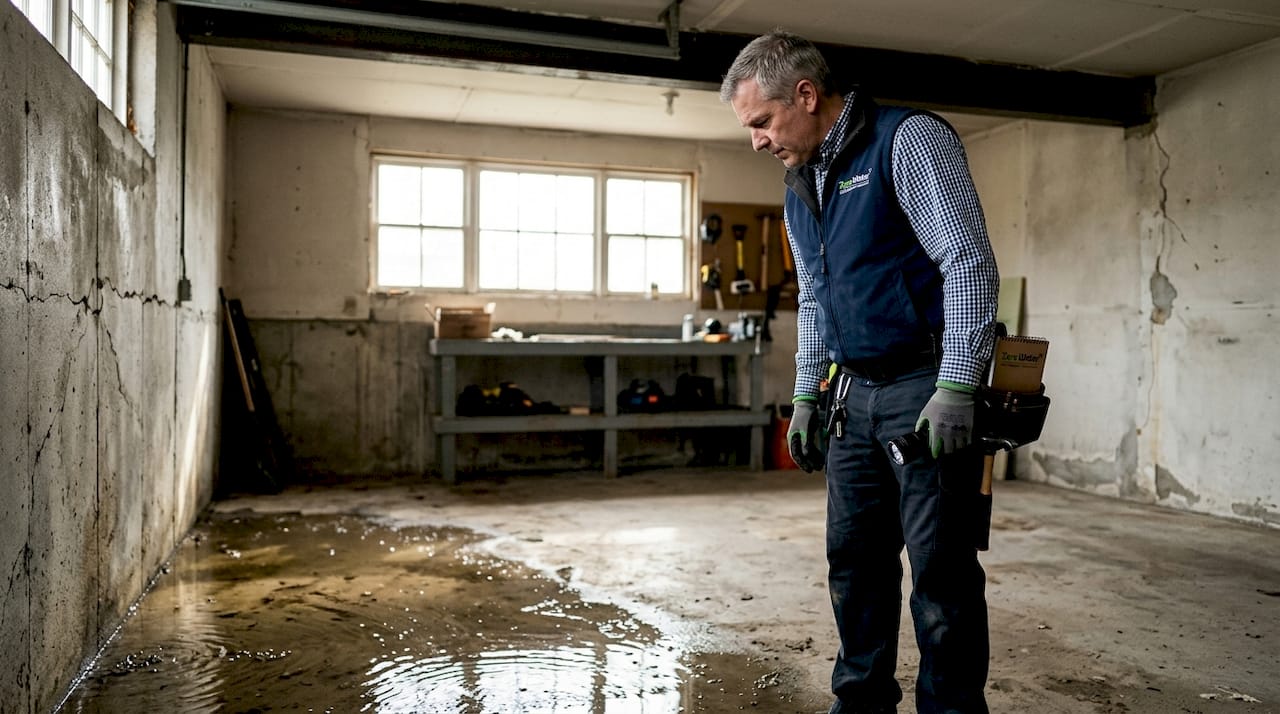
- Sewage backflows and toilet overflows. A blocked sewer line can force raw sewage back through floor drains, toilets, and sinks. Any overflow containing fecal matter is automatically Category 3, regardless of how small the volume appears.
- Floodwaters from rivers and storm surges. Rising groundwater carries agricultural runoff, industrial chemicals, and biological waste. The IICRC classifies all external floodwaters as Category 3 because their contamination profile is unknown and consistently hazardous.
- Wind-driven rain entering a structure. When storm water mixes with soil, insulation, or building materials inside a wall cavity, it picks up contaminants that elevate it beyond clean water status.
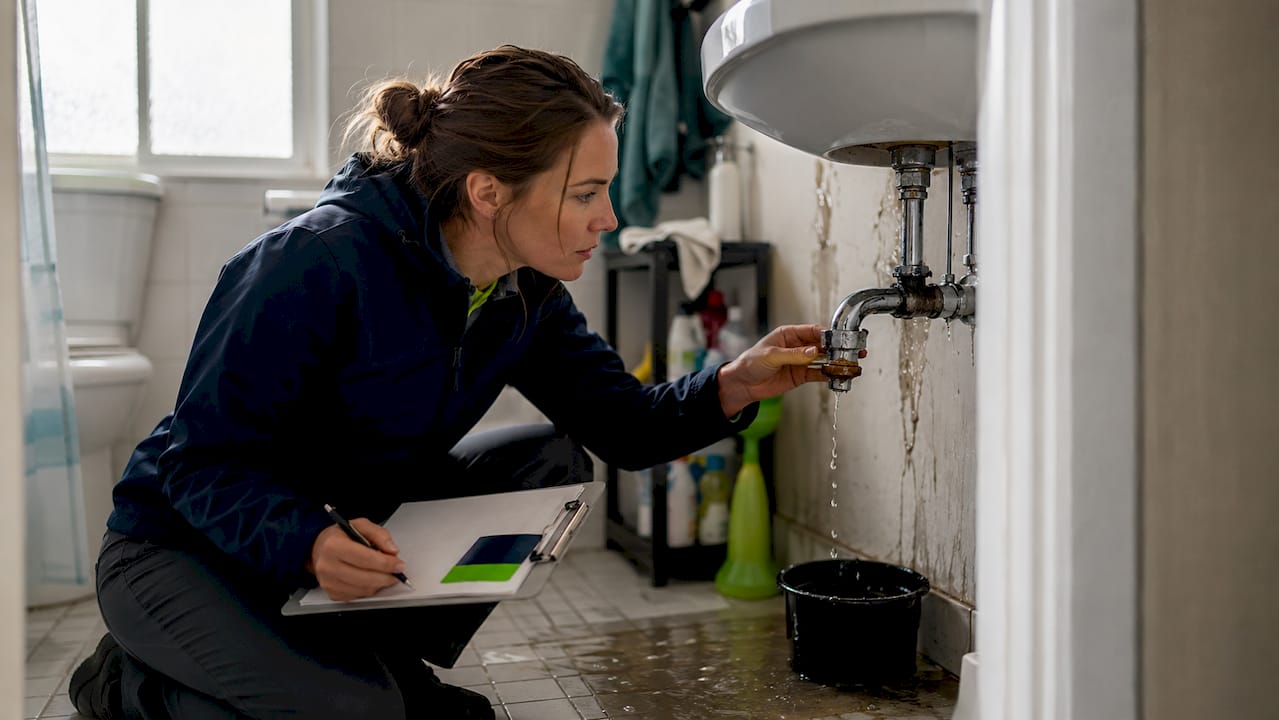
- Stagnated water that has degraded over time. This is the source most homeowners miss. Water can escalate from Category 1 to Category 3 within 96 hours if left standing untreated. A burst pipe ignored over a long weekend can become a biohazard situation by Monday morning.
The last point carries a practical warning for property managers overseeing vacant units. A slow leak discovered days after it started is not a clean water problem anymore. Time changes the category.
What health risks does category 3 water damage present?
Exposure to black water carries immediate and serious health consequences. The pathogens commonly found in Category 3 water include E. coli, Salmonella, Hepatitis A, Norovirus, and Giardia. Each of these can cause severe illness through ingestion, inhalation of contaminated aerosols, or direct skin contact with open cuts or mucous membranes.
Certain groups face a higher level of danger:
- Children whose immune systems are still developing
- Adults over 65 with reduced immune response
- Immunocompromised individuals, including those undergoing chemotherapy or living with HIV
- Pregnant women, where fetal exposure to certain pathogens carries additional risk
Exposure to Category 3 water does not require drinking the water to cause illness. Breathing in airborne droplets during cleanup, touching contaminated surfaces and then touching your face, or walking barefoot through affected areas are all transmission routes that have caused documented infections.
Secondary mold growth adds another layer of risk. Mold spores begin colonizing wet porous materials within 24–48 hours. When black water soaks into drywall or subfloor, the mold that follows is growing in a nutrient-rich, pathogen-laden environment. Understanding mold growth after leaks shows why incomplete remediation creates a second health crisis on top of the first.
What are the industry standards for category 3 water damage cleanup?
The IICRC S500 standard and ANSI guidelines define the minimum requirements for safe remediation of Category 3 contamination. These are not suggestions. They are the protocols that licensed restoration professionals follow to protect both occupants and workers.
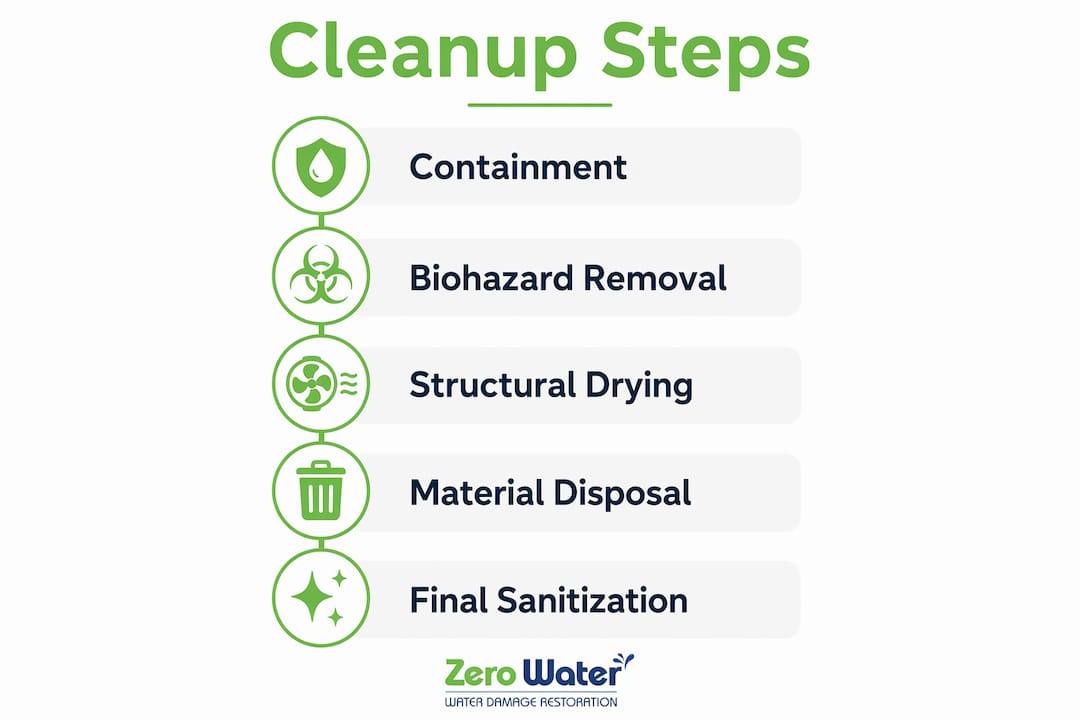
The core remediation steps under IICRC S500 include:
- Establish containment. Seal off the affected area with plastic sheeting and negative air pressure to prevent cross-contamination to clean zones.
- Remove all porous materials. Porous materials must be removed 12–24 inches above the visible waterline. Carpet, carpet pad, drywall, insulation, and wood framing that has absorbed black water cannot be disinfected. They must be bagged and disposed of as biohazardous waste.
- Apply EPA-registered antimicrobials. After demolition, all remaining hard surfaces receive treatment with antimicrobials approved by the Environmental Protection Agency for pathogen control.
- Dry the structural cavity. Industrial air movers and dehumidifiers run until moisture readings confirm the structure has reached acceptable dryness levels.
- Conduct post-remediation verification testing. Verification testing confirms air quality and surface safety before any reconstruction begins or occupants return.
| Remediation step | Purpose |
|---|---|
| Containment setup | Prevents spread of contaminated air and water to unaffected areas |
| Porous material removal | Eliminates reservoirs where pathogens survive disinfection |
| EPA antimicrobial treatment | Kills surface pathogens on hard, non-porous materials |
| Structural drying | Removes moisture that sustains mold and bacterial growth |
| Post-remediation verification | Confirms the property is biologically safe for re-occupancy |
Pro Tip: If a contractor proposes steam cleaning your carpet or spraying bleach on drywall after a sewage backup, walk away. No disinfectant eliminates pathogens trapped deep in porous materials. Removal is the only compliant solution.
The restoration project phases for Category 3 events are more involved than standard water damage jobs, and the documentation generated during each phase matters for both safety clearance and insurance claims.
How do you identify signs of category 3 water damage?
Early recognition limits exposure and reduces remediation scope. Common signs of Category 3 water damage include visible sewage backups, pooling water with a foul or unusual odor, and rapid mold growth appearing within one to two days of a water event.
Watch for these specific indicators:
- Visible sewage or solid waste in standing water or on floors and walls
- Dark or discolored water with a strong sewage or chemical odor
- Mold appearing within 48 hours of a water event, which signals the water carried nutrients for immediate microbial growth
- Occupants reporting nausea, gastrointestinal symptoms, or respiratory irritation after a water event in the property
- Water intrusion following a storm or flood where the source is external groundwater rather than a clean interior supply line
The degradation timeline is the detail most homeowners overlook. A clean water leak from a supply pipe becomes gray water as it picks up contaminants from building materials. Left for four or more days, that same water crosses into Category 3 territory as bacteria multiply. The mold prevention window closes fast, and so does the window for lower-cost remediation.
Pro Tip: If you are unsure whether your water damage is Category 2 or Category 3, treat it as Category 3 until a licensed professional tests and classifies it. Underestimating the category is the most expensive mistake you can make.
What steps should you take after discovering category 3 water damage?
Speed and caution define the right response. The following steps apply whether you are a homeowner dealing with a sewage backup or a property manager responding to flood damage in a tenant unit.
- Evacuate vulnerable occupants immediately. Children, elderly residents, and anyone with a compromised immune system should leave the affected area before any assessment or cleanup begins.
- Do not touch the water or contaminated materials. Avoid walking through standing black water without waterproof boots and gloves. Do not attempt to move soaked furniture, carpet, or personal items without full PPE.
- Stop the water source if it is safe to do so. Shut off the main water supply for a sewage backflow. Do not attempt to enter a flooded basement if electrical panels are at risk of contact with water.
- Ventilate cautiously. Open windows to reduce airborne contamination, but do not use fans that could spread contaminated aerosols to clean areas of the property.
- Contact a licensed water damage restoration company. Category 3 events require professionals with IICRC certification, proper PPE, biohazard disposal capability, and post-remediation verification equipment.
- Document everything for your insurance claim. Photograph the damage before any cleanup begins. Record the water source, the time you discovered it, and the areas affected. Detailed insurance claim documentation directly affects how quickly and fully your claim is processed.
Pro Tip: Call your restoration company before you call your insurance company. A certified restorer can provide the damage assessment and category classification that your adjuster needs. Starting with the right documentation saves weeks of back-and-forth.
Professional biohazard remediation practices follow the same principle across all severe water damage events: contain first, remove second, verify last.
Key takeaways
Category 3 water damage is a biohazard that requires licensed professional remediation under IICRC S500 protocols, and no amount of DIY disinfection makes a contaminated property safe.
| Point | Details |
|---|---|
| Category 3 definition | Grossly contaminated black water containing pathogens capable of causing serious illness or death. |
| Degradation timeline | Clean water becomes Category 3 within 96 hours if left standing untreated. |
| Porous material removal | Carpet, drywall, and insulation must be removed 12–24 inches above the waterline and disposed of as biohazardous waste. |
| Post-remediation verification | Laboratory testing of air and surfaces is required before re-occupancy, not optional. |
| First response | Evacuate vulnerable occupants, avoid contact, stop the source, and call a licensed restorer immediately. |
What I’ve learned after a decade of Category 3 jobs
The mistake I see most often is a homeowner who waits. They see a sewage backup, clean up what they can see, run a box fan, and assume the smell will go away in a few days. It does not. What actually happens is the pathogens migrate deeper into the subfloor, the mold establishes itself inside the wall cavity, and what could have been a contained remediation job becomes a full gut of the bathroom and adjacent hallway.
The second mistake is trusting a contractor who proposes disinfection in place. I have seen properties where a crew sprayed bleach on sewage-soaked drywall, declared the job done, and left. Six months later, the occupants were dealing with chronic respiratory symptoms and a mold colony behind the wall that had been growing since day one. Visual cleanliness is not safety. Laboratory verification defines when a property is actually safe, and that standard is non-negotiable.
The homeowners who come out of Category 3 events with the least damage, the lowest out-of-pocket costs, and the fastest return to normal are the ones who call a certified restorer within hours, not days. They let the professionals handle the classification, the documentation, and the insurance communication. That is not giving up control. That is making the right call under pressure.
— Jim
Zerowaterrestoration responds to Category 3 water damage across Chicagoland
Category 3 water damage requires a team that knows the IICRC S500 protocols and has the equipment to execute them safely. Zerowaterrestoration is available 24/7 for emergency response across the northwest suburbs of Chicago, including Schaumburg, Arlington Heights, Lake Zurich, Barrington, and Streamwood.
The Zerowaterrestoration team handles the full scope of black water events: containment, biohazard removal, structural drying, EPA-registered antimicrobial treatment, and post-remediation verification. The company also works directly with insurance adjusters to manage documentation and keep your out-of-pocket costs as low as possible. If you are facing a sewage backup, flood event, or any water damage you suspect is Category 3, call (847) 515-7000 or visit the water damage restoration page for a free inspection and estimate.
FAQ
What is the category 3 water damage definition?
Category 3 water damage, defined by the IICRC S500 standard, is grossly contaminated water containing pathogenic or toxigenic agents that pose a serious risk of illness or death. Common sources include raw sewage, toilet overflows with fecal matter, and external floodwaters.
How does category 3 water damage differ from category 1?
Category 1 water originates from a sanitary source, such as a broken supply line, and poses minimal health risk when addressed quickly. Category 3 water contains pathogens, toxins, and biological waste that make it a biohazard requiring licensed professional remediation and biohazard disposal of all porous materials.
Can you clean up category 3 water damage yourself?
DIY cleanup of Category 3 water is not safe or compliant. Porous materials trap pathogens that no household disinfectant can eliminate, and incomplete decontamination leads to mold growth, ongoing health risks, and potential legal liability.
How quickly does water damage become category 3?
Standing water can escalate from Category 1 to Category 3 within 96 hours as bacteria multiply rapidly in untreated moisture. Delayed action significantly increases both the health risk and the scope of remediation required.
What does category 3 water damage cleanup involve?
Remediation includes containment of the affected area, removal of all porous materials 12–24 inches above the waterline, EPA-registered antimicrobial treatment of hard surfaces, structural drying, and post-remediation verification testing to confirm the property is safe before re-occupancy.