
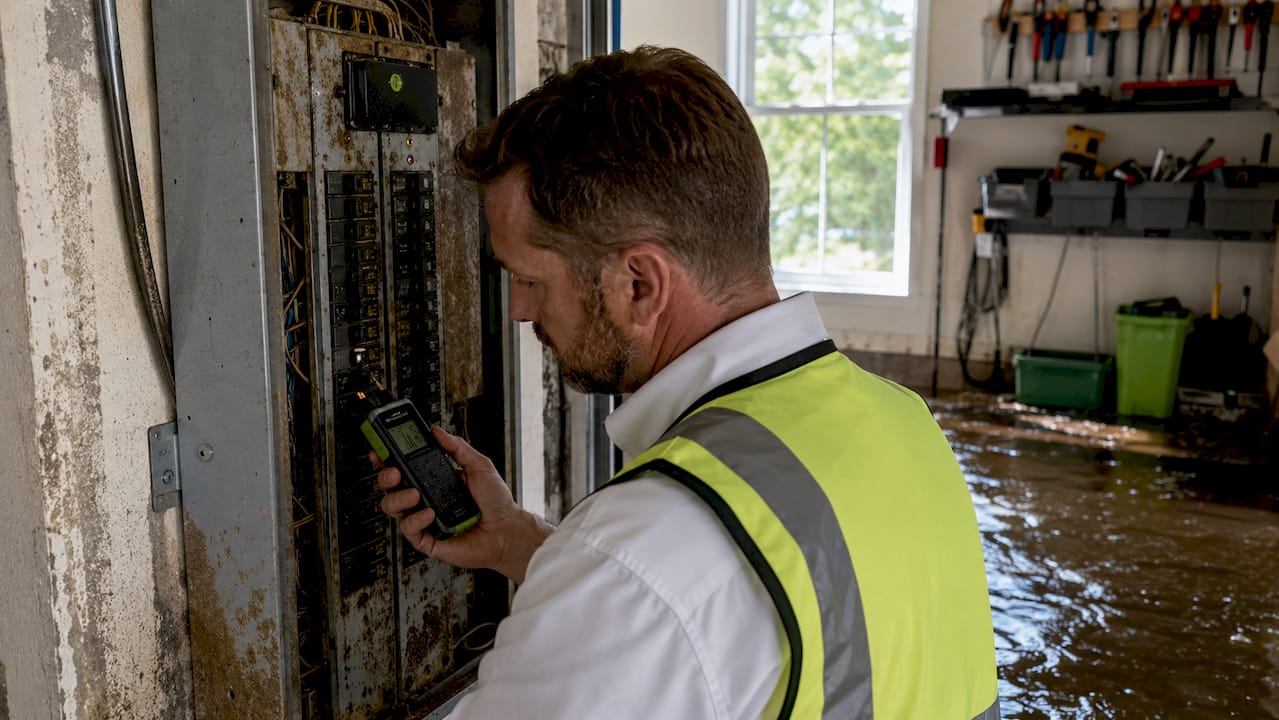
Water damage compromises electrical systems by degrading insulation, corroding metal components, and creating conductive pathways that cause short circuits, arcing, and fire hazards. Understanding how water damage affects electrical systems is the first step toward protecting your home and your family. The four primary failure mechanisms are electrolytic corrosion, insulation breakdown, conductive contamination, and mechanical swelling. Each one can cause serious harm on its own. Together, they make a flooded electrical system one of the most dangerous situations a homeowner can face.
What are the primary ways water damages electrical systems?
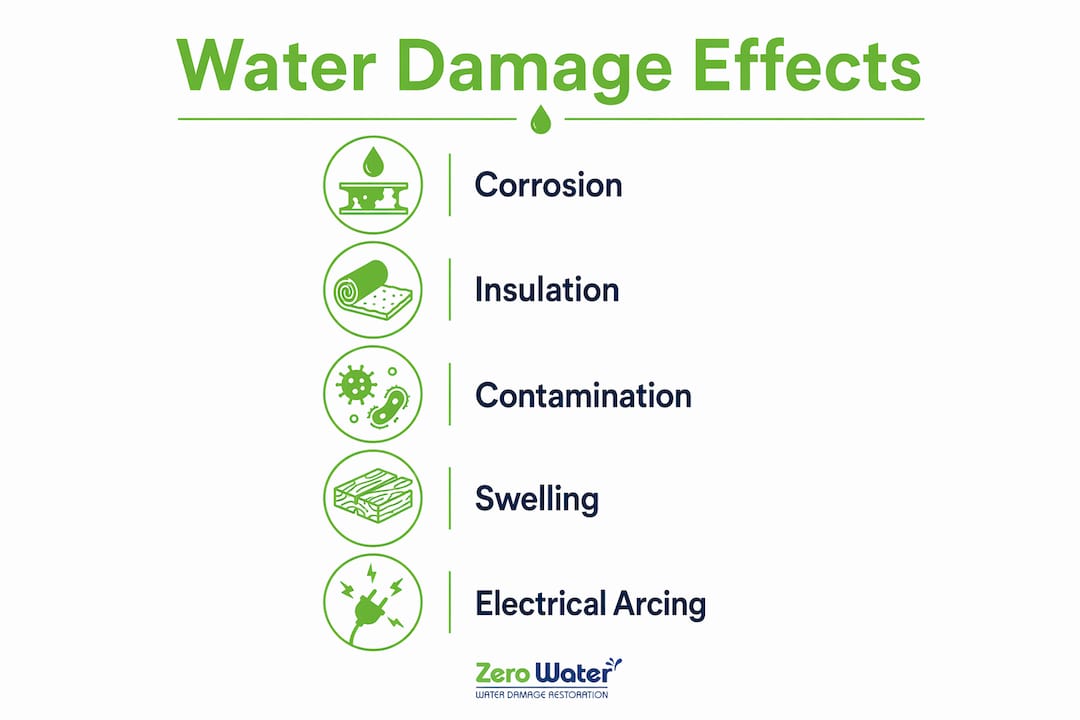
Water attacks electrical systems through four distinct mechanisms: electrolytic corrosion, insulation breakdown, conductive contamination, and mechanical swelling. Each mechanism operates differently, and each creates its own set of risks.
Electrolytic corrosion happens when water dissolves minerals and salts, then carries electrical current between dissimilar metals. Copper wiring and aluminum bus bars are especially vulnerable. Floodwater contaminants accelerate corrosion in these metals, eating through connections that looked perfectly fine the day before. The damage is often invisible at first and builds over weeks or months.
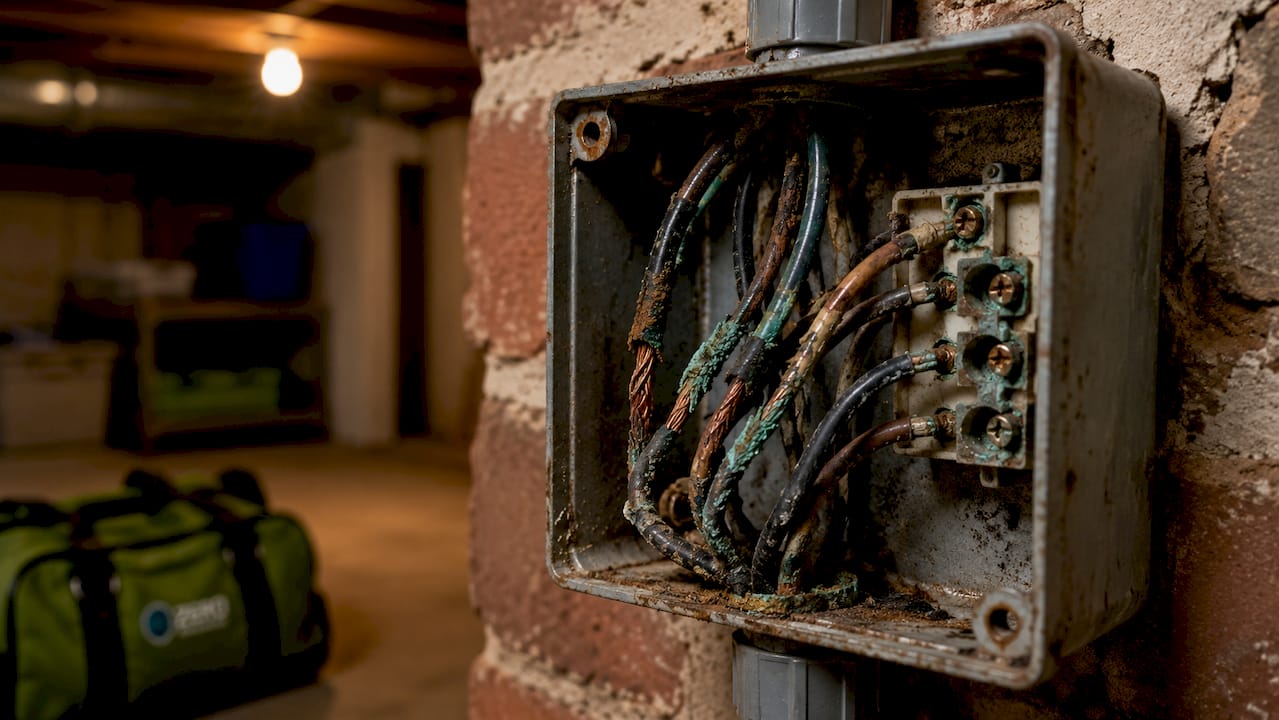
Insulation breakdown is equally serious. NM-B thermoplastic wire jackets absorb moisture and lose their ability to block current flow. Water permanently reduces the dielectric strength of these jackets, meaning a cable that got wet during a flood is no longer rated for safe use, even after it dries out completely. You cannot restore insulation by drying it.
Conductive contamination is the hidden threat most homeowners never think about. Floodwater, sewage, and even groundwater carry dissolved minerals, bacteria, and chemicals. These substances leave conductive films inside outlets, junction boxes, and panel components. Residual conductivity from contaminants does not disappear when the water dries. Those films can defeat circuit protection and cause shorts or fires months later.
Mechanical swelling rounds out the four mechanisms. Wood framing, drywall, and plastic enclosures all absorb water and expand. This physical pressure can crack conduit fittings, distort junction box covers, and compromise the seals that keep moisture out of electrical components.
- Corrosion targets copper wiring, aluminum bus bars, and breaker contacts
- Insulation damage is permanent once NM-B cable gets wet
- Conductive films from contaminated water require cleaning or full component replacement
- Swelling can crack conduit and distort junction boxes, exposing live wiring
Pro Tip: If your home flooded with sewage or groundwater, treat every electrical component in the affected area as contaminated. Clean water from a burst pipe is far less corrosive than blackwater, but neither is safe without professional evaluation.
Why is re-energizing too soon after flooding dangerous?
Turning the power back on before a flooded electrical system is fully assessed is one of the most dangerous mistakes a homeowner can make. The risk is not just immediate shock. The bigger threat is a fire that starts days or weeks later, long after the water is gone.
FEMA’s guidelines are specific: wood moisture content must fall below 19% before power is safely restored after water damage. That threshold matters because damp framing and subfloor materials continue to transfer moisture into wiring and junction boxes even when surfaces feel dry to the touch.
Visible surface dryness often hides substantial moisture trapped inside walls, junction boxes, and conduits for weeks. Standard household testers cannot detect internal resistance faults caused by this hidden moisture. Only licensed electricians using specialized equipment can confirm a system is safe to re-energize.
Electrical arcing caused by moisture creates intense heat that damages wiring and surrounding materials. That heat can ignite insulation, wood framing, or debris inside a wall cavity without triggering a breaker. Corrosion compounds the problem. Dissolved minerals generate heat at electrical connections as resistance increases, and that heat can ignite a fire long after the water recedes.
The hidden risks of water damage extend well beyond what you can see. A system that passes a visual check can still fail catastrophically under load. Professional moisture mapping with calibrated meters is the only reliable way to confirm that walls, conduits, and junction boxes are truly dry before power is restored.
How can you spot electrical damage after water intrusion?
Recognizing the symptoms of electrical damage early gives you the best chance to prevent a fire or injury. The signs are not always dramatic. Some are subtle enough that homeowners dismiss them as minor annoyances.
- Tripped breakers are the most common warning sign. Tripped breakers after water exposure signal critical insulation failures and should never be reset without a professional inspection. Resetting a tripped breaker in a wet system can cause an arc or start a fire.
- Flickering or dimming lights indicate unstable connections, often caused by corrosion increasing resistance at wire terminals or breaker contacts.
- Visible corrosion or discoloration on outlets, switch plates, or panel components means moisture has already reached the metal parts inside.
- Burning smells or warm outlet covers are urgent red flags. Both indicate active heat generation from a compromised connection.
- Outlets or switches that feel wet or show water stains around the cover plate confirm direct moisture exposure inside the box.
If you notice any of these symptoms, shut off power at the main breaker immediately. Do not touch wet outlets or panels while the power is on. Document everything with photos before touching or moving anything. This documentation supports your insurance claim and helps the electrician understand the full scope of exposure.
Pro Tip: Never use a standard voltage tester to check a water-damaged circuit yourself. DIY testing with household testers can miss internal resistance faults entirely, giving you a false “all clear” that puts you at serious risk.
What do professionals do to repair water-damaged electrical systems?
Repairing a water-damaged electrical system is not a simple dry-and-reset process. Licensed electricians follow a structured sequence of assessment, cleaning, drying, testing, and selective replacement to restore both safety and function.
Assessment and moisture mapping
The first step is a full inspection using moisture meters and specialized moisture mapping equipment to locate hidden water in conduits, junction boxes, and wall cavities. This goes far beyond what you can see or feel. Professionals map moisture levels throughout the affected area before any other work begins.
Cleaning and decontamination
Any component exposed to contaminated water requires thorough cleaning to remove conductive films. This includes outlets, switches, junction boxes, and panel interiors. In many cases, cleaning is not enough. Components exposed to sewage or heavily contaminated floodwater are typically replaced outright, since residual conductivity can defeat circuit protection even after cleaning.
Testing and replacement decisions
The table below shows how professionals decide between cleaning, drying, and full replacement:
| Component | Condition | Recommended action |
|---|---|---|
| NM-B wiring | Any flood exposure | Replace. Dielectric strength is permanently reduced. |
| Outlets and switches | Contaminated water contact | Replace. Conductive films are difficult to fully remove. |
| Junction boxes | Clean water, no corrosion | Clean, dry, and inspect. |
| Main panel | Any flood exposure | Full professional inspection. Often requires replacement. |
| GFCI devices | Any water exposure | Replace. Internal electronics are not reliably restorable. |
Insulation resistance testing, performed per NEC standards, confirms whether wiring is safe before power is restored. This test measures the resistance between conductors and ground. A low reading means the insulation has failed and the cable must be replaced.
- Licensed electricians must sign off before power is restored
- NEC compliance is required for all replacement wiring and devices
- OSHA guidelines govern worker safety during post-flood electrical work
- The water damage restoration process for Illinois homeowners includes electrical clearance as a standard phase
How can you prevent water damage to electrical systems going forward?
Prevention costs far less than repair. A few targeted measures significantly reduce the risk of electrical damage during future water incidents.
- Install GFCI (ground fault circuit interrupter) outlets in all wet-prone areas: bathrooms, kitchens, garages, and basements. GFCI devices cut power within milliseconds of detecting a ground fault, preventing shock and reducing fire risk.
- Add AFCI (arc fault circuit interrupter) breakers to bedroom and living area circuits. AFCI breakers detect the electrical signature of arcing before it ignites surrounding materials.
- Seal electrical conduit entry points where they pass through exterior walls or foundation penetrations. Unsealed conduit acts as a direct water pathway into your electrical system during flooding.
- Raise electrical panels, outlets, and junction boxes above the base flood elevation for your area. This single step prevents direct submersion during most flood events.
- Schedule annual inspections of your electrical system, with specific attention to moisture intrusion points in basements and crawl spaces.
- Address water damage immediately. Timely water damage restoration prevents prolonged moisture exposure that accelerates corrosion and insulation degradation.
Routine maintenance also includes checking that weatherproof covers on outdoor outlets are intact and that sump pump systems are tested before storm season. A failed sump pump during a heavy rain event in the Chicago area can flood a basement in under an hour.
Key Takeaways
Water damage destroys electrical safety through corrosion, insulation failure, and conductive contamination, and no flooded system is safe to re-energize without a licensed professional inspection.
| Point | Details |
|---|---|
| Four failure mechanisms | Corrosion, insulation breakdown, contamination, and swelling each create distinct hazards. |
| Never reset tripped breakers | Tripped breakers after flooding signal insulation failure, not a minor fault. |
| 19% moisture threshold | FEMA requires wood moisture content below 19% before power is safely restored. |
| Wet cables must be replaced | NM-B wiring permanently loses dielectric strength after flood exposure. |
| GFCI and AFCI protection | Installing these devices reduces shock and arc fire risk in wet-prone areas. |
What I’ve learned after years of seeing flooded homes
Most homeowners I talk to after a flood are focused on the floors, the drywall, and the furniture. The electrical system is an afterthought. That’s understandable. Water damage is visible and immediate. Electrical risk is invisible and delayed.
The fires I’ve seen start weeks after a flood are the ones that stick with me. The homeowner dried everything out, the house looked fine, and then a connection that had been slowly corroding finally failed under load. Corrosion can be invisible initially and acts over weeks or months to degrade connections, increasing arc fault risk long after the water is gone. By the time it fails, nobody connects it to the flood.
The other thing homeowners consistently get wrong is the tripped breaker. They see it as a safety feature doing its job, reset it, and move on. A tripped breaker after flooding is not a success story. It’s a warning that insulation has already failed somewhere in that circuit. Resetting it without a professional check is genuinely dangerous.
My honest advice: treat your electrical system as the highest priority after any significant water event. Get a licensed electrician in before you restore power. Get a restoration company with moisture mapping equipment to confirm the structure is dry before that electrician signs off. The mold remediation and the cosmetic repairs can wait. The electrical system cannot.
— Jim
Zerowaterrestoration is ready when water damage strikes
Water damage to your electrical system is not a problem you can assess from the surface. Zerowaterrestoration brings professional moisture mapping, structural drying, and full remediation to homes across the northwest suburbs of Chicago, including Barrington, Schaumburg, Palatine, and surrounding communities.
The team at Zerowaterrestoration responds 24/7 because water damage does not follow a schedule. From the moment they arrive, the focus is on stopping further damage, documenting everything for your insurance claim, and restoring your home safely. For homeowners in the area, water damage restoration in Barrington and throughout the region is handled start to finish, including coordination with licensed electricians to confirm your system is safe before power is restored. Call (847) 515-7000 or visit zerowaterrestoration.com for a free inspection.
FAQ
Can water-damaged wiring be dried out and reused?
No. NM-B wiring permanently loses dielectric strength after flood exposure and must be replaced, regardless of how thoroughly it dries.
How long should I wait before turning power back on after flooding?
Wait until a licensed electrician confirms the system is safe. FEMA guidelines require wood moisture content below 19% before re-energization, which can take days to weeks depending on the extent of flooding.
Why do breakers keep tripping after water damage?
Tripped breakers signal insulation failure in the affected circuit. Do not reset them. Call a licensed electrician to inspect the wiring before restoring power.
Do GFCI outlets protect against water damage?
GFCI outlets reduce shock risk by cutting power when a ground fault is detected, but they do not prevent corrosion or insulation damage. They are a safety layer, not a substitute for professional inspection after flooding.
How do I know if my electrical panel was damaged by water?
Visible corrosion, discoloration, or a burning smell near the panel are clear signs. Any panel that was submerged or exposed to circuit breaker issues after flooding requires a full professional inspection before use.